The Fresnel Third Order lens turnsin a display case taller than I am,a 60-watt bulb lighting the museum room.Long before, through the same glass,a wick lit up 20 miles of night sky.
Only 17 percent of light lost out of top and bottom,this very efficient sourceburned whale blubber, rapeseed oil, kerosene–
not a destroying fireunless you’re the whale,but one that saved ships that didn’t wreck,their stories on the other side of the lens’s windowed wall.Through a white-painted framed doorway,they are still floating on a touch screen my toddlers pressand pinch to see their damage on the lake’s floor.
And in the turning lens the prismslight the room almost into rainbowsat the soft edges of the glass segments,and the middle, largest circles show the shorelinegrow and wane with the split between grey sea and blue skyblowing larger, disappearing into a glimpse of the door’s latch,before the flame-like incandescent lightshines bright, alone, in the circle’s frame,coming and going, and always it is turning.
And always my mother in the middle of the daybusy, calling, getting shit done, smiling,always at night waning into wine and her slow wordsalways in the morning shuffling out of stupor.Light from her phone the only light, her fingers sliding,clicking, swiping letters into placessomeone or a computer had already foreseen.
I keep sailing home to her.
The lighthouse still shines for safety,LED light locked above in a tower not for museum guests,and my mother still wakes and talks and shuffles.When I count her hours between piss-interrupted sleep and slow steps,79 percent has always been lost out top and bottom.
Outside the leaves say sh sh sh sh.They shimmer on the short-lived water poplargrowing awkward out of a rocky hillside over the lake.
There are rooms in hospitals that are less rooms than pauses in the machinery of dying. They have tough plastic chairs bolted to the floor like prison furniture and televisions murmuring weather from cities nobody here has seen. Your husband has been here for sixteen days with severe pneumonia. He is thirty-eight; you are thirty-nine. He has HIV, though his viral load has been undetectable for years, and every morning he takes his four handfuls of medication with orange juice in the blue mug his niece bought him, the one that says WORLD’S OKAYEST UNCLE. He has never liked coffee. His body has become an arrangement of straps, tubes, monitors, and strangely, stickers. A nurse calls him brave for breathing, then asks him to breathe for her. Your mother says you ought to be grateful he is alive. You are grateful, but it is still not enough.
At 2:14 a.m., a nurse enters. “He needs to be turned, and I need two people. Could you help?” You laugh. This isn’t your first rodeo. “No,” you say. The nurse doesn’t react.
At 3:47 a.m., your husband wakes. “So I had this dream,” he says. You move closer to his face, which looks impossibly pink beneath the fluorescent lights. His oxygen mask clouds with each breath. The condensation briefly resembles the face of a fish, its mouth opening and closing against the plastic. “There was this house underwater,” he says. “It was our dream house. You know, the mid-century-modern thing?” He looks confused. “Everyone was still having dinner,” he says. “And what was I doing,” you ask. “You should have seen it. You drove us out of there,” he says.
At 4:38 a.m., the nurse returns. “He should go to the facilities,” she says, and you think about the word facilities, and how you are inside one. The nurse helps your husband into the bathroom. There, sitting beside the sink, is a pristine bottle of mouthwash. You close your eyes. For a moment you hear black water rushing from the faucet. You break the seal and breathe deeply from the bottle’s mouth. Peppermint. Alcohol. Something medicinal. Something very blue. You have a feeling of something beginning.
Four days later, your husband wants to know about his plants, particularly his prized basil. It is the first houseplant he hasn’t killed, so he has propped it up with his favorite pair of chopsticks, the ones you bought on your trip to Tokyo, pink bears holding their paws above their heads. “Plants don’t die in a few days,” you say, but then your heart fills with sadness. When you get back to your townhouse, you straighten the chopsticks and touch the basil leaves. “Cheer up, old chap,” you tell it.
Four days after that, your husband wants to know where you’ve been. If you’ve just been drinking. If you’ve been going to your meetings. He watches you for a long time. “I’ve only been drinking mouthwash, darling,” you say finally. “Do you know what the fish was?” you ask. “No, but do tell. I’ve always been so into ichthyology,” he says. “It was a catfish,” you say.
The next morning, your husband asks you to take him home. He has not been discharged, so doing so would certainly be against medical advice. But he wants his own bed, his basil plant, his blue mug with orange juice in it. You need some air, even though it is winter and the air outside is colder than the hospital’s. When you come back, carrying two coffees you know he will not drink, he has fallen asleep. “Let’s go home,” you say loudly. He wakes instantly. “Wha? Huh?” “Let’s make a break for it.” He blinks at you.
At 5:01 a.m., a nurse brings a portable oxygen tank to replace the one beside his bed. Your husband watches her wheel it in. “Remember all those years I was on nitrous?” he asks. “Remember all those tanks? Remember how mad you got?” You do remember. How could you forget? How could you forget the endless cylinders in the garage, how new ones would seem to appear from nowhere? How could you forget finding him sitting on the kitchen floor, laughing at nothing? You remember saying, You idiot, you are going to die. You remember him answering, Everyone is going to die.
Your rage and loneliness, the years lost, fade into a pale muteness. Because you know where the fish is now and you know how you can catch it. It’s always been there, hunting you. The fish was swimming through the black water of your dream house, past the dining table where everyone was still eating, waiting for you to see it.
You look out the window. Snow catches on the tops of the buildings like little white wings, little tufts. You suddenly feel exhilarated, an icy wind traveling through your lungs.
For a moment you imagine opening the window and letting the whole hospital fill with snow. You imagine the beds covered, the monitors buried, the nurses walking through drifts, everyone finally quiet.
Then your husband says your name. You turn around. He is awake. The morning light has reached him, pale and blue, and his eyes are fixed on something behind you.
“What?” you ask. He doesn’t answer.
You turn toward the window. Nothing is there except the snow now. When you look back at your husband, he is smiling.
“I saw it,” he says. “Saw what?” you ask. He closes his eyes. “The fish.”
You wait for him to explain, but he doesn’t. His hand searches beneath the blanket until it finds yours. You hold it. Outside, the snow keeps falling. Beneath the low mechanical breathing of the machines, you hear something wet and slow move through the dark.
It is too late now for daffodils
but their rings appearagainst melted snowheads hang heavy.Look, they are closing their mouths.
Mother’s Day was around the corner.I remember because we bought shoesfor the children that year
and a fish I didn’t want.Hallmark holiday anyway.Anyway.I got a few things for myself,not secretly justquietly.
Face turned toward the mirrorwaiting for him to come homeI smiled at myself.Was it a smile?Was I rehearsing?Would he like the showthis time?
Finally the door opening,a sigh, a greeting:
Why are you wearing that?You look like a crazy old lady.I was 39.Spring winters so early this year.I just shrugged, wiped my mouth on my sleeve.It left a rust shapedheart colored stain.
My mother is still aliveBut I think her corpse restsUnder my bed.I tuck my sheets around the frameOf her as sheGroans and rolls overAnd whispers up through myPillows. She asks why IDon’t call why I blocked her numberShe tugs on the sinkholeOf my mattress and wondersWhy I crush her so.She sprinkles her grave dirtUnder the covers just toWatch me writhe.My mother balls up all theLint and wayward socks andStuffs them into her rotted chest cavityTo feel some sort of fullness thereAnd she says this is what you’veDone to me.
She tells me to get out out outOf bed and into the world whileHolding me downShe asks why it hurts so muchFor me to surrender into her embrace.Is she really so jagged and sharp?Has her softness decayed so muchThat she must wound meEvery time she reaches out to touch my skin?My mothers’ corpse makes sureI am always uncomfortableWhen I lay down to rest;No, you will never be safe, you willNever be anywhere that I’m not.She drags me into theBusted rib cage of her bodyAnd tells me to look in the mirror:We are so alike.When you realise that we are the sameThat we are entwined and mouldedTogether—then willYou pick up the phone?
Louise glues her late mother’s statues up on the ugly streetside wall, praying diverse intentions for every placement of the Shivas, the buddhas, the Jesuses, the apostles, saints and martyrs galore. There are the unholy and profane, too: garishly painted naked ladies, Grecian goddesses, satyrs, nymphs, cherubs holding horns of plenty, one or two putti holding themselves or peeing. The discarded hoard becomes a pantheon above the heaps of moldy stuff in the family’s dirty front yard; all the plaster citizens glued atop the cinderblock fence, staring at passersby. Neighbors and strangers who look feel the urge to look again.
Freed from the curio cabinets, the bookshelves, and the wormy ground, each god silently dares each viewer to do a right thing. Shiva wants destruction, Jesus wants unconditional love, and the demigods cry out a hundred different things as the cherubs espouse free love and free dress. Only Buddha stays silent.
40 days after her mother’s death, Louise completes god-scaping the entire front wall. As she locks a small statue of St. Jude onto the final perch with a tiny prayer for her mother’s soul, a flutter of wings erupts all around her and she thinks damn pigeons again – don’t you dare — but when she turns around she sees that the statues behind her are shaking off the shackles of statuehood and rising above their plinths, coruscating with golden auras or shiny halos. The light from them pours over the grimy sidewalk and scours it clean.
Our Lady of Guadalupe scatters roses from her robe as she walks in the air. Ganesh is wandering out into the busy street amid a cacophony of horns and shouts, while a blue nymph hops up on the back of a motorcycle behind a Hell’s Angel. St. Sebastian throws arrows high over the street.
Louise climbs down the ladder, shaky, hoping that her brain is not exploding like her mother’s did, hoping that things will settle down, but no, in every inch of the space around her the saints and apostles are linking arms and nymphs are shaking their breasts at the satyrs. All but St. Jude are life-size now, and most have joined Louise on the sidewalk in joyous family reunion.
Louise creeps up the ladder again and looks at St. Jude who views the entire scene with resignation. Still affixed to the cinderblock, he tells Louise: “I’m the patron saint of impossible causes, you know,” but she knows her mother’s favorite saint well. “So why are you still here?” she asks him. St. Jude sighs, raises and lowers his painted-on eyebrows, black and thin. “It’s a mystery?” he offers with a shrug for the obtuse catechism. “Don’t think about it too much.” He places a tiny plaster hand, cold and smooth, on her cheek and then blesses her.
All the other gods have danced down the street, alarming or delighting people and dogs. Those who fly are flying, some low, some high, all free now. She watches them go.
item type | quantity | year acq’d | condition | total costit typ | quan y | ear q’d | con on | tot osti m pe | u nit | y ac | dit on | to a st
that phantom person (item type: ghost?) in the corner of the room— of the eye—never seenstraight on
don’t make me lookinto my memory (condition: bad?)
don’t ask me to write downevery belongingwe lost (quantity: too many?)onto sheets | into columns | and rows—
like being asked to takethe body parts of a beloved (year acq’d.: 1975?)and organize them on a grid
(total cost: tbd?)
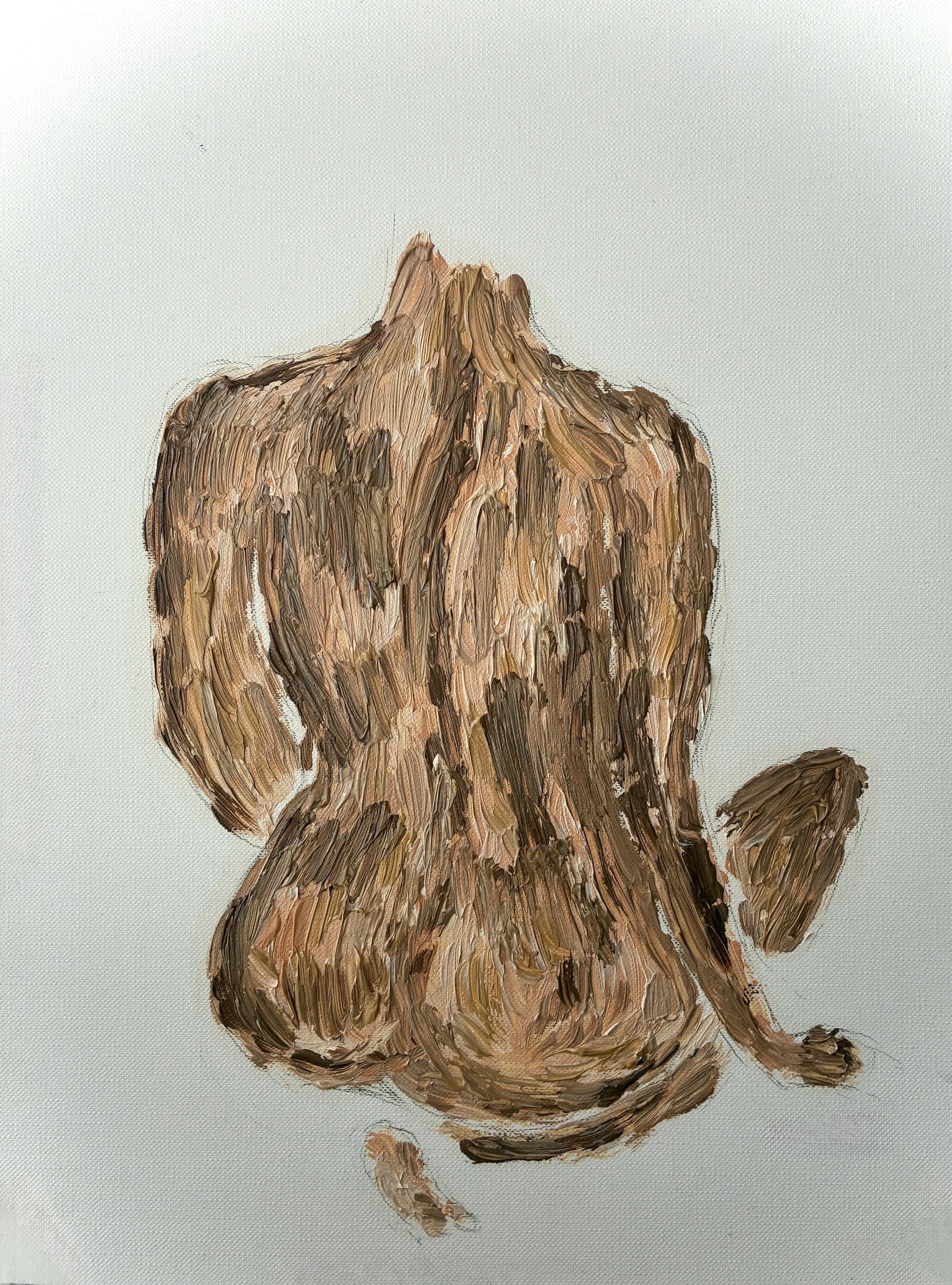
Nick rises at six.We drink the same bitter coffee.He is going to the urologist,but first to the factorywhere they will forge rocket partsfrom nickel alloy,metal that keeps its shape,refuses to burn or crackwhen heat and pressuretry to unmake it.
The nickels in our pocketsare mostly copper,seventy-five parts base metalto twenty-five of the harder name.When he was small I called himNick Nick Nick and Nickel,as if the sound itselfcould plate him against harm.
He leaves.
All day I gather light:crowd weatherproof solar lampsinto buckets of sand,hoard the sun’s thin currencyagainst the dark that always comes.
I have never sat in that waiting room.He does not seem afraid.I am afraid in the gut,where the body’s oldest weather gathers.
We live in the last world,or the only one we know.He is young, still strong, still handsome.I am the old man, thinning,collecting daylight in plastic bucketsfor a night that has not yet arrived.
And still the alloy holdsuntil the pressure finds the seamwe never named.
I posted it at 10:00 a.m. from the school library during office hours, a Honey Citrus Mint tea cooling beside my laptop.
The building carried the strange stillness of a campus settled into midmorning. Fluorescent lights hummed overhead. Students drifted through the library without staying long enough to disturb the quiet.
I had been searching for years. Not constantly. Just often enough that the absence never fully disappeared from my mind.
1964 Studebaker.
Hickman.
Ohio.
Two years earlier, I thought I had found it. A Bordeaux Red two-door hardtop sat in an Ohio junkyard with weeds growing through it. I studied the photographs until I could almost believe it was ours. For a while, I thought my search had ended there, in rust and weeds. Then I started looking again.
That morning, I joined a Studebaker Facebook group and revised a post three times before pressing publish. This was supposed to be my dad’s inheritance, I wrote. I’ve spent years trying to find it. It’s been a dream of mine to give it back to him someday.
I attached three photographs. In one, my father stood beside the car as a teenager. In another, my great-grandfather polished the hood. The third was blurry, but there I was as a little girl, sitting barefoot on top of it beside a row of trophies.
Then I waited.
A woman named Kay wrote that a friend of hers might have the car in Arizona. It had come from Ohio. She gave me her number, and I sent her mine.
For three weeks, I tried not to make too much of the message. I had no VIN, no registration, nothing that could prove the car in Arizona was the one my family had lost. I kept returning to Kay’s words anyway: It came from Ohio.
The text arrived at 4:37 one afternoon.
I had just gotten home from work and was laying camera lenses across my office desk, preparing for a photo shoot, when my phone lit up with a number I didn’t recognize.
VIN# 64V 6558 as it is today.
Photographs followed. My hands started shaking before I opened them. It was not excitement exactly, but something heavier. A feeling I recognized from hospitals and waiting rooms, the strange physical awareness that arrives before the mind fully understands why.
I sat down and tapped the screen.
A Bordeaux Red two-door hardtop appeared, its chrome trim reflecting desert sunlight. It was the same shape I had spent my life seeing in family photographs, except now it existed in the present tense.
Then I saw the registration card.
Walter Hickman. My great-grandmother’s handwriting looped across the paper beneath it.
The car existed.
“I’m so pleased to contact a member of Mr. Hickman’s family,” its owner, Keith, wrote.
Before the Studebaker became something I searched for, it belonged to my father. Before that, it belonged to my great-grandfather. My great-grandmother bought it for him for Christmas in 1964, when my father was eight months old. My father grew up beside the car as both it and his grandfather aged.
My great-grandfather kept it in a climate-controlled garage beneath a custom cover and quilt. He polished it more often than he drove it. At car shows across Ohio, Kentucky, and West Virginia, it arrived on a trailer, trophies packed carefully in the trunk. My father helped clean it and learned how to start it. My great-grandfather trusted no one else to handle it.
Even after my great-grandfather fell into a forty-foot metal pit at work and broke his back, he returned to caring for the Studebaker. He spent a year in a full-body cast. When he recovered, he walked with a slight limp. The car remained without a scratch.
My father was the grandson my great-grandfather intended to leave it to.
Then my great-grandfather developed Alzheimer’s disease. After six years, he died. My father told me many times about the morning of the funeral. His own father said not to bring the car. It would be inappropriate, he said. Attention-seeking.
But my father had made my great-grandfather two promises: no tie in the casket, and bring the Studebaker.
So he drove it anyway. He parked where everyone could see it before walking into the funeral home. One last showing.
When he told me that story as a child, I thought it sounded rebellious.
Now it feels more like grief.
After the funeral, my father drove the car to its next home because his father did not know how to start it. My grandparents sold it. The Studebaker disappeared from our family, though my father kept telling its stories.
I do not remember sitting on its hood as a little girl. I have seen the photograph enough times, though, that memory and repetition have begun borrowing from each other. My bare feet against the paint. Trophies lined beside me. My great-grandfather showing me off beside the car the way other families posed children beside horses or heirlooms.
My father inherited stories from his grandfather too. He still laughs when he tells me about jumping into the Ohio River after a fish, though he could not swim. His grandfather had told him not to let go of the rod. That Christmas, the mounted fish waited beneath the tree, and for years it hung in our living room. After my father’s motorcycle accident and traumatic brain injury, he moved it into the garage. Not gone. Just relocated.
Some memories remain startlingly precise. He can describe a road he traveled with his grandfather decades ago, then forget a question he asked five minutes earlier. I wondered what would happen if I could put the Studebaker in front of him again. I told myself I wanted to return his inheritance. I also wanted to see whether it might bring back some part of the man I knew before the accident.
Keith and I continued talking across the distance between Arizona and South Carolina. He had bought the car on eBay years earlier and had it shipped from Cambridge, Ohio. He loved it too. I told him about my great-grandfather, about the car shows, about my father. I told him that if he ever decided to sell, I wanted him to call me.
Weeks later, Keith named a price: twenty thousand dollars.
I did not have twenty thousand dollars myself. My mother and I believed we could find a way to buy it together. I thought about a loan, a credit card, flights to Arizona, the long trip home. I imagined pulling into our driveway and watching my father recognize the car before I even told him it was his.
For about a month, I kept the photographs and my conversations with Keith to myself. I wanted to know the car was real and that bringing it home was possible before I showed my father.
At 11:00 one night, I sat beside him on the couch. The dogs had gathered around him. I handed him my phone.
“There’s no way that’s the car,” he said.
Then he saw the registration. He reached for his glasses and leaned closer.
“That’s Grandpa’s name,” he whispered. “That’s Grandma’s handwriting.”
His voice changed as he studied the photographs. Not louder. Fuller somehow. He named McNeer Motor Company and Ninth Street. He remembered the dashboard, the steering wheel, the smell. For a few minutes, I watched the car give something back to him.
Then he zoomed in on the rear photograph.
“Dual exhaust,” he said quietly.
He looked closer.
“It used to have one.”
He studied another photograph.
“New engine.”
Then, after a pause: “There’s a cigarette burn in the seat.”
I had looked at those photographs for weeks without noticing any of it. He noticed at once. The excitement left gradually, rather than all at once. By the time he handed the phone back, the car in Arizona and the one he had driven from his grandfather’s funeral no longer matched.
“I don’t want it,” he said.
“Why don’t you want it? Do you know how hard I’ve looked for this? What if I want it?”
“I just don’t.” His voice was weak.
“That’s not good enough. How could you not want it? We can afford it. I can give this to you, something you’ve always wanted back.”
“I’ve wanted it back, but it’s not the same. It’s not the same, Lucy. There’s too much different. Papaw wouldn’t want that car. He never drove it. He would’ve never had a cigarette burn in it, never changed it. I don’t want it like it is.”
“But you could have this. We could fix it. You could show it just like he did.”
“Lucy. No. There’s too many miles on it. It’s too expensive for what they’ve done to it.” He looked at me. “I love you more than anything for finding it. You don’t know how much it means to me that you’ve done this. But I don’t want it now. I would love to have it if it was like it was thirty years ago, but it’s not. It’s just not. I have those memories, and I’d rather have that than what they’ve done to the car.”
I had pictured him sitting behind the wheel. I had not imagined that finding the car would end with us arguing over whether to bring it home.
That night, I went to bed and cried. I was angry at my grandparents for selling the car my great-grandfather had meant for him. I was angry at my father too. I had searched for years, spent weeks talking with Keith, and begun figuring out how to pay for a car I could not afford on my own. Now he was telling me that finding it had mattered more to him than owning it again.
For a while, I kept looking at the pictures. I thought about the little girl on the hood and my great-grandfather’s trophies. I thought about my father driving the Studebaker away after the funeral, knowing how to start it when no one else did. The car in Keith’s photographs had traveled far beyond that day. My father could see every sign of the journey.
Keith still keeps the Studebaker in a climate-controlled garage in Arizona. He drives it and shows it. We stayed in touch, and he now has its family history to share: my great-grandfather’s naval service, the car shows, and the grandson who polished the chrome beside him.
My father knows the car is there. He knows it is cared for. I wanted to bring it home, but he had already told me what he wanted to keep: the Studebaker he knew with his grandfather. I could find the car. I could not give him back that one.
In holding your swollen hands,I find a breaking. The crackingcalloused pads of my paws do nothing.
Beside the ICU window, a fledglingcircles for hours. The bird cannot flywith its wounded wing. We watch
its patterns grow in mania. Tomorrow,the doctors tell me I must suffocate you.They echo, this is the end of life. This is the end of life.
The fledgling moves with its mouth agape.Adrift, the crushing heat on the window’s ledgelooks like a small hell. Across the Earth: Kefalonia—
the place where you grew. In this heat, you wouldcatch seabream with your hands and set them ablazeon the sands. Picking apart flesh from bone, beneath
stars and futures. In the past, we spoke of a futurewhich we would walk below the moonlit caves,where the slick walls refracting light forms a chrysalis.
On Hauntology, Fisher writes of the slow cancellationof the future.¹ The systems in place create cycles. A culturewith its mouth agape, circling below an ever-nearing death.
Dear Yorgos, I fear that I am haunted,and the future will not come. The blue skyconforms into an eye, and its glare will not break.
¹ Mark Fisher, Ghosts of My Life Writings on Depression, Hauntology And Lost Futures, Zer0 Books, 2014. Pg 12-22
When on vacation, I always find myself in graveyards. But it’s not death I am searching for—it’s peace. France, Iceland, Armenia, India—it doesn’t matter. When I lived in Russia, I went to several. As I stroll through the rows of tombstones, I feel connected to the ones laid to rest there and, in a larger sense, to all of humanity. One of my favorites is in Moscow’s Novodevichy Cemetery. There is a larger-than-life upright marble stone depicting a ballerina balancing on the toes of one foot. The stone belongs to Galina Ulanova, one of the greatest ballerinas of the 20th century. As I stand in the blistering, snowy gusts of the Russian winter, I watch YouTube clips of her dancing until my iPhone has a mechanical failure due to the cold. That never happened when I visited cemeteries back home.
I come from a very rural part of Deep East Texas, where the pine trees stretch far into the horizon and you can’t drive ten miles without passing a church. Our dead rest in graveyards that we do our best to maintain. Every year during Cemetery Day, we piled into Grandma’s ’95 Lincoln, with me carefully balancing a warm roast pan on my knees, and drove the twenty or so miles to her old community’s graveyard. Grandma’s name is etched next to Granddad’s on the same stone, with a blank space next to “1932–” where her death date will go sometime in the not-too-distant future.
We mow, rake, pick weeds, put down flowers, and spend time telling stories of those who have passed on. The graves show Freemason emblems, military ranks, and shoebox-sized plots for stillborn babies who never even had names. After my dad’s death, a cousin installed a stone in front of Dad’s plot bigger than his. On the dark marble was a laser etching of the grave’s occupant—the beloved family dog.
When my dad died on April Fool’s Day, it felt like God was playing a joke on me. But in all honesty, his death was a relief. He had been suffering for seven years from terminal cancer. In his last days, after the stroke, he could not string four words together, raising his arms every few seconds, like a child asking to be picked up. The people of his church said he was reaching for the angels. People simplify what they struggle to understand.
In my earliest memories of my father, he was already in his early fifties, an older dad. I was his fourth child from his third marriage. I have nephews and nieces older than me. My dad was very different from the man who raised (or failed to raise) my elder brother and sister. The man I knew was kind, funny, and hard-working. He was a God-fearing Christian who had not touched alcohol or tobacco since my birth. He coached my tee-ball team and, as a professional carpenter, built my class a float for the town’s parade. Or at least, that’s who I thought he was.
“Dad was an alcoholic,” my eldest brother told me at the funeral. I could see hurt in his eyes and perhaps something even deeper—envy. I understood the meaning behind his words. I got the good version of Dad. This revelation added a new dimension to my grief. Did I even know the man I was mourning?
Following the funeral, I spent time speaking to Dad’s other relatives and friends—people who knew Dad when he still went by “Lee Roy,” before he shortened it to “Lee” to seem more refined. Lee Roy had been a reckless young man. He spent time in dance halls and in the woods, drunk and hunting with friends, far away from his young wife and two babies. It took years, but I finally came to terms with this added side of him. He aged. He matured. He was a different dad from the one my brother knew. I haven’t talked to my brother since. I don’t hate him. But I don’t want to know any more about Dad’s past. My belief in who Dad was is finally settled. If my brother shared more about Dad in a new conversation today, I would have to renegotiate who he was. I would have to reconstruct this complex human being. I would have to mourn him again.
All of my favorite musicians are dead. After a notable artist passes away, I sometimes like to consider their entire catalog, sitting within each period of their work, inspecting and admiring each piece as a treasured part of a life. I listened to Mac Miller, the Pittsburgh-based hip-hop artist, while he was alive. He was popular in my friend circles and often thrown on in the background of hangouts and parties. Mac and I were about the same age, and it felt like he was always rapping about the stage of life I was currently in. In 2018, he released a few singles for his upcoming album. I was excited for the new direction his art was taking him. And then he died at twenty-six.
I watched and rewatched his NPR Tiny Desk concert, trying to get a peek at who he might have become. I got reacquainted with the Mac of my high school years, Mac at seventeen with his hits “Senior Skip Day” and “Kool-Aid and Frozen Pizza.” Recorded conversations from this era show a fun-loving young man, hungry to make a name for himself. After he established some credibility, he began to experiment with hard drugs. The work he created on what appeared to be the other side of that addiction was my favorite. He included live strings. He sang about life and love rather than death and drugs. I mourned the young man who passed, but also the older man and artist he was becoming. I would never get to see the end of this beautiful new chapter of his life. Like life itself, this burgeoning period had a definitive ending, one cut short. And after a year of navigating his music, interviews, and concerts, I felt I finally had a grasp of him as an artist and a little of the person beneath the surface. I was finally ready to move on, to lay Mac to rest. Then another Mac Miller album came out. For the first time in my life, I was not excited to put it on.
In the past few years, inheritors of artists’ estates like Mac’s have released new music using uncovered audio files and never-before-seen lyrics. Using animators and found footage, posthumous music videos featuring Mac have been released. Watching these videos and listening to the songs, I had to consider how Mac would have felt about it all. Would he have produced something like this had he survived? His later album, Balloonerism, was released in 2025 and had been recorded in 2014, four years before his death, but never released while he was alive. We can’t know whether this is the same album he would have given the world. Instead of considering his life when I play these songs, I only think of his death.
To me, there’s something sacred about watching a dead ballerina pirouette while standing in a place where her loved ones visit her. I wasn’t there, but I have the distance, the separation I need, to feel connected to her memory as I visit her grave and reflect on her life. I don’t get that same experience listening to these later albums. They do not allow what I need to process death—an end. I don’t want to mourn Mac again.
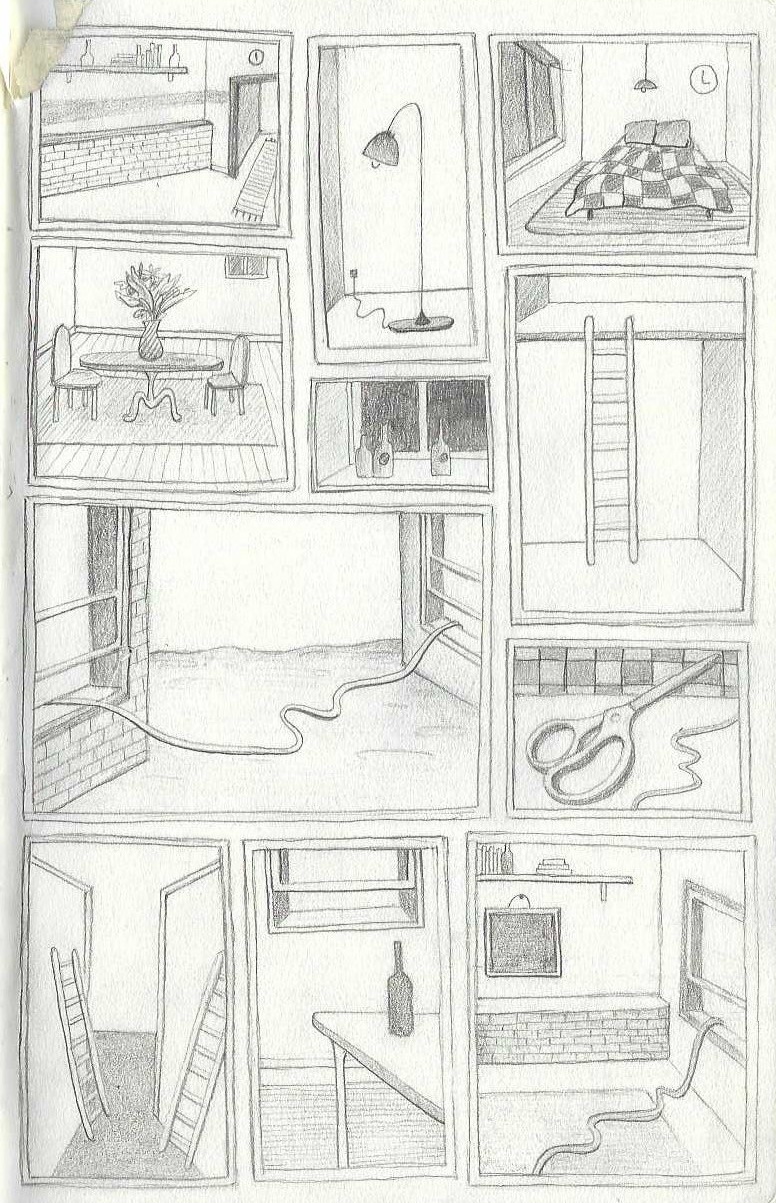
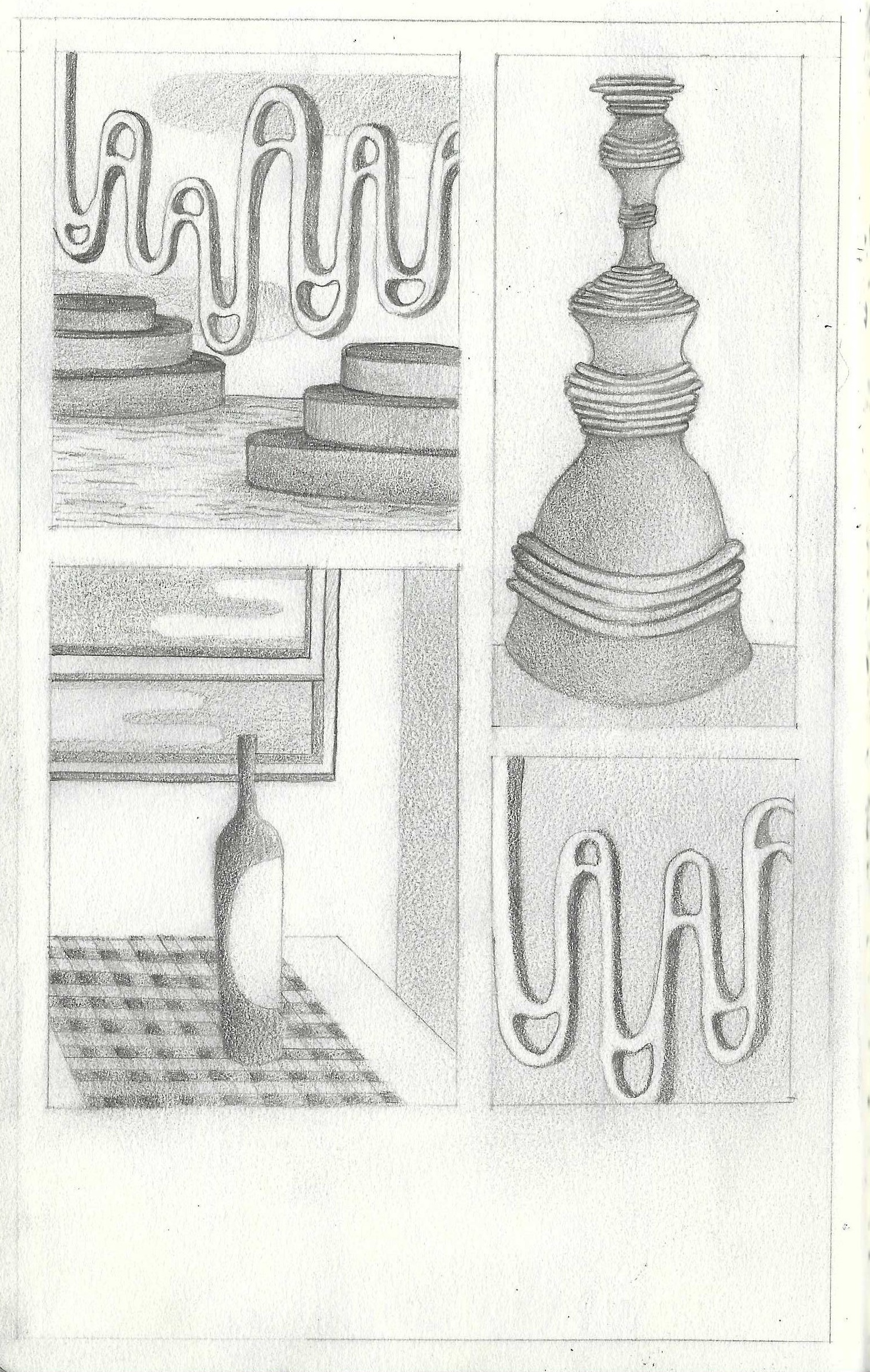
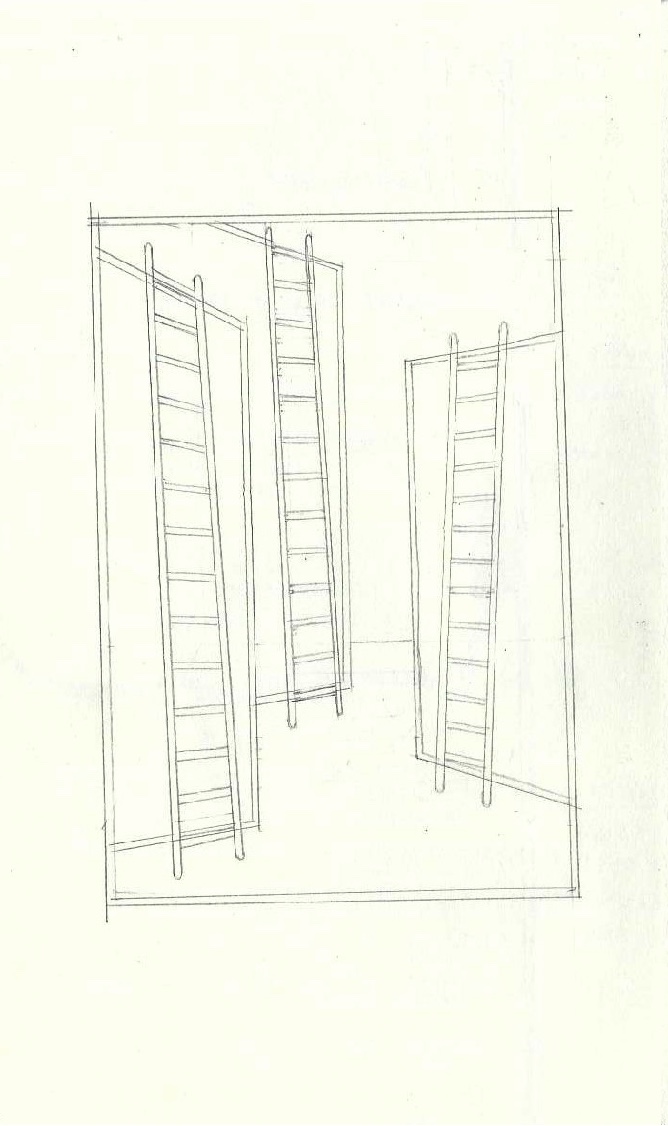
We fly through night snow on bald tires, pointingour broke teenager cars like dowsers.Big, rusting Chryslers, black slush-chokedwheel wells, sliding over medians, spinning outon roadways, squinting through frost.Done with prayers.
Hundreds of us fleeing suburbia, fleeingthe pleas of La-Z-Boy fathers,Where are you going, can’t you stay home one night?Dipping below 8-Mile a generation before Eminem,into a Detroit of soot and corrosion, desperateafter years watching boys kiss girls.
Caroming off darkened skyscrapers, shunnedby trees-of-heaven that leer from church steeples,sewer gas rising like what’s left of idled factory workers,heads down, names sewn onto shirt pockets,paper bag lunches.Every forsaken thing on display.
Not really rebellious, treading water Not really angry, struggling to breathe Not really scared, manic Not really growing up, being born
Over rooftops, down fire escapes, tearingat pavement, at fear, sensing a door off the alley,a crack leaking light as life-affirmingas an oil drum fire. Starvedsince twelve, now gorging at eighteen,we make of this place, a chorus.
You told me the clouds look like they’re kissing and turned expectant and I showed you that move he taught me with my tongue in your ear and then you turned it on me, you said people do what they want done to them, and you were right. Remember when everything I did turned you on? I used to love visiting you at work, your black shirt and hands knifing lemon rinds, a guy at the bar tucks my hair behind my ears and you said I could have gone home with him but you were so surly at dinner I nearly left you there. When I flew back from Rome I ran straight to your bed, he left in the middle of the night and I’d tighten my nails around your forearm as you snored so you couldn’t do the same. All summer we swam in stormwater runoff when your parents left town. You read me Anne Carson on the train back from our final date then held still so I could doze in your arms, at the arcade you’d tried to win me a stuffed Yoda in the claw machine, desire is no light thing, you bet.
Count five on your left. Count five on your right. Note that this doesn’t make you the center of the stage.
Don’t yelp when the youngest pulls at your hair. Don’t sob when the oldest leaves for town. If you do, they’ll cry as well.
Leave the door open. Seven and Eight come home late and they won’t sleep without you. But don’t leave too wide a gap, lest Nine and Ten catch a cold from the cross-breeze.
Feel free to let your thoughts wander down the starry lanes, but don’t even think about staying up. Count ten stars your window grants you the view of. Then get up before dawn and put Eleven back to sleep.
Keep the puppies away from the kids. You never know what things they touched with their paws. Reproach it when the older pup bullies the younger, the way you’d yell at Seven who quarrels with Nine.
Throw Eight a compliment when he overtakes you on his bike. Though you know the speed limit of your pram.
Don’t flinch when Ten spits his soup at you. Just keep feeding him until he finishes his noodles. If he dumps your phone in the bin, don’t fret, just pick it up and wipe it, though he’s been occupying it for the past two hours.
Never let the pram leave your sight while playing dodgeball.
Keep an eye on the ball, yes, but also on Eleven, or whoever that’s been carrying her for you. If she wails, pass the ball to someone else; go straight to her, lift her up and pat her.
Remember to be gentle, she can’t take the cathartic force you use when tossing the ball.
Stay.
Feel free to watch the ball from the side, now that she’s in your arms.
Smile at the younger girls who come up to you. Put the baby in the pram now, given that she’s dozed off. Braid the girls’ hair. And don’t forget to rock the pram with your feet while you’re at it.
Don’t talk about the pram when they ask you why you stopped going to school.
Talk about your grades. Talk about the classes that made you yawn for hours on end. Talk about your teacher – doesn’t matter, it’s not like she’s gonna hear you. Talk about your friends, how you’re in this together. Talk about playing catch. Talk about sneaking snacks. Talk about how these were the biggest reasons why you went to school.
Stop talking now. You don’t have to tell them everything.
Indulge in a trance if you may. They’ll stop probing once they see you stare at the postcards you’re clutching. Picture One and Two in them; find One’s silhouette among the pillars of Pantheon, seek out Two’s smiley face amid the bustling crowds in Bangkok. You know they aren’t really there, but at least they’re closer to those places than you are. Close your eyes just so you can forget about that. Picture the places in your mind. Now place yourself in any of them. No one can keep you from your whimsies.
Rise from the stool, Eleven’s crying on your back now. Coo her like you would the doll you loved as a child – which you still do.
Once she’s asleep, weep without shedding a tear. A moment of silence for the doll now resting somewhere in the valley, rotting away like the days before you could count to five…or perhaps vinyl doesn’t decompose?
Make good use of dusk. The light is strong enough to tell them that you’re around, and dim enough to hide your vestiges.
Sulk in Three’s empty bed. Nuzzle against her pillow, though it barely retains her scent. Wonder what One, Two and Three did when they were your age. Relish the moment in a room containing you, your sister’s pillow, a gecko, and a fly on the wall.
Be the fly on the wall when Four and Five demand your audit. Give a thumbs-up to Four’s latest invention, though you think it’s funny to install a siren on a motorcycle.
Swear internally at the lousy engines they’re hopelessly proud of. Cough out loud as you wrestle with the exhaust, but note that they won’t hear your protest from yards away.
Now close your eyes and recite the nursery rhyme Two has taught you. Check your phone and see if she texted. This way you’ll find out if she’s bluffing about her telepathic ability.
Throw a tantrum if she lied. Stomp a puddle. Kick a cobblestone. Elbow that tree you deem too frail to stand the tempest. Jump and pick that dragon fruit dangling from the branch over the fence. Crack it. Devour it. Don’t mind the seeds. Swallow them like how you swallowed the curse that almost spilled when Seven yelled at Nine, when Eight bumped into you and the pram on his bike, when Ten spat his soup on your new tee, when Eleven wailed just as you were dodging the decisive shot.
Now gaze at the trail once Four and Five are out of sight. Picture the way One, Two and Three would come scurrying down the same lane on New Year’s Eve. Sit with the thought and smile for some time. It’s better for your health than apples and maize.
Go back to the porch at moonrise. Count the younger ones before you go inside. One, two, three, four, five…
Six.
Don’t forget to count yourself this time.
The woods out back called us deeper where leaves circled down off the maples, where the brook we lay in all summer
had run in trickling tears— & now had stopped crying, its stone bed empty. We skipped from bank to bank
along its length like a zipper closing— up to the fast road where the water would slip beneath & the unknown world
on the other side was enough to stop us. We were listening that day for the croaking of frogs at the wrong time of year—
jelly jars in hand— little schoolgirls unschooled in mating dances & heard boots crushing on gravel
between the road and the sad yellow grasses of autumn. Watched shadows rolling & two men crossing
into our trees in t-shirts whiter than the flickering light in the lowering afternoon sun
—nothing in hand but those long guns they held loose in one hand as if tenderly crossing the street, kid in tow
—all that sort of love—but then the sudden lunge—like a leashed dog rearing. “Go home!” the old one barks, “or I’ll call the cops!”
& flicks that long barrel up & points somewhere toward us— somewhere in home’s direction. Time enough to see what you call
stature. See the plaid of his woolly trapper’s cap, flaps snapped up at attention, gray hairs poking out around his ears. Enough
time to see the younger one’s buzz cut & something like eyes hiding behind his black-rimmed glasses thick & opaque as bathroom windows.
Time enough to feel the weirdness of life on the other side of the gun—little squirrels. That hint of clarity. We turned our backs
to them & scattered like shot. It was something in the way we heard all the sounds— our feet blundering, twigs snapping, the wind across our ears—
to count on nothing but the mercy of a falling canopy surrounding us & feel what it must be like to a brook
rushing in springtime. Finding our way out to lawn’s edge where grass meets prairie, we fell sprawling breathless on its crewcut & laughed until the sun
went away & something other than childhood began to leave us cold.
Stop! yelled the angel,but the old man didn’t hear—it was windy,and at a hundred years oldhis hearing wasn’t what it was,neither were his reflexes.
So the knife was already falling,with all the weight of his faith in that hand.
The bound boy did not cry out.
Or if he did, it was carried on the wind,past his father, straight to God.
Then silence.
The ram stood in the thicket,tethered and useless,chewing on a thorn.
Oh, God said.
1
They say they see me in places I don’t remember ever having been. I seem to linger in the interstices not just of existence, but my own memory.
2
It used to be that people screamed. Now they just stare at me with goofy smiles.
3
I have been conjured into existence by sheer weight of historiography.
4
As proof of an afterlife, I’m surely something rather shabby. More glitch than glimmer?
5
Perhaps we’re crushed into existence by coastal shelves of humanity past, the pressure forcing us, fragments of many deeply flawed creatures, into visibility. Fleeting indications that something has been going deeply wrong for a very long time. I am a long way from myself and I can feel the others swarming around, into and out of me. Countless others. You can’t comprehend quite how countless.
6
They clothe me in outfits I never wore, which change as their perceptions do. Some make a great effort, others none at all. If my feet touched the ground, I’d be a walking anachronism.
7
For some reason they think I’m trapped within these walls. But where else would I go?
8
I don’t understand where I am. I was good and devout and minded my own business. This was not one of the options.
9
The other layers are forever with me and yet not. It’s as though I’m haunted. They are not simply existential, but also temporal and spatial. One might be one thing here, and another over there while also essentially the same. Perhaps it’s more a transfer between layers and tendrils. Or a matter of one part of the weave lighting up at any one time. Or several, like fireflies on a summer’s evening.
10
Expectations thwarted, good intentions forgotten, anger repressed, joy deferred, but instances of pleasure and ecstasy too, anything strong enough to leave a footprint. It’s all in there, maybe?
11
Their faces!
12
If there’s one thing I know, it’s this: when Death looks surprised to see you, for goodness’ sake stay right where you are.
13
Tap into the ancestral fear of wandering in the woods. We’ve pretty much cut down all the trees now so it’s hard to imagine, but these were hostile places full of the unfamiliar and potentially threatening. And it’s unquiet too, see? That’s another part of the trick. There’s always a racket going on in the woods with the chirping and the rustling and the gusting but the sounds are so alien it feels deathly silent. A third part is the knowing that no one’s going to come help you in a hurry because you can’t tell them where you are – even today, you don’t get signal. Which is why your abandoned mansion comes so in handy: dark, confusing corridors recreate that inaccessibility and disorientation, the creaking of floorboards, doors and windows, rustling behind the walls, the rushing of pipes: these are decent substitutes for the background noise of the forest. A forest that may well have been cut down to build the mansion. It all lays the groundwork for the sudden, unexpected jump. The fact said jump comes from someone who’s supposedly long since dead … that’s almost incidental. Back out in the woods you’d be almost glad to see a ghost – it means you might have someone to chat to. In the woods, they’re called naiads or spirits. Far scarier are worldly dangers like wolves or bears or snakes. Or just a malevolent tree root or dip in the ground eager to break your ankle.
14
When you think about it, we represent a triumph over death.
15
Triumph is probably the wrong word.
16
Boo, Boo!, Boo (emphasis on the first ‘o’), Boo (emphasis on the second), Booo, Boooo, Booooo (and so on).
17
But I want.
18
I can be used to fill an empty spot at a table, or stir an existential crisis in my son, I can even appear as an instrument of my own creation, but I am never returned to after my initial return. I am forgotten immediately after being so feverishly remembered.
19
I seem to be both harmless and deadly. It’s all a matter of perspective.
20
All it is is a dark corridor that stretches out before you with no way of knowing what’s at the end. But isn’t that everything?
I used to dream that moon crashed into the earthwhenever I’d have bouts of anxiety.
4th grade: Christmas concert where we were all sentenced to sing one solo line in front of everyone.
Little Carla Jean, rolled her turtleneck up over her face, tuft of blonde hair sproutingas she delivered the line. She left it like that while the rest of us whispered our lines.
That night, the moon fell from the sky. Crashed intothe tree lighting at Rockefeller Center.
Prom tickets on sale: All the boys linger in the hallways.Suavely leaning on something, chomping their gum too fast
or red-cheeked and sweating. A mine field from class to class.I am in love with a girl in the next town over.
The boy next door approaches, 2tickets sticking out of his letterman jacket.
That night, the moon-wearing a purple corsage around itLike a belt, smashed into the gym like a missed fly ball.
Thesis defense final question: One word to describe your overall theme.Is there a word that means: to make the moon stop falling? I don’t say that.
The department head shakes my hand, and I still feel like an imposter.What now, am I in charge of teaching? Asking someone these questions?
That night, the moon spies large over the Alumni,suddenly speeds towards us, they overturn chairs
trying to flee the graduation ceremony.But you can’t outrun the moon.
I am in Australia and my wife to be is driving us towardsthe Sydney Harbour Bridge. The radio Occasionally mentions
the super moon. I thought about the panic-dreams and smirked to myself.I’ve seen her 18 days out of this year. Impending separation
until immigration decides we’ve answered the visa questionsto their liking, are rich enough to support being in love,
have no terrorist ties, have paid every fee they can issue, maxedout every review time they can, this could take 4 months or years.
What will the dream be tonight? The moon crashes into our courthousewedding? The moon crashes while either one of us are in midflight
to the other? I laugh nervously as the bridge comes into view.The moon sitting behind it, the width of it.
“Wow.” she says as everything echo-drainsaround me and my body goes numb.
It’s growing as we drive. Once, when my grandmotherwas making egg salad she said, “What if science is just wrong and we find out later?”
I stare at it, the moon is a hard-boiled yolk. Is it later?What if science is wrong, if theories dissolve
and it just—hits us.
My anxiety is ruled by the moonand now yours will be too.
Is everybody seeing this?I check my phone.Is this a catastrophic event?Photos of it flood CNN’snewsfeed. I can hearshutters all overthe world cuttingit into slices.
It’s so bright that night can’t fall.
Is it displacing oxygen?I touch my neckMy heart rate must be170.Her hand reachesfor the radio dial, twists,She looks excited.Her mouth movesat half speed with the lyrics,Sisters of the Moon.
It’s a space rockwith nothing on it.Alan Shepard’s golf ballsCharlie Duke’s Family photo.We are spinning in spaceand can’t even feel it.We have lookedand can’t find a tree anywhere.It’s now bigger than the fucking Sydney Harbour Bridge.There aren’t birds on other planetsand we can’t even feel that,only when the moon is big.If we survivedriving into itI leave here,I leave her,in 3 days.
I am in the waiting room of mydentist’s office, waiting. The tworeceptionists are at the window; there’sbeen a collision out front on the street.Their awws andlook over there’sand the tst tst tst’scompete with the easy-listening radio.One of the women is reconstructing theincident as she imagines it playing out.Deciding who is who.The victim by her posture.The negligent by his.The sirens, slow to come, are coming.The front door opens.The receptionists return to their desks in unison.
Glaucio Aquila piloted Baby Blue’s baby blue 1973 Mustang 302 convertible down the Ventura, rear seat loaded with lavender Cattelyas it had taken him all morning to amass. He’d relieved Dottie’s on Sherman Way, Tina’s in Woodland Hills, and San Fernando Florist—way the hell up in the north Valley—of their inventory. All for Priscilla, who was feeling repressed. Or maybe she had said depressed?
Paul in a pup tent in their backyard could have had something to do with it.
“I had a dream,” she said rolling over to rub Glaucio’s belly the way she did every morning. “The house was on fire. I ran outside in my pajamas and Paul said, ‘What’s the ruckus?’ I told him, ‘The house is on fire.’ He said, ‘I see the exterior motion sensor lights that just turned on. I see the fluorescents flickering in the kitchen. I see the lights over on the 405. I see no fire.’ I told him, ‘You think everything that isn’t your own illumination is insignificant.’”
It was true. Paul had a tendency to focus on himself.
“Promise,” he told Priscilla. “He’ll only be here for a while.”
But then he thought of Paul’s tendency to extend everything past its natural limits. His correspondences, for example, could go on ad nauseam, beginning with him describing some slight he had experienced in the world at large, devolving into a disquisition on the nature of humiliation, segueing to a brief history of the trope of the scapegoat, reminding him of a trip he took to Germany in which a dead end street became symbolic of the plight of the capitalistic world, leading him to an insight into his relationship with his father (R.I.P.) and a revisiting of a long-running fight he had with his siblings over the disposition of family funds.
Thus the oblation of orchids, their delicate stems and blooms necessitating that the lid stay on, even though, on an April day in Southern California, the smog at a bare minimum, he should have been blazing down the freeway with the wind whipping his pate.
Paul in the backyard was, it was probably true, a transgression too far, a thing to be atoned for. Priscilla said, “I would have thought given everything that’s happened you’d learned to get a date certain for his EDT,” the night she got home to find Paul drinking a beer by the pool. “I know, I know,” Glaucio said, “But if you can’t be there for a friend in need, what’s your friendship good for?” Priscilla said, “Are we sure ‘friend’ is the right term for him?”
Priscilla’s opinions of Paul:
Inconsiderate
Narcissistic
A DSM-V category of his own (provisional, not reimbursed for by insurance)
Freeloading
Unappreciative of all that Glaucio had done for him over the years
Jejeune
Paul’s opinions of Priscilla (never voiced, but inferred):
Self-centered
Inferior in the intellect department
Shallow
Unappreciative of all that Glaucio had done for her over the years
Back at Brooklyn Tech, Glaucio and Paul had aspired to glory, hanging on the every word or scribbled blackboard equation of Mr. Zechariah with the plastic pocket guard, Mr. Aretas, who looked like a young Peter Lorre, Mr. Nikita, whose nickname was Khrushchev: the nerdier the better, the better to lead them to the hallowed halls of NASA and engineering launches to the Moon.
So what happened there?
Too much blotter acid in Berkeley for Paul, there as an eager supplicant when Owsley was handing out the squares. Lunar voyages less appealing, after that, than those to some internal maria of nectar, tranquility, storms, forgetfulness, such that one day he came back from a grad class in post-classical mechanics, tried to feed his roommate’s dog, spilled a 40-pound-sack of kibble on the linoleum, decided he needed a drink and a bath, not necessarily in that order, and be-toweled, ankled down the rickety steps of the clapboard rental house onto College Avenue, where he joined a passing band of Hare Krishnas. It had been a long road back from there.
As for Glaucio, he had determined that astrophysics required too much effort, that internal combustion engines—your 351 Cleveland Q code, SD-455, 455 stage 1—held quite enough thrust for him, no need to escape Earth’s gravity. In addition, for reasons he couldn’t quite fathom, literature assumed a far greater pull than differential equations, an epiphany delivered by his reading of The Crying of Lot 49. Thus his cross-country transposition to the land of Yoyodyne for Ph.D. study at the USC English department. Whence he had come to judge the quick and the not-so-quick off the line in the confines of the freshman composition classroom at Northridge.
In the rearview mirror, he could see it before maybe it saw him, but like lightning from behind came a rev and another 302, now beside him, a gleaming Blue Glow, top down. The mustachioed driver gestured with a thumbs up, meaning, “Open ‘er up! What fool rolls their Stang with the soft top closed on a day like this?” Glaucio jerked a thumb over his shoulder to the back seat, not sure he conveyed his full meaning in regards his tender cargo as the guy grinned and gunned thrumming on by.
No sign of Priscilla when he rolled into the drive. As forecast, she’d hitched a ride down to the Boulevard with their neighbor Betty for her dental appointment. Come to think of it, the Cattelyas could also serve as thanks for sharing her car while his was in for crankshaft grinding and balancing, best left to professionals with the right tools, even with his proficiency.
After much halloo-ing, he located Paul in the guest bathroom. Add that to the DSM-V description: over-fastidiousness with regard to bathing, although Glaucio always figured he performed tasks not necessarily related to hygiene when closeted thusly though preferred not to think too hard about it. Maybe it was preferable to Paul floundering around in the grand-piano shaped pool seeming just on the verge of drowning.
Eight trips to carry the flowers in, each in a distinct container, the names of which he had enquired about at the shops and written down with care: a white ceramic cylinder on a gold-painted base; an alabaster cachepot; a woven sweetgrass basket; a green and white chinoiserie planter; a Cotswold long pot; an hexagonal zinc receptacle; an antique terracotta tureen; an egg-shaped green-glazed planter; a paisley printed burlap bag; a small wooden trug; a pressed-glass bowl; a cast aluminum basket; a mug with butterflies (his least favorite); a Mason jar; and a small lath crate. Arrayed on the kitchen counter, they looked like a Greek chorus waiting to comment.
“For Priscilla, not for me, I assume,” said Paul, bare feet slapping vestiges of bathwater across the tile.
Glaucio felt a stab of anger. Surprised, he said, “Tell me brother.” Waited a beat, said, “Tell me something brother.”
Paul raised his bushy eyebrows. Stared. Goggled. Shook his head. “Tell what?” he said.
“Tell me what you think you’re doing here.”
“Exponentially? As in, distributed according to a given time constant?”
“I mean, for how long and why?”
Paul pressed his lips together.
“Because, this isn’t Berkeley in ’77. This isn’t Stuart Street. You can’t just camp out here for six years chanting and doing yoga and awaiting Krishna consciousness.”
“Cruel.”
“No, my friend. Who gave you the dough to retrieve some semblance of a life after you realized you weren’t escaping the cycle of life and death so easily? Who let you live on the sofa in Studio City for long as it takes to gestate a whole damn human without once hustling you to figure it out? That time is past. I should have asked in advance, but I’m asking now. No, I’m telling: a couple more days, max. Then you find another option.”
“Bad data points, as always,” said Paul. “You never even realized how much you were gaining. Bhakti, man. I gave you selfless service. Plus, you been taking yours. Those four squares her family owns outside Dodge City. Think you’d be in this joint otherwise?”
Glaucio stood there. He laughed. “Forget it,” he said. Took out his wallet. Pulled out two bills. Extended them.
“A pair of Benjamins?” said Paul.
“Your ticket out of here,” said Glaucio. “Bus leaves in 15.”
“You only ever think about yourself,” said Paul.
“You can even take the pup tent if you want it,” said Glaucio.
The orchids, in all their hues, all their stages of bloom and fade, appeared to be nodding, dimly looking on.
By the time he heard the neighbor pull into the cul-de-sac, Glaucio had supervised Paul’s exit (backpack bobbing downhill), cleaned the bathroom, bagged empty chip bags and beer bottles from around the pool and back lawn, packed up the tent, and put Spinout on the turntable. He felt badly, fleetingly, but he wasn’t, after all, his brother’s keeper. So that when Priscilla walked in the door, the arrayed orchids, wavering slightly as the sound waves laved them, looked like they were singing “All That I Am” to her. “For you, Baby Blue, for no reason whatsoever,” Glaucio said with a sweep of his arm, hoping his gesture encompassed not only the flowers but also the absence of a pup tent in the back yard.
Priscilla seemed to register what he wanted her to register, and turned her gaze firmly to the display. “Aww, Glaucio,” she said, “you are and always will be the light of my life.”
Cynthia Yatchman is a Seattle based artist. A former ceramicist, she apprenticed with master potter, JT Abernathy in Ann Arbor Michigan. After receiving her B.F.A. in painting (UW) she moved from 3D to 2D where she has remained ever since. She now works primarily on paintings and prints which are housed in numerous public and private collections. She has exhibited on both coasts, extensively in the Northwest, including shows at Seattle University, SPU, Shoreline Community College, the Tacoma and Seattle Convention Centers and the Pacific Science Center. She is a member of the Seattle Print Art Association, COCA, Women Painters of Washington and Puget Sound Group of Northwest Artists.
Lisa Shugert Bevevino teaches French and Latin language and literature at a small university in the Midwest. She helps people belong, writes poems, creates art books, sculpts, and organizes free writing groups for community members, children, and fellow writers in person and on zoom. She works for access to enough clean, safe water for everyone. She lives and loves with her partner, their three children, and cat in a house with green shutters on a hill covered with trees. Bevevino.com.
Bryan Kim-Butler is a research assistant at Yale Law School. He was a Ph.D. candidate in English at the University of Michigan, specializing in early and 19th-century American literature. He also holds a J.D. from Columbia University. He lives with his husband in southeastern Michigan. “The Fish in the Dark” is his first fiction publication.
Erica Tolin is a Pittsburgh-based writer, theatre artist, and Realtor. She teaches Voice and Speech for actors at Point Park University, and is part of the Madwomen In The Attic writing workshops at Carlow University. She lives in an old house with her two kids and four cats.
Eva Hale is an Australian poet currently based in Naarm/Melbourne. Her works often explore themes of trauma, poverty, social politics, sexual assault, grief, the mother-wound, and the shapeshifting reality of surviving in an unstable world. She is currently in the early stages of drafting a literary fiction novel and dilligently working on her upcoming poetry collection Everyone is Happy But Me: poems from my early twenties.
Judy French is a California-based writer whose work has appeared in The Colorado Review, Nano, Vestal Review, Opium, and other places.
Ilana Gustafson is a Cuban American writer and theater artist who has created original work with experimental companies ARTEL, Duckbits, Highways, City Garage, Rachel Rosenthal Company, and others. She was living in the foothills of Altadena, California with her partner when they lost their home and belongings in the January 2025 Eaton Fire. She is an emerging poet whose work has been published with Muse Pie Press and Griffel.
Tania Costea is an emerging artist based in Amsterdam. Working intuitively and often from memory, she creates expressive paintings and drawings that explore atmosphere, embodiment, movement, and emotional presence through colour, texture, and form.
J. Alan Nelson is a poet, journalist, lawyer, actor, and nominee for a Pushcart Prize, Best of Net and Best Microfiction. He has recent publications in Rattle, Sky Island Journal, Dunes Review, Permafrost, Bookends Review, New Verse News, Cagibi, Heavy Feather Review, Touchstone, California Quarterly and The MacGuffin. He played the lead in the viral video “Does This Cake Make Me Look Gay,” the verbose “Silent Al” in HBO’s Emmy-winning SXSWestworld,” and narrated New York Times videos on AIDS programs in Africa.
Lindsay Hickman is a writer, photographer, and educator based in Myrtle Beach, South Carolina. She holds an MFA in Creative Nonfiction and teaches writing at Coastal Carolina University and Southern New Hampshire University. Her work explores family, memory, caregiving, and the changing relationships between people and the places and objects they hold close.
Eros Livieratos (He/They) is a Greek-Belizean writer & artist whose work focuses on the intersection of identity, aesthetics, and capital in the Anthropocene. Eros has published poetry, fiction, non-fiction, comics, photography, and film score work. They can usually be found making harsh noise & screaming in your local basement.
Brian Selman writes memoir and personal essays exploring family, memory, and identity. His unpublished memoir, Through the Briars and Brambles, was shortlisted for this year’s Bridport Prize in Memoir.
Gabrielle C. Nielsen is an illustrator and artist based in Baltimore, MD, pursuing a BFA in Illustration and an MAT at the Maryland Institute College of Art (MICA). Working across editorial illustration, sequential art, background design, and mixed media, Nielsen's practice synthesizes observed modern life with surreal, imaginative dimensions. Driven by a desire to document transient moments and physical artifacts before they fade, she approaches the sketchbook as both an archival ledger and an experimental testing ground. Nielsen's illustrations have previously appeared in Beaver Magazine and The Baltimore Banner.
Michael Conboy’s writing has been included in the poetry journal & Change, the quarterly Three Fold Press, the Supergay Detroit blog, the UCLA literary journal Southland Alibi, and the queer history zine Chromatic Aberrations. He recently finished his debut novel, HOMO DIPSO MANIA. Raised in the Midwest, Conboy now lives with his husband in Los Angeles.
EMB’s favorite poets are Richard Siken and Hannah Sullivan.
Wenxi is currently a high school student and a writer of suspense, fantasy and poetry. She started off with writing fantasies. She once topped her class’s typing contest after typing stories every day. Growing up, her works were influenced by the books she read and the world she ventured in. Not long ago she fretted over the blank page that followed the biggest cliffhanger she wrote years ago, and she’s been hoarding inspirations to finally fill it in. If you run into Wenxi at dusk, chances are she’s either reading, writing, dancing, humming, or busy persuading a moth to exit her room through the window ajar.
M. Cortney Daniels finds her muse as an aging poet and adoptee in the psychological hum of humanity and its perpetual paradoxes: choice/coercion, war/peace, violence/gentleness, power/futility, nature/nurture. Her recent work has appeared in many journals and her poem, "Blue Grief," in Soul of Our Soul, an anthology on the Israeli/Palestinian war, was nominated for a Pushcart in 2025. Her chapbook, Lineage, is long-listed for the Headlight Review chapbook prize. With an MFA from Iowa, she co-edits Well Versed, the annual anthology of the Columbia Chapter of the Missouri Writers Guild. She lives in Columbia, MO.
Rob Marchini was born and raised in London but settled in Yorkshire thirty years ago. He writes poetry to ease the pain of full-time employment in financial services and of being an Arsenal supporter. “Too Late” is his first published poem, with another to follow in the forthcoming anthology For Those Who Despair.
Kit Maude is a translator based in Buenos Aires.
Maranda Greenwood is a writer and poetry instructor in Vermont. She holds an MFA in Poetry. Her work can be found in; Driftwood Press, Sundog Lit, Eunoia Review, White Stag, Cathexis Northwest, Beyond Queer Words and other journals and anthologies. She was a Vermont Poetry Society Prize Winner and a finalist in the Robert J. Demott Short Prose Contest. In her free time, she collects Zoltar tickets.
Lenora Steele's poetry has been published in: Santa Clara Review, Atlanta Review, Event, TNQ, Eastern Iowa Review, The Fourth River & others. She lives where the dykes hold back the red waters of the Bay of Fundy in, Truro, Nova Scotia, Canada, on the unceded territory of the Mi’kmaq people, once known as, We’kwampekitk, the Land Where the Waters End.
Gina Maranto is a graduate of Pomona College ('77) and The Writing Seminars at The Johns Hopkins University ('80). She is a prize-winning science writer who published one of the first national magazine cover articles on climate change in 1986. She taught for 21 years at the University of Miami, where she ran the English Composition and Ecosystem Science and Policy programs. She has returned to writing fiction after many years and recently had a story published in BlazeVOX Spring 2026.