I choked on a sob in mysoup today, its carrot ginger heatan unspeakable kindness.
These days, I findthat warmth canoverwhelm me (even sippedfrom wooden spoons).I well up and blur with thered window rain in ahot-seated Subaru.
When I was seventeen andpre-prescription, I used to lieclothed in the creek, in itseasing-open elbow, whereneighbourhood dogs wentto drink. I think somehowwet denim gavesense to my sickness, its bluean explainable weight.
These days, I findsleep sinks like a silver dollarin the sand. I dream I’m runninglate to a fundraiser. I’m the musicalact. Then a cat digs its clawsin my face. Dream pain iseasier, rivering through.There’s no sense in whatthe sieve keeps, justsolidity and size.
These days, this city feelssmall. There’s a curly-headed womanon the bus, on a loud phone call:“I searched all overhell’s half-acre, and stillno spring onions.” (Andhaven’t we all?)
I can’t take the coldin the river anymore. I don’t knowhow to tell my mother thatthere’s no way to know if your jean-weight willsink you until you’realready in the riverand that’s why Ican’t have children.
These days, everything’s easyto swallow. Two red pills, one cream-hued.A soy latte. Three to eight crossword gamesso I don’t hear the news. Sometimessincerity makes my stomach hurt, likea sweetness I can’t quitedigest. I guess that’s whyI smile like the cat; why Ican’t have children. The claws.
I can’t let the coldtouch my teeth anymore. I likedpoker games best before I knewwhat we were playing for.
Am I river or absenceof rock?Am I right? Do Iwant to be?
Nearly everybody has apologies that are never spoken.
The father who died before making the phone call. The ex-wife who wrote the letter but never posted it. The surgeon who cannot tell one patient they made the wrong decision. The school bully who is now seventy-three and still wakes at 3 a.m. remembering a name he cannot find on social media. The child who only understood their mother’s loneliness after she developed dementia and stopped recognising them.
These apologies accumulate. They gather in the gaps between what was said and what should have been said. They do not disappear. They simply wait.
Franklin’s office occupied a small, declining high street that had once thrived and now subsisted on charity shops, vape outlets, and the stubborn inertia of businesses too tired to close. His premises were indistinguishable from any insurance broker you have ever ignored: faded carpets the colour of weak tea, filing cabinets with handwritten labels, framed certificates from accreditation bodies that no longer existed, a brass bell on the counter that no one ever rang, and shelves of thick paper files whose contents had not been touched in decades.
But if you looked closely—if you had the patience to stand quietly and let the room speak—you would notice things.
A shelf near the back, labelled Undelivered. The folders were thin, some barely containing a single sheet. Another shelf, higher, labelled Accepted. Those folders were thicker. Some had been there so long the paper had yellowed to the colour of old bone.
A cracked photograph in a cheap frame. Two children, a boy and a girl, standing on a riverbank. No names. No date. The girl’s shoelace was untied.
A box containing wedding rings. Seven of them. Each in its own small envelope. No names. No explanations.
A child’s drawing. A house with a crooked chimney. A stick-figure family. The sun in the corner, smiling. The word “sorry” written in unsteady capitals across the bottom, one of the letters backwards.
Franklin did not know the stories behind these objects. He did not need to. He was not a therapist or a priest. He was a broker. He handled liability. He understood that some debts could not be paid in currency, only in the currency of acknowledgment.
His specialism was a kind of insurance. Not the kind you took out against car accidents or workplace injuries. The other kind. The kind that accumulated when you failed to say something, and the window for saying it closed, and you spent the rest of your life paying interest on the silence.
Most clients walked out lighter. Some walked out with new policies they hadn’t expected. Some walked out having discovered they had been carrying the premium for decades without knowing it.
Elena arrived on a Tuesday afternoon when the high street was quiet, and the rain had reduced the world to grey watercolour. She was in her early sixties, dressed in the careful neutrality of someone who had long ago stopped expecting to be noticed. Her coat was sensible. Her shoes were practical. Her hands, resting on the counter, were the hands of someone who had spent decades gripping something too tightly.
Franklin looked up from his ledger. He did not speak.
“I want to arrange a policy,” she said.
He waited.
“I want to apologise to someone.”
He waited.
“To myself,” she said. “The nineteen-year-old version.”
Franklin set down his pen. He did not say it was unusual. He simply inclined his head, a small gesture that acknowledged the weight of the request without adding commentary.
“Please,” he said, and gestured to the chair.
She sat, unbuttoning her coat with slow, deliberate movements. The rain tapped against the window. A car splashed through a puddle somewhere beyond the glass.
“Tell me about the policy you want,” Franklin said.
So, she did.
Her younger brother had died when she was nineteen. His name was Daniel. He was seventeen. He had gone swimming in the river on a day that was too warm for May and too cold for the water to be safe. She had been the one who said, “Go on, I’ll catch you up.” She had not caught up. She had stopped to tie her shoelace. By the time she reached the bank, Daniel was already under.
The official account was an accident. The family accepted it. They had to. But Elena knew the truth. She knew that if she had not stopped, if her shoelace had not come undone, if she had simply run a little faster, she would have been there. She would have seen the current. She would have shouted. She would have pulled him back.
Instead, she became the Keeper of the True Version—the version that no one else would speak aloud, the version that lived in her chest like a second heart, beating its cold rhythm through every year of her life.
“For forty years,” she said, “I have been apologising to Daniel. I have apologised to my mother. I have apologised to my father. I have apologised to the river. But I have never apologised to the person who actually needs to hear it.”
“Your nineteen-year-old self.”
She nodded. Her hands were trembling now. “She spent a lifetime believing it was her fault. She carried a dead boy’s name in her lungs. She never got to be anyone else. And I—” Elena’s voice wavered. “I have been so angry at her. So ashamed of her. I treated her like a criminal. And she was just a girl who tied her shoelace on the wrong day.”
Franklin was silent. The rain continued. The clock on the wall ticked.
“The policy requires collateral,” he said. “Something from that day.”
Elena’s hand went to her handbag. She opened it. She searched. Her fingers moved through the contents—tissues, keys, a small purse, loose change. Nothing.
“I don’t have it,” she said.
Franklin did not respond.
“I threw it away,” she said, but her voice was uncertain. “Years ago. I remember throwing it away.”
She kept searching. Her hands were moving faster now, more urgently. The contents of the bag spilled onto the counter—a lipstick, a pair of reading glasses, a folded receipt from a supermarket. Nothing else.
Then her fingers stopped.
There was something in the lining. A small bulge she had never noticed. She pressed the fabric and felt it—something thin, flexible, the length of her hand.
She worked the lining loose with her thumbnail. A small gap opened. She reached inside.
She pulled out a shoelace.
White. Frayed at one end. Stained with mud that had dried forty years ago. She stared at it. She had no memory of putting it there. It had been waiting, tucked behind the lining of her purse, carried with her every day of her adult life.
“I didn’t know,” she whispered. “I didn’t know I still had it.”
Franklin looked at the shoelace. He did not reach for it. He simply looked.
“The liability has been accumulating for forty years,” he said. “The premium is the shoelace. The settlement—if you choose to make one—is the apology itself.”
“What happens after?”
“The claim is closed. The debt is paid. You walk out of here no longer owing the past anything.”
He opened a drawer. He removed a small velvet pouch. The fabric was worn, the drawstring frayed from decades of use. He placed it on the counter.
Elena looked at the shoelace in her palm. She looked at the pouch. She did not move.
“You don’t have to decide now,” Franklin said. “The offer will remain.”
“No,” she said. “I’ve been deciding for forty years.”
She placed the shoelace into the pouch. She tied the drawstring. She slid it across the counter.
Franklin caught it. His fingers closed around the worn velvet. He nodded once.
Then he did nothing.
He simply sat, his hands resting on the pouch, and waited.
Elena sat opposite him. The rain tapped. The clock ticked. Neither spoke.
After a long moment, Franklin said, quietly: “Close your eyes.”
Elena closed them.
She heard nothing. No rustle of paper. No drawer opening. Just the rain, and the silence, and the faint, steady rhythm of her own breathing.
Then the temperature shifted. The damp chill of the high street faded, replaced by something warmer, hazier. The sound of the rain changed—became softer, further away, as if she was hearing it through a wall. She smelled grass. She smelled river water.
When she opened her eyes, the office was gone.
She was standing on a riverbank.
The light was golden. The kind of light that only exists in late spring, when the world is still tender and the air smells of new grass and the day stretches ahead like something that might still be saved.
A girl sat on the grass nearby. Nineteen. Dark hair pulled back. Jeans with a small tear on one knee. A t-shirt that said something about a band Elena had long forgotten.
Elena noticed things she had not expected to notice.
The girl’s trainer was untied. The same shoelace. The same white lace, trailing in the mud.
Her fingernails were chipped. She had been biting them.
There was a faint bruise on her forearm. Elena did not remember where that came from.
The girl was crying. Not loudly. Quietly. The way you cry when you believe no one is watching.
Elena sat down beside her.
The girl did not look up. The river moved past them, slow and indifferent.
Elena was silent for a long time. She watched the light on the water. She remembered this day. The heat. The way the grass had scratched her legs. The sound of Daniel’s laughter, already fading, already gone.
“I know you,” Elena said. “I know what you think you did.”
The girl looked at her. Her eyes were red. She was so young.
“I should have been faster,” she said.
“You were nineteen,” Elena said. “You stopped to tie your shoelace. That’s not a crime. That’s being human.”
The girl shook her head. “He died.”
“Yes. He did. And you carried him.” Elena paused. “Not because you had to. Because you loved him. And guilt was easier. It made you feel like you could have changed it.”
The girl stared at her.
“I don’t know how to stop,” she said. “I don’t know how to put it down.”
Elena reached out. She touched the girl’s hand. The girl’s fingers were cold, but they warmed slowly, as if the heat was travelling backwards through time.
“You don’t have to stop,” Elena said. “You just have to stop believing that the feeling is true. You were a girl. You are still a girl. And you are allowed to forgive the person you were.”
She reached down. She took the girl’s trainer. She began to tie the lace.
The girl watched her.
“It’s not your fault,” Elena said. “It was never your fault.”
She tied a perfect knot.
The girl opened her mouth to speak—but the riverbank dissolved. The light faded. The scent of grass gave way to damp carpet and old paper.
Elena was back in Franklin’s office. Sitting in the chair. Her cheeks wet. Her hands empty.
Franklin was watching her. He did not ask how she felt.
He slid the velvet pouch back across the counter.
Elena opened it. The shoelace was inside. The mud was gone. The fraying had softened. It looked like any other shoelace.
She tucked it into her pocket. She stood. She buttoned her coat.
At the door, she paused.
“I was only nineteen,” she said.
It was not a question. Not a plea. A statement. As if she was only just beginning to believe it.
Franklin nodded.
The bell on the counter rang once.
Elena walked out into the rain. The high street was wet and ordinary and full of people who had never apologised to themselves.
Franklin closed his ledger. He wrote a single line in Elena’s file: Claim settled. Premium returned. Liability discharged.
He placed the file on the shelf labelled Accepted.
Then he looked out the window.
Through the rain-streaked glass, he watched a woman pause on the pavement. She had just stepped out of his office. She was standing still, her coat collar turned up, the rain falling around her.
She looked down.
Her shoelace had come undone.
She bent. She tied it. Once. Carefully.
She straightened. For a moment, she did not move. Then she smiled. A small thing. Almost invisible.
She walked on.
Franklin watched her go. The rain continued. The street continued. The ordinary, unremarkable world continued.
He turned back to his desk.
The velvet pouch was still there. He opened it. The shoelace was inside. It was knotted now—a perfect double bow, tied with care.
He did not remember tying it.
He placed the pouch back in the drawer. He did not close it fully. He left it open, just a crack.
A young woman entered the office. She was holding a photograph. She looked uncertain.
Franklin looked up.
“Are you here to arrange a policy?” he asked.
She nodded.
He gestured to the chair.
My mother’s Aunt Ida began to have no memory before I was bornMy mother took my toddler-aged older sister to visit Aunt Ida one last time neither Aunt Ida nor toddler would remember itThe last meal at Aunt Ida’s was eaten on used plates stained with egg yolk they drank from delicate teacups with bright carmine-red old-lady lipstick smudged on the rimsThe dishes were put away filthy as was Aunt Ida asked again if my mother had eaten yetAs if their linen napkins were not caked with grease and crumbs dotted with blood spots from Aunt Ida’s unkempt gumsTo my mother it was important to have something happen even in the absence of memory: this the gift of her presence to her oblivious Aunt Ida
All her childhood my mother presupposed her family’s memories in evident lineal scars:
insuppressible tremors chronic dysesthesia perpetual coughs
Each affliction insufficiently hidden by the conventional methods:
morning inebriation early evening stupor afternoon cruelty
My mother begins to have no memory or rather she remembers other ways things happenedMy mother is no longer tethered to facts or sequenceMy mother is only sure it is important to know something happened even in the absence ofmemory: this the gift of repression she gives to her diminished self.
My whole childhood I listenedfor it, not knowing exactly what Iwas listening for, or the shape it makesin air or in the vacant stare of my brotherwho died before I was born but seemed stilla presence in our house. I thought I wouldknow it when it arrived, and was afraid.“Those precious years,” a neighbor said,patting me on the head, yet nothing was preciousthen, nor certain, nor jinxed—just there, one calendar page at a time,the calendar of impossible vistas in a closetby the back door.I saw my brother there more than once,a brief presence before I closed the door.It was unsettling, especially the first time I saw himthere, but after that he was just a feeling,unfortunate for a child my age.I remember his eyes, which were large,which seemed a shape in air, but not the oneI was looking for. When I told my mother aboutmy brother in the closet, she said I know.
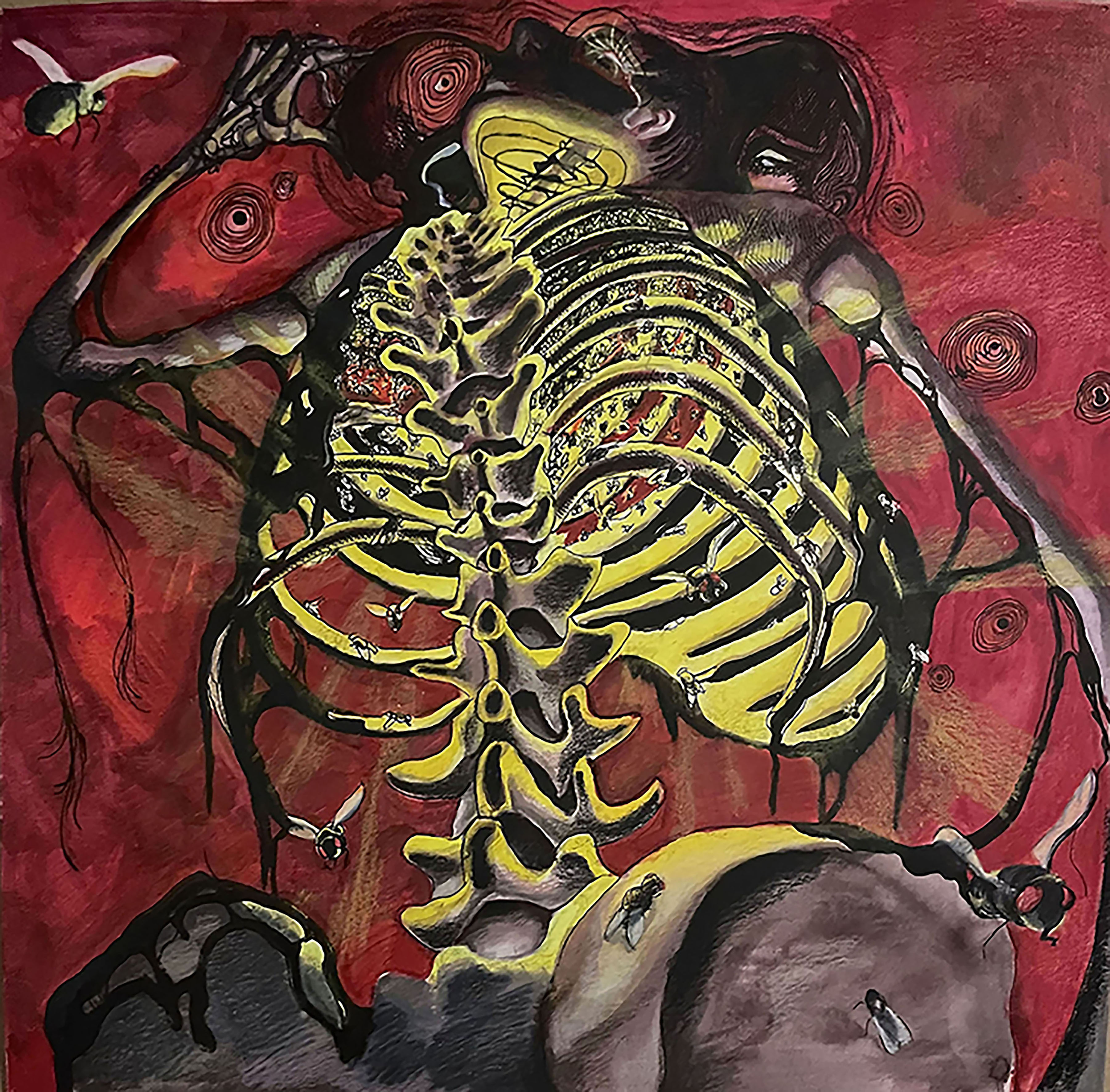
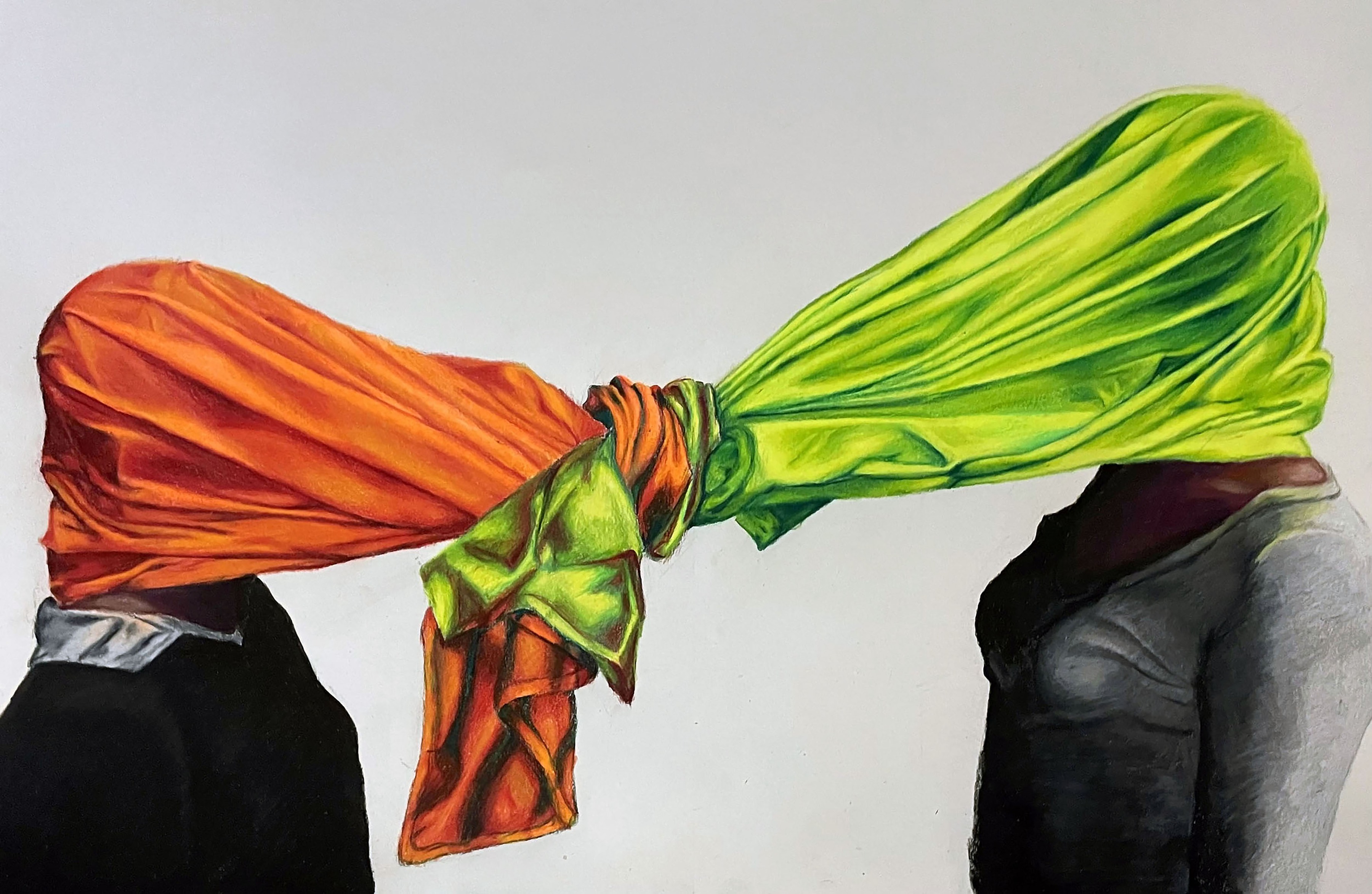
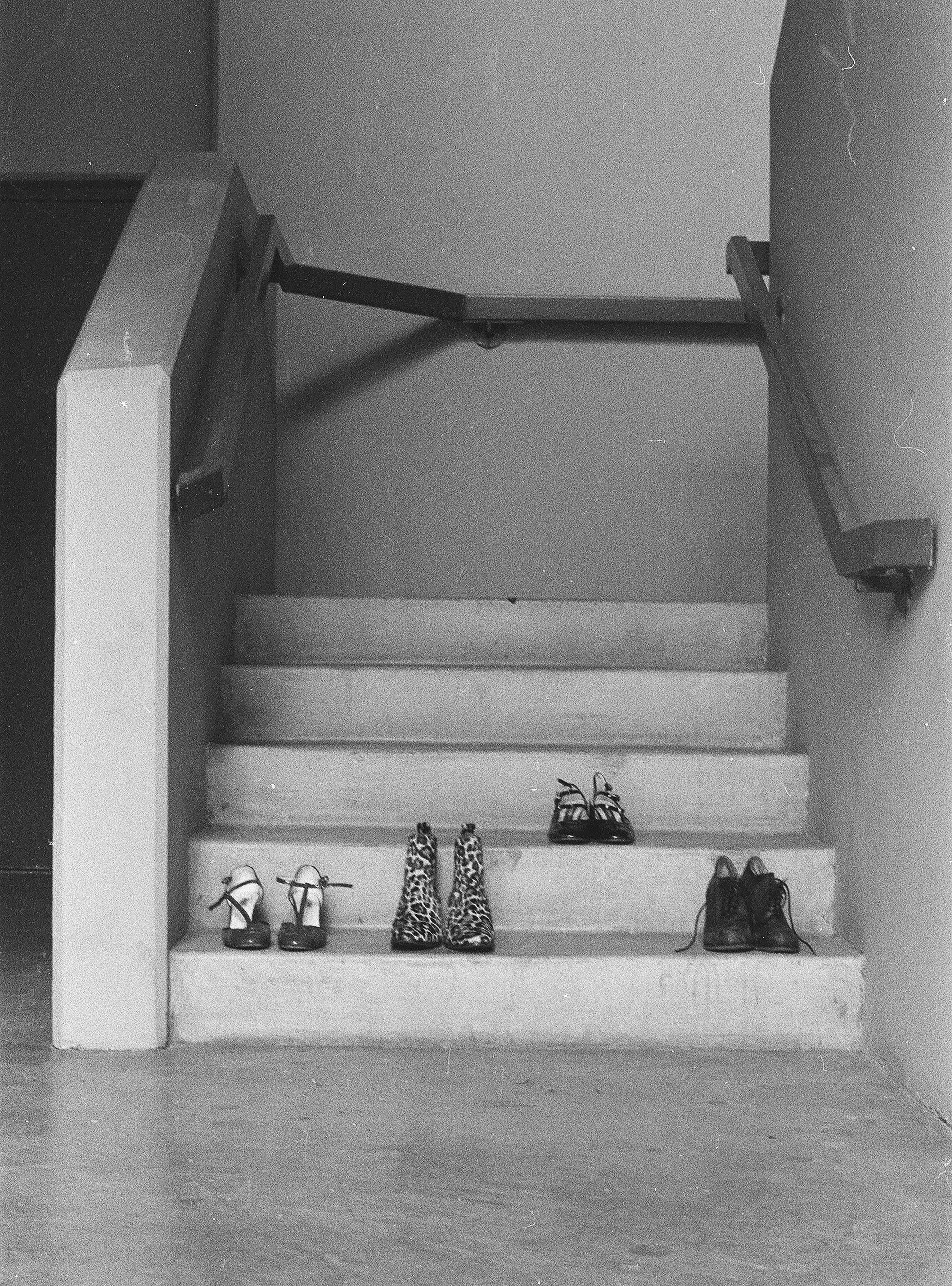
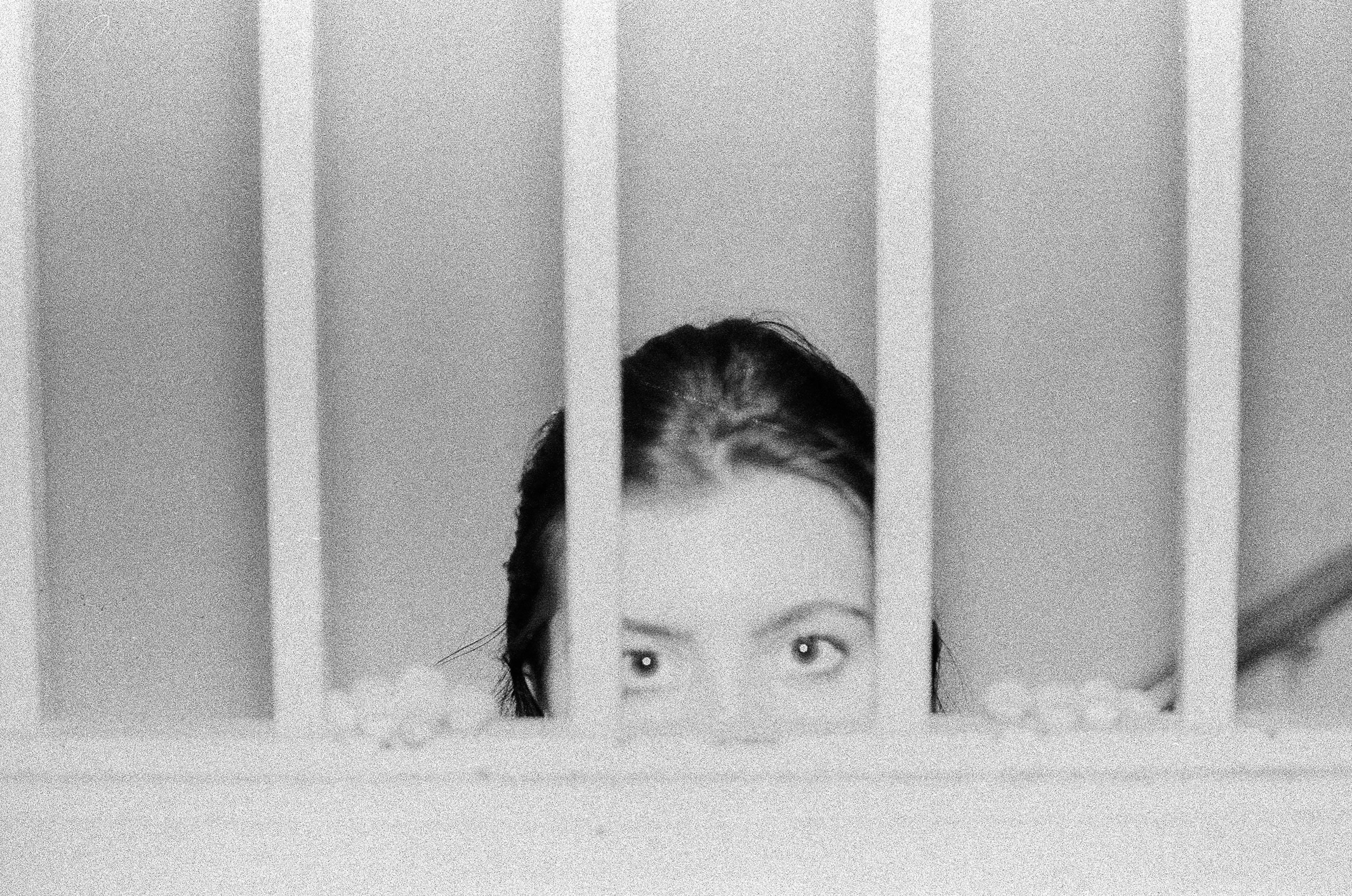

after Paul Tran
Sun in Capricorn
Water broke inthe mountain'shigh summit.Descended pastthe train loop,the firstbornarrived onthe flat SanJoaquin valleyfloor. A junior.Then one cityto anotherto a desert toa church inthe concretejungle. The sonbecame a mansitting. Thechurch flooredwith officersaiming. Hishands reachedfor his phone.Water thendesert then fire.A trainwreck.They firedfired fired. Thechurch becamea grave.
Moon in Gemini
He flirtedwith life.He movedaround,breathlesswith a need.His forte wasthe word.He tendedtowards theintellectualto detach asif it were alla story. Hedesired to fly.His denialof emotionbecamedefenseagainstcloseness.He had atendency tofidget if hestayed fortoo long.He tattooedforever youngon his rightbicep. Histime wasspent.
Rising in Sagittarius
This year a cakecould havethirty-eightcandles, asDecember getscloser, I dreamwhat wishesbrother might'vemade had hisphone numberstill led to hisvoice, the scruffof stubble againstthe mic, he'dsay, Rememberme? I'd justsob, I love you,he'd sigh, thenwe'd Facetime,I'd say, I do, sohe'd never askagain—and yetI wake everyBJ-less dayknowing theconstant askingwas the seekerin him—his wayto make sure I'dremember, sowhen it cametime to livewithout him, Iwould.
I dream of my dadwhen I’m with you—
whose ashes I lugged2,329 miles—only to place themon a dark cellar shelf,
terrified his particlesmight seep,a pallid haze—silica dust—seeking fusion.
This summerI had the chance,to take him back toColorado,
spread his ashesin Creede—where heused to sell his pottery.
I didn’t.
There’s comfort in hispresence—a familiarity,slightly outweighingthe unease of torrid memory.
Much like the solace ofhope, radiating acrossthe expanse of our bed,
as I dream—your hands, reaching—a glaze of protectionover mybisque-fired—body.
Ronnie Mercer was thirty-four years old and still bought his mother’s cigarettes.
The packs collected in the glove compartment beside expired insurance cards and fast-food napkins gone stiff with grease. Marlboro Lights. Diane said she was quitting every couple months, usually while smoking one.
“You think they got lost?” she asked.
“No.”
“You checked the email?”
“Yeah.”
Diane sat staring through the windshield toward the county access gate. Gray February sky. Mud pooled beside the gravel road from last week’s rain. Beyond the fence, the old Hadley property stretched flat and brown toward a collapsed horse barn at the far end of the field.
She lit another cigarette.
Ronnie cracked the window automatically.
Cold air rushed into the truck carrying the smell of wet dirt and manure from somewhere nearby.
After a minute Diane said, “I should’ve worn the black coat.”
“You’re fine.”
“It makes me look less washed out.”
Ronnie looked over at her.
The coat she had on was dark green wool with cigarette burns near one pocket. Her jeans bunched at the knees when she sat. She’d buzzed her hair two nights earlier standing over the bathroom sink while Ronnie clipped the back for her.
“You missed a spot,” she’d said afterward, rubbing the base of her neck.
Now she checked herself again in the passenger mirror, pulling the visor down farther.
“You think I look okay?”
“Yeah.”
“You didn’t even look.”
“I did.”
Diane kept staring into the mirror another second before snapping it shut.
At the gas station twenty minutes earlier, she had bought a pack of gum and two scratch-off lottery tickets she left untouched in her coat pocket. Ronnie could still smell the burned coffee from inside the station on her clothes.
“You think they’ll use makeup on me?” she asked.
“What?”
“On TV. Sometimes they powder people.”
“I dunno.”
Diane nodded like she already had an opinion about it.
“They better not make me look shiny.”
“You’re not gonna look shiny.”
“I always look shiny on camera.”
Ronnie rubbed his thumb against the steering wheel.
Three local news stations had interviewed Diane over the years. Once outside the courthouse. Once in front of the property itself. Once at a diner off Route 41 where Diane spent half the interview correcting the reporter’s timeline.
Afterward she’d called the station six times because they cut out her theory about the truck stop.
“You remember that woman from Channel 8?” Diane asked suddenly.
“The blonde one?”
“She twisted everything I said.”
Ronnie nodded.
“She made me sound emotional.”
Diane flicked ash through the cracked window.
“Like I’m some grieving daughter hallucinating things.”
She said grieving with visible irritation.
A black SUV finally appeared at the end of the road.
“That’s them.”
Two more vehicles followed behind it pulling equipment trailers. Young people climbed out carrying hard plastic cases and insulated coffee tumblers. Everybody moved quickly through the cold wearing knit caps and clean boots already sinking into Indiana mud.
The podcast host stepped out last.
Claire Dodd.
Ronnie recognized her immediately from clips online. Long dark braid. Gold hoops. White thermal shirt beneath a denim jacket.
Diane dropped her cigarette into the gravel and crushed it beneath her shoe before Claire reached them.
“Diane?” Claire said warmly.
“It’s really good to finally meet you.”
Diane straightened slightly.
“Well,” she said, “I appreciate somebody taking this seriously for once.”
Claire nodded in a way that made it sound true.
“We’ve been going through your timeline all week.”
Ronnie watched Diane’s face settle into its camera expression. Serious. Certain.
As Claire turned toward him, he caught the smell of her shampoo. Clean. Maybe flowers. It surprised him.
“And you’re Ronnie.”
He nodded.
“Your mom says you remember all the details better than she does.”
Diane laughed softly.
“He remembers everything.”
Ronnie shrugged.
Claire smiled at him another second before one of the producers called her toward the equipment trailer.
The field filled gradually with movement after that. Folding tables. Cables dragged through wet grass. Drone equipment unpacked from black cases. County deputies arriving in marked SUVs.
One of them nodded at Diane like they’d met before.
“Morning, Diane.”
“Morning, Scott.”
Ronnie wondered if the deputy remembered the thick envelope of handwritten notes Diane mailed to his house after he stopped returning her calls.
Probably.
Diane talked almost continuously while the crew unloaded equipment.
“Our father hauled freight through Indianapolis twice a month in seventy-nine.”
“The body near Terre Haute was found three miles from the old route.”
“If you compare the timelines—”
Ronnie carried banker boxes from the truck bed and lined them beside the folding table. Plastic folders bulging with maps and photocopies and photographs of missing girls with feathered hair and fixed smiles.
The boxes smelled faintly like cigarettes and basement mildew.
When Ronnie was little, they sat stacked along the dining room wall. After the divorce, they spread into the spare bedroom too. Ronnie’s father lived outside Evansville now with a woman named Carol who sold candles at church craft fairs.
The last Thanksgiving Ronnie spent there, Carol served turkey on plates decorated with little painted pumpkins. Nobody mentioned Diane once.
Claire interviewed Diane beside the fence line while a production assistant adjusted sound levels.
“Women know things,” Diane said. “That’s what people don’t understand.”
Claire nodded carefully.
Ronnie stood near the equipment cases drinking burnt coffee from a paper cup.
“You’ve been helping her long?” one of the sound guys asked him.
“Pretty much.”
“That’s wild.”
Ronnie shrugged again.
The guy waited like maybe more was coming.
Nothing did.
A little before noon, Claire walked over holding two coffees.
“You want one?”
Ronnie looked down at the paper cup already in his hand.
“Oh. Sorry.” Claire laughed softly. “I didn’t see that.”
“It’s fine.”
“You freezing?”
“Nah.”
“You from around here?”
Ronnie nodded toward the field.
“About twenty minutes over.”
Claire followed his gesture.
“It’s pretty out here.”
Ronnie looked at the mud and dead grass.
“Not really.”
Claire smiled a little.
“You guys always think wherever you grew up is ugly.”
Before Ronnie could answer, Diane called from across the field.
“Ronnie!”
He turned automatically.
“What?”
“Did you grab my other lighter?”
“It’s in your purse.”
Diane kept patting her coat pockets anyway.
Claire watched quietly while Ronnie walked over and opened Diane’s purse for her. Cigarettes. Loose receipts. Crumpled tissues. A yellow legal pad folded in half.
“Found it,” he said.
Diane took the lighter without thanking him.
Claire had already turned away by the time Ronnie looked back.
By noon the cadaver dogs arrived.
Everything sped up after that.
Deputies talking in tighter circles. Producers carrying cameras uphill toward the barn. Claire pulling her braid through the back of a baseball cap.
Diane smoked faster now.
“This is it,” she said quietly.
One of the dogs stopped near the remains of the old barn foundation. The handler raised a hand.
People started moving immediately.
Crew members grabbed equipment. Deputies headed uphill. Claire followed behind them with headphones hanging around her neck.
Nobody said anything to Diane.
“They started?” she said.
“Mom.”
“They started without me?”
She began walking uphill too quickly for the mud. Ronnie grabbed her purse from the fence post and followed behind her.
The hill sloped more than it looked from below. Diane’s boots slipped once in the wet grass.
Halfway up, her breathing changed.
Sharper now.
Cold air and cigarettes catching in her chest.
“Mom.”
“I’m fine.”
She kept walking.
Her coat had come open completely. The old men’s T-shirt underneath clung damply beneath her arms. Ronnie slowed automatically so she wouldn’t have to tell him to.
Near the barn, the podcast crew moved around easily carrying tripods and cases through the mud.
Diane stopped once beside a fence post with one hand pressed flat against her stomach.
“You want me to carry your coat?” Ronnie asked.
“I said I’m fine.”
Her face had gone pink from exertion.
For a second Ronnie thought she might turn around and go back downhill.
Instead she took another cigarette from the pack tucked into her coat pocket and held it unlit between her fingers while she caught her breath.
Above them, Claire stepped easily over a patch of broken concrete near the barn foundation without even looking down.
Diane watched her for a second.
Then she started uphill again.
By the time they reached the barn, the cigarette in Diane’s hand was bent slightly in the middle from where she’d been gripping it too hard.
The disturbed patch of dirt was small. Smaller than Ronnie expected after hearing about this place most of his life.
A dark rectangle surrounded by orange flags.
Claire stood nearby recording narration while one of the producers filmed the dog handler.
“Excuse me,” Diane said sharply.
Nobody answered right away.
Claire finally turned.
“We’re just getting some ambient audio before they begin digging.”
Diane stared at her.
Ronnie could smell cigarettes and wet dirt and Diane’s peppermint gum all at once.
Claire stepped carefully around a patch of mud, one hand pressing headphones against her ear. Her jeans were damp at the knees from kneeling in the grass.
Behind her, Diane lit another cigarette.
Ronnie turned at the sound of the lighter.
Her coat had fallen open. The old men’s T-shirt underneath had gone soft and thin with years of washing, stretched across her stomach and caught beneath the waistband of her jeans. Smoke drifted around her crew cut in pale ribbons. One hand rested against the fence post while she squinted toward the disturbed earth.
For a second, she looked strange to him.
Big. Solid. Older than she had that morning.
Then Diane caught him looking.
“You know,” she said suddenly, too loud, “Ted Bundy had girlfriends and everything.”
The field went quiet around her.
One of the sound guys bent over an equipment case without touching anything.
Claire’s face stayed careful.
“Nobody believes people till it’s too late,” Diane continued.
A deputy crouched near the disturbed soil.
“Probably animal remains,” he said.
The cameras kept rolling anyway.
One of the producers motioned for Claire to continue talking.
Diane lit another cigarette before she’d even finished the first one. The lighter shook slightly in her hand.
Nobody looked at the dirt anymore.
Claire lowered her headphones.
“Can we get Diane over here for one more question?”
Diane moved immediately.
Ronnie watched her straighten her shoulders before stepping toward the cameras. She dropped the cigarette into the mud but kept the lighter in her hand.
“Can you walk us through what first made you suspicious of your father?” Claire asked.
Diane rubbed her thumb hard against the lighter wheel.
“There was a woman on television talking about her missing daughter.”
The crew stayed quiet.
“She mentioned a truck stop outside Terre Haute. I knew my father drove through there.”
The drone buzzed overhead.
“And once you start noticing certain things?” Claire asked softly.
Diane looked past the cameras toward the dark rectangle in the ground.
“You can’t stop,” she said.
The wind moved across the field.
Behind Diane, rainwater had already begun gathering slowly at the bottom of the hole.
island-lone with my old man in the diner adorned in between-the-lines lights,choking on winter-sips of charcoal coffee to hibernate the fear in my throat.my interior design: a one-take script scribbled in my chest like cardiac arrest,a bomb threat—red or black wire—minefield ballet & all its connotations,but i couldn’t give him lacking sensations, only afterlife words,the ones without ribcage, without environment, without chorusan honest handshake, a harmless self-portrait: the alphabet of my desire.
so pulling from the blueprints of my honeybruised, bankrupt memorybank,i rolled up my right sleeve & showed the nostalgia tattooed on mefor his morning sunny-side-up’s, a sibling to the shape of his laugh,or our twin sweat on the basketball court,his education of the pivot foot: how even in quicksand we can still maneuverinto a winning play.but then i rolled up my left sleeve & all the names it deifies,reminding him of the skin-cutting wayi would leech onto his leg everytime he left like premonition,the way i see mom’s reddened nose & blackened eye everytime i feel his hands,my young, heavyweight eyes: how i feel safest in pillbug curl with lightless sight& even worse how it has reflected the way that i love,the danger i become with vital organs in my line of fire,how it islands me under the admire of stormwater,parenthetical, howling the worst things imaginable, in his cadence,every word & breath against my will.
because the eros i sisyphus is globeheavy,where anyone could wear the wedding dress,kisses on the forehead, rose petals in the hair& intensely aware of my gravity, without pointing fingers,feather in ink, sinking into sand, i pivoted for the olive branch:
queerness isn’t an aesthetic but the only way my lungs will accept air.i need you to be okay with this. i don’t know what i’d do if you weren’t.
& he was languageless for a long time,so long my tongue cannot dance the weight of the silence,so my nervous fingers performed circus-acrobatics from beneath the table& the coffee cup began sweating as if it had released a lightheavy weight,until suddenly, with hints of repentance in the eye & a splash red ink, he said:
son, there is an ineffable guiding light, a neighbor to your soulthat i like to consider as god: the foundation of all love.&, to the same light inside me, i pray you grow closer to it every day.how could i ever look away from your dormant glow?
& then we embracedlike glue until we bruisedinto light anew;the whole dineronce tumbleweedsnow elephantine applause,& of course, it precipitatedapologies until rainbowsphoenix throughout the nationthen every child forgotthe familiar cages—
okay obviously he never said this & he never will:the actual scene hundreds of miles apart, over the phone,all the words turning left, like cutting the wrong wire every. time.nitpicking at scabs, everything in exclamation,leaving me this cachinnation every moonlight,dumbstruck & unable to labelthe proper adjectivefor any of my tears.
but oftentimes i tell this fiction to the children inside me,as they have awful insomnia, kept awake from his church of love,or however you metaphor abuse, the brick road to eden i have followed.so i give them this gospel: a fairy tale with the inclination of belief,this new testament father to tuck them in, as we dive back into black ink.
he called me a fag—close upto my earprolongedto make surei’d hearon the pulsingdance floorbreath hot—afterthinking i must beshittingbecause i’d saton the toiletand with thestall door betweenus i buttonedup my shirt scaredhe’d stillbe there wheni was donepissingand seemy scars and make someassumption althoughmen are ratheroblivious and probablyi could makeup a lie that wouldbe believed
i don’t know what my point is—that i was hatecrimedbecause he dislikedme personally and maybeonly called me a fag forsomething to say and didn’teven clock thefaggot necklacethat hungright betweenmy scars the ghostswhere my tits used to be
i don’t know what my point is—that this too is still, in a way,a good thing, to be called a fag—not just called but shoutedinto my ear FAG!—the way a manwould be because i ama man, that is, and so he wantedto fight me like one
and although i romanticize thebloody fists andscabbed knuckles i’ve neveractually had any andprobably never will andprobably always willromanticize them—i want youto hit me as hard as you can—and so i will continue toimagine what would've happenedif instead of hiding in the stall,faglike, i had faced him and told himto fuck off, manlike, or maybewhat i did was more manlyto not engagewith his bullshitthat i still don’t reallyunderstand—i don’t know
i don’t know what my point is
The noodling guide took a long, derisive look at my week-old Jeep.
“What are you, a sorority girl?” he deadpanned.
Normally—if I hadn’t been technically at work—that would’ve elicited a Go fuck yourself, but I shut it. Smiled evilly. Compliantly. Suddenly, I was more than ready to try to catch a fifty-pound catfish with only my bare hands. For work.
It was a muggy May Saturday, and I’d taken an early-morning drive to southwestern Oklahoma for a magazine assignment about noodling, also known as hogging, catfisting, or hand fishing. In the most extreme examples—the ones you’ve seen on reality shows—noodlers reach into massive holes in river banks and pull out monster flathead catfish.
Yes, they do hear the word crazy a lot.
I wasn’t dying to participate in this activity, if I’m honest. But somehow, I’d agreed to the assignment, and now, this dickweed had insulted the car I’d just bought the week before—the first car I’d ever bought myself, in fact.
What are you, a sorority girl? The words started to burn a hole in my mind—and in my cheek, because I was chewing on it to keep from chirping back at him. Instead, I started steeling myself to absolutely kill at noodling. On my first try.
⁂
Personally, I thought the Jeep was kinda butch. But I have a history of misreading things like that.
Because my brain is what it is, I misread a lot. It’s why I’m terrible at team sports: Too much information is coming in at once and too quickly, and I never have any idea what’s going on.
So I never joined in with the other boys playing soccer on the elementary school playground, because—not being visibly the best right away—I had no interest in participating. I had no interest in most of what the other boys were doing.
I missed out on learning the secret language of masculinity, though I don’t think playing soccer or pulling girls’ hair then running away would’ve helped. It’s a deeply arbitrary set of conditions and behaviors, and my overclocked little brain never could sort the why from the wherefore.
It always felt to me like the random nature of what defined a man was part of the point: It was prey you could never catch but could never be seen to stop chasing. Whatever’s going on inside my skull, I never could quite clock the finish line, so I never saw any point in starting the race.
Because what do you mean it’s gay to wear long pants in the winter? It’s fucking cold!
⁂
The first person I ever told I was gay was a Navy recruiter named Sean. I was seventeen and a senior in high school, and for a month solid, Sean called me every afternoon. It was like he knew when I would get home from school. It was like he was watching my house.
Finally, I was fed up, because I had no interest in joining the Navy—and, frankly, I would’ve been a huge liability to that august institution. So after people-pleasing Sean and leading him on way too long, in the middle of his nine-hundredth spiel about why I should forgo college and join the Navy, I just spit it out.
“Sean, I can’t. I’m gay.”
There was a weird silence on the line. Even the room I was in seemed to get quieter, and I was the only one home. Outside, I could hear the wind shaking the branches of the pine tree in the back yard, the ice cream truck driving up a street deeper in the housing addition, the men working on the roof three houses down.
Then, I heard a click. Sean had hung up.
I stood there way too long, staring at the phone, agape at what I’d just said for the very first time, trying not to smile at how good it felt.
⁂
The first thing that happens when you engage a noodling guide—And seriously, don’t try this by yourself. Engage a guide.—is that you learn about safety. Because wading around in murky waters and trying to grab fish that could weigh a third of what you do isn’t the safest thing to do. Especially given the existence of water moccasins.
The biggest question people always have is, Isn’t it scary putting your hand in those holes when you don’t know what’s in them?
Yes. Yes, that is scary. But that’s why the guide: I learned all kinds of little safety tricks—for instance, to get a stick and use it to feel around inside the hole. If you feel the stick break the surface of the water, that means there’s air inside. So there’s almost certainly not a catfish in there, but there could be a snapping turtle or a snake. Is the hole full of water top to bottom? And did you feel like there was maybe something moving around inside there when you poked the stick in?
Well then get to noodling.
The other factor is the fact that many of Oklahoma’s lakes and rivers are impossibly muddy most of the time, and the place I had come to try this sport out was no exception. There’s no opening your eyes underwater—it wouldn’t help most of the time. Noodling is all about feeling your way to what you hope to find.
⁂
I once engaged the services of someone to help me become manlier. Or at least not gay.
It was my sophomore year of college, and, racked with youth-group guilt about the homosexuality of it all, I had confessed my depraved desires to a couple of friends. They’d urged me to talk to the college minister at our church, who put me in touch with a Christian counselor named Mike.
The first time I walked into Mike’s office, he appraised me with an extremely skeptical expression that never fully left his face the few short months I knew him. There was something about me Mike didn’t like, but he gestured to me to sit and begin unpacking my trauma.
Mike also gave me books to read. One of them was a collection of case studies of men who’d supposedly been cured of their gayness with the help of the kind of “therapy” Mike and I were doing. The book told the allegedly true stories of the factors that had led these men to “choose” homosexuality as a trauma response and how they were healed of the trauma and, therefore, the desire to munch on penis.
In one case, a man’s homosexuality could be traced back to the fact that he was short. This made him—I dunno—a huge Britney fan somehow. (No, kidding. The author of this book had no idea who Britney Spears was).
Even at the height of my desire to please God, I couldn’t metabolize these stories, each of which seemed a bigger swallow than the last. I’m five-foot-six, but I knew that even at six-foot-four, I’d have wanted men.
I started to find it hard to take Mike seriously. I started showing up late to our sessions. To his credit, he never charged me a dime. I think we both knew I was a lost cause.
⁂
There’s a question both noodlers and gay men hear often: Does it hurt?
The answer is yes. Yes it does. A little. But it’s worth it.
I didn’t catch a monster flathead catfish that day in southwestern Oklahoma. Never did prove my manliness to Mr. Hates-on-Jeeps. On a couple of dives, I managed to snag a little channel cat or two, but they always wriggled away from me before I could drag them out of the water.
But I had an article to write, and there was a TV crew there filming the whole thing, so the guys at the guide service had gone out and caught a monster flathead for the hosts and I to pretend to catch on air.
“When it bites you, it’ll feel like a suitcase handle closing on your hand,” the guide told me. “Just bear down and grip tighter.”
It was an oddly apt description. Despite never having had a suitcase handle close on my hand, when the catfish’s bony, wide lips did bite down on my hand, that was exactly the sensation: a blunt, flat pain across my knuckles. But not bad enough to make me reflexively let go.
She thrashed around pretty hard in the water, but I managed to hold on to her. In the pictures of me from that day, I look absolutely wild with excitement.
⁂
My friend Dylan sent me a photo recently. It was from National Coming Out Day 2001. In it, a few members of what we used to call the gay-straight alliance—myself among them looking oh-so-wanna-be-sexy in jeans and an orange sweater—sit on a bench outside the college post office. We were passing out little bags of Skittles. Telling people to taste the rainbow. It wasn’t cute.
I came out on the same college campus where, two years earlier, I’d tearfully confessed to friends about having lustful thoughts regarding men. Now, here I was, cuter and fitter and having recently gotten laid, and my fellow students were following entire Great Circles to avoid me.
Mike had told me I was “confused” about what it meant to be a man, and I think in his parlance, he wasn’t wrong. I was confused—deeply confused—about what it would mean for me, specifically, to try to wedge myself into the extremely narrow set of parameters that acceptably defined man for the community I was a part of. It felt like cutting out nine-tenths of myself, but from random places in my body. And the fact that doing so was the bare minimum price of entry to belong in that community made it so much worse. This awful process was step one.
The Skittles bench was harder, but it was better. We just should’ve used a different slogan.
⁂
I did keep going to the same evangelical church for a little while. The pastor had a habit of rushing up behind me and tackling me in a wrestling hold, which I hated. Boys. Rough housing. My neurodivergence hates it. I’d indicated to him it stressed me out and wasn’t fun. He insisted on continuing to do it.
One day, to get him to stop, I made a suggestive face at him. He laughed for just a second then remembered who I was. What everyone had recently learned about me.
The next week, for the first time ever, he invited me to coffee.
“That made me extremely uncomfortable,” he said of my joke.
I apologized—it really wasn’t okay, and I really was sorry—but reminded him that I’d asked him not to run up and tackle me on several occasions. He told me I needed to get over it and that continuing to do this would help me get over my anxieties and bullying trauma. Exposure therapy.
He told me about a group at the church. Not a lot of people knew about it. A group of men, mostly married, mostly older than me, who “struggled” with homosexuality. They got together once a week and supported each other. Most of their wives didn’t know.
I thanked him, but I knew I’d never go. I didn’t go back to church much after that, and the few times I did, I was always glad not to know who was in that group. Because I had a lot of guesses.
⁂
The noodling guide didn’t have shit to say as I got out of the water. I hadn’t turned out to be the best handfisher in history, but I’d been eager and unafraid, so I guess I’d passed or whatever. I also guess I didn’t care.
This was the beautiful thing coming out gave me: I got to stand up from the desk, put my pencil down on my Scantron, and stop constantly subjecting my masculinity to standardized testing. I got to go outside and play in the sun instead.
I never did agree to pick up a bayonet and patrol the borders of what is and is not acceptable male behavior. Do you have a Y chromosome or feel that you’d be really great at having one—that maybe you were supposed to, but mistakes were made? Come join the party. We’re gross, but there’s beer and fried catfish. I caught it with my own two hands. Maybe I could show you how. No, it doesn’t hurt. Much.
They tore Jack McPherson limb from limb. Maybe they opened his belly before they killed him, or cut out his tongue or sliced off his cock. I always hoped not. I hoped those were exaggerations, flourishes born in the retelling. I hoped his death had been quick if not clean. But every word that made its way back to us from London was the same, in essence: they had killed him in the square, in a manner befitting traitors. They tied him to a pair of horses and those horses tore him apart.
“That poor man,” the widow Smith said to me late one night as we did the washing up. Then she looked guilty. “Could he really have tried to kill the king?”
I had to say that no, Jack was a good man, he wouldn’t do a thing like that. What else could I say? Turn to her over the soapy bowls and spoons, lower my voice so as not to wake her grand-babies, and tell her I was with him the morning it happened. That a group of us hid in the woods beside the king’s road. Tell her how I watched him sharpen the knife, and then sharpen it some more, sharpen it well after the thing needed doing, and then stand and take the blade in hand and walk out into the road to die.
I couldn’t tell her how he shone in that last moment before he disappeared among the trees. I couldn’t say that I heard how close he came to success.
Everyone said that Jack McPherson was dead. We never heard a soul tell it any other way. So it was strange, four years later, to walk into a roadside inn a few miles outside Brussels and see Jack sitting in the corner with a drink in his hand.
I was across the room before any thought could enter my head. I stared like a fool.
“Jack?”
He looked up. He looked at me as if he didn’t know me. But he was the spit and image of himself: the same dark hair and red beard, the same pale scar across the bridge of his nose. (He never told me where he got that scar. I’d wept, late at night, over the thought that I had lost my chance to ask.)
“Jack?” I was trembling. “Is it you?”
“Sit down, girl,” he said. “Have a drink. I’ll tell you all there is to tell.”
The story was short, simple, and strange. It began on the banks of the Thames.
He awoke in the shallows of the riverbed. He said “woke” because that was how it felt. As if he’d been only sleeping. His hands were whole, and where they ought to be. His legs were whole. His arms and shoulders were whole. And as he confirmed these facts, drenched in the wet and filth, he was gasping and shaking like a drowned man. Perhaps he thought that was what had happened to him, in those first moments. That he had gone into the river and drowned.
“You don’t remember?” I said hopefully. “You don’t remember what happened before?”
“Don’t ask me that,” he said, which was answer enough.
He thought, also, that he was covered in blood, before he realized that it was only the stinking black mud of the riverbed. He wandered down the banks, speaking to no one, he said, though he also said he was befriended by a sailor and brought aboard a merchant ship. He didn’t seem to notice the contradiction.
No matter how he got there. He found himself aboard a ship. When the sun set he was looking back on England with lungs full of salt, and it was only then that he could really breathe again. He didn’t have a plan. He didn’t think what he would do when the ship next reached land. He wanted to be away from London, that was all. He wanted to be away from anything he’d ever seen before.
“But could you not have sent a message?” The words burst from me. “I can understand—of course—you wanted to be away from London. But once you were safe. Could you not have sent a letter? Some word? Any hint that you were safe?”
He looked at me like a hound. The same baleful, uncomprehending expression. “Why?” he said.
“Why? Because we though you dead,” I hissed. I had not known I was angry until I heard my own voice. “Horribly dead. We mourned you. I had dreams—awful dreams.”
“I have bad dreams,” he said. “Shall I go on?”
I examined his face. I was searching for guilt, for any sign of regret. A painful knot began to drawn tight in my stomach. “Yes,” I said. “Yes, go on.”
He stumbled off the ship in Brussels. He’d gotten clean on the journey. He’d gotten into sailors’ clothes. Perhaps he’d done a sailor’s job, he didn’t know. At port he slunk away into the streets of the strange city, and walked until he reached the outskirts, and kept walking. When he was too hungry to go on, he stopped at an inn, tended by a widow and her daughter. The daughter took a liking to him, and so he stayed, and here he was. That was all.
“There she is.” Jack nodded to a plump yellow-haired girl weaving between the tables. “Pretty, eh?”
I stared at him. I felt hollowed out.
“What do you tell her? About your past?”
He shrugged. “My dad beat me as a kid. I was jumped by a pack of soldiers during the war. I tell her whatever I can to explain myself.”
I didn’t know what he meant. My mind was churning. “But you’re unharmed. You’re—you’re whole.” I looked at his hands. What did I expect? For them to disappear? Turn to wood? Turn to dust? They were just hands. Scarred and creased like any working man’s.
“It’s a miracle,” I said. “This is the work of God.”
I was shaking again. Jack was very still. “Or the devil,” he said. “One’s as likely as the other.”
“Jack.” I leaned forward and lowered my voice. “Jack, the king of England lies now on his deathbed. Within days—maybe hours—they will crown his nephew. Remember what you told me? That they say the boy is gentle-tempered? That blood will no longer run through the streets of English towns?”
Why wouldn’t he look at me? Why wouldn’t his expression change? Didn’t he understand?
“It’s done, Jack,” I whispered.
He was silent for a long moment. Then he raised his cup and drank. “I don’t care about that,” he said. “I don’t have it in me to care.”
Those were his words. I can hear their echo, even now.
I sat as if struck by a blow. I wanted to be angry. I wanted to call him a liar. But I watched him sit back in his chair and drink again and I saw that he was telling the truth. Whether the king lived or died. Whether the streets ran with blood or they didn’t. He did not care.
I can’t describe the terror that seized me then. More like fury than like any fear I’d felt before. My breath froze in my lungs. An icy hand closed around my throat. It wasn’t fear of death. Or fear of pain. I conquered both of those before I began, before my first day as a fresh-faced scullery maid in the palace kitchen. And besides: I would never be stripped and gutted and pulled apart. I was a woman. If I were caught, I would be burnt.
I looked across the table, and the man before me no longer looked so much like my old friend. This was only a stranger, deceiving me, amusing himself at my expense. I had seen Jack in his face because I missed Jack terribly. Because I had thought of him so often on the long lonely ship ride away from England. Because I had wanted him to be alive.
I waited until I could be sure my voice would not tremble. “You are a liar,” I said. “You aren’t Jack McPherson at all.”
I had forgotten there were twenty other men and women in the room, eating and drinking, chattering in Dutch, in French, in scattered snatches of English. I shrunk in my seat. Had I kept my voice low enough? I wanted to jump to my feet and run from the room, but I didn’t. I couldn’t. I was too afraid.
“Alright,” said the stranger I’d mistaken for Jack. He smiled for the first time. It was a familiar smile. “Alright, girl, settle down. You’re right. I’ve never seen you before in my life.”
“Anne,” I said, and then remembered I didn’t know him. “Miss Smith.”
“Miss Smith,” he said agreeably. He finished his drink to the last swallow and pushed himself up from the table with a wince. He looked me over slowly, carefully, as if he knew he would never see me again. I remember these moments very well, for I have turned them over in my head on many a sleepless night since. His face. His eyes. The words he spoke. On nights I feel close to madness, I convince myself it was a dream, or a phantasm, or a ghost. But other nights I know he sat across from me, flesh and blood, and this was what he said:
“Have another drink. At no cost, for your trouble.” He was smiling again. Before he turned and walked away he bent his head to my ear. “Safe travels, Miss Smith. Don’t get caught.”
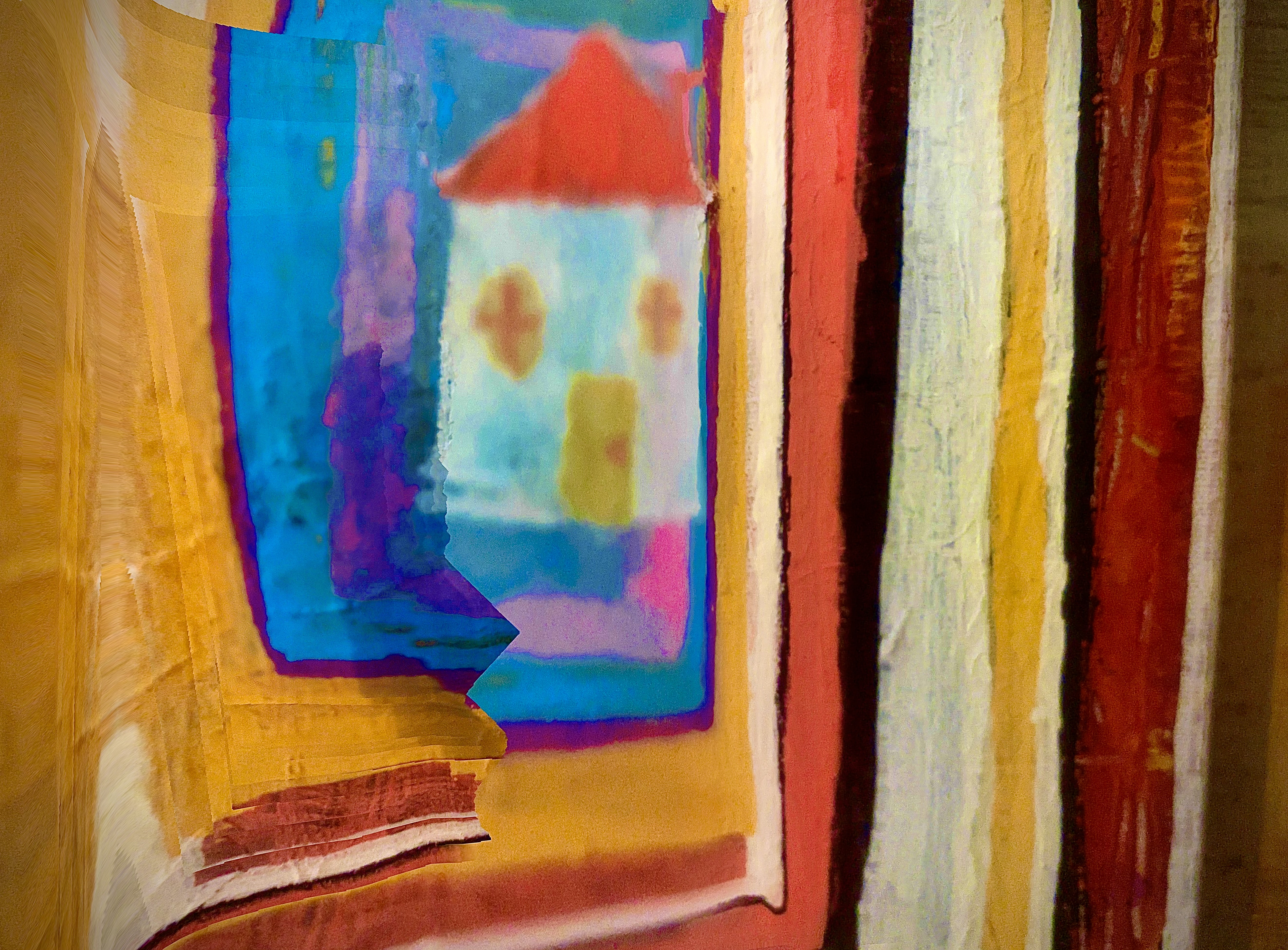
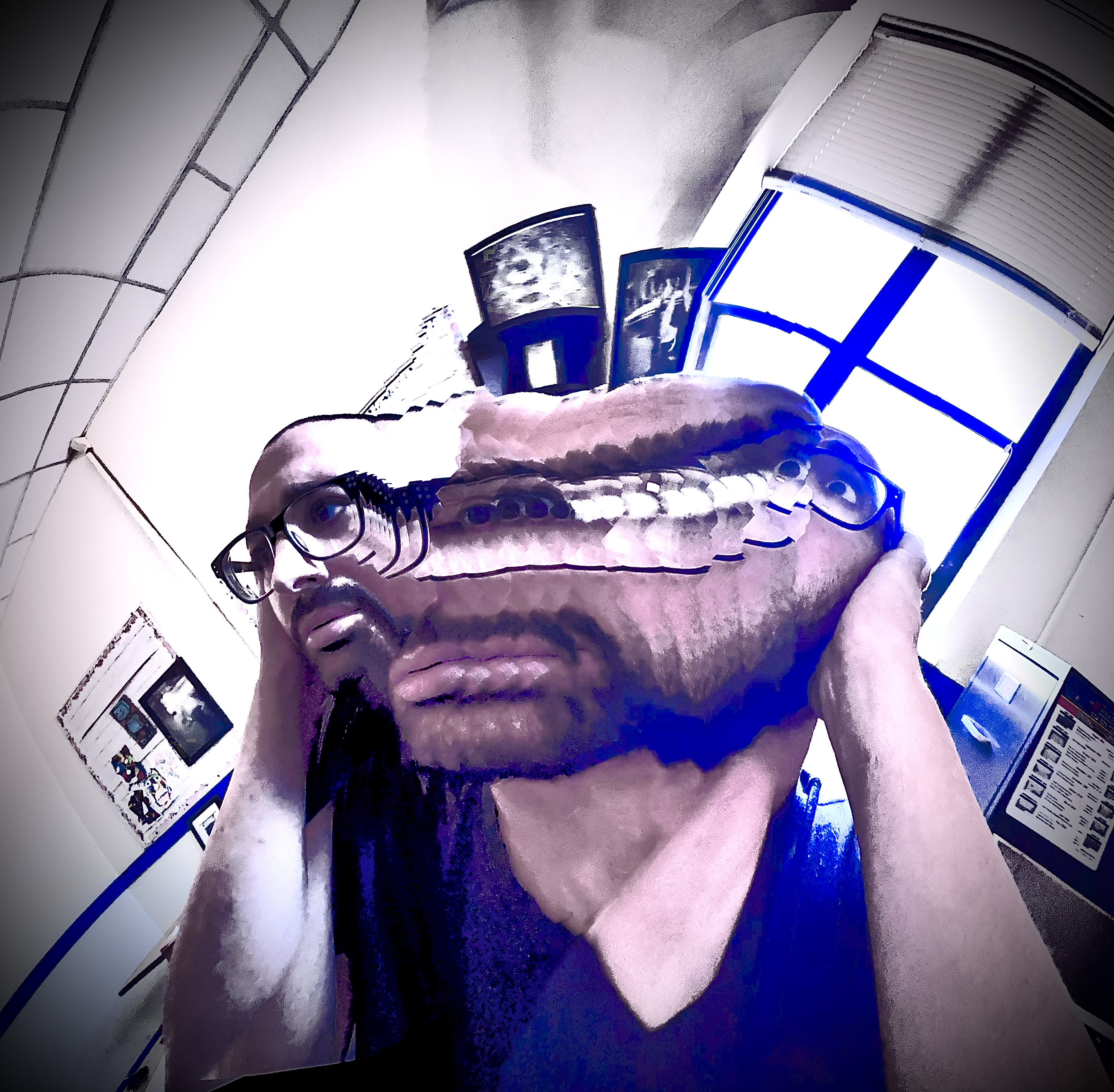
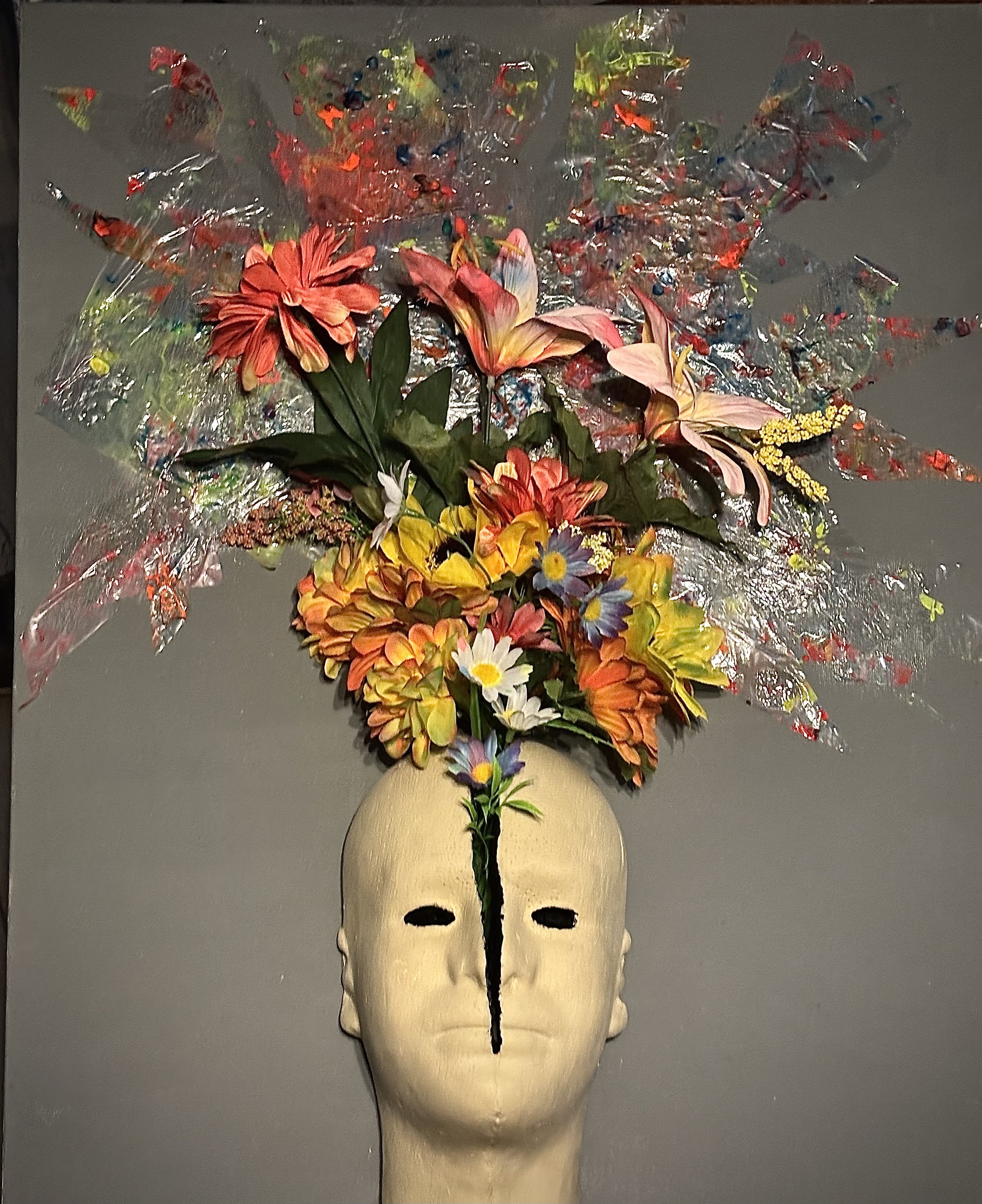
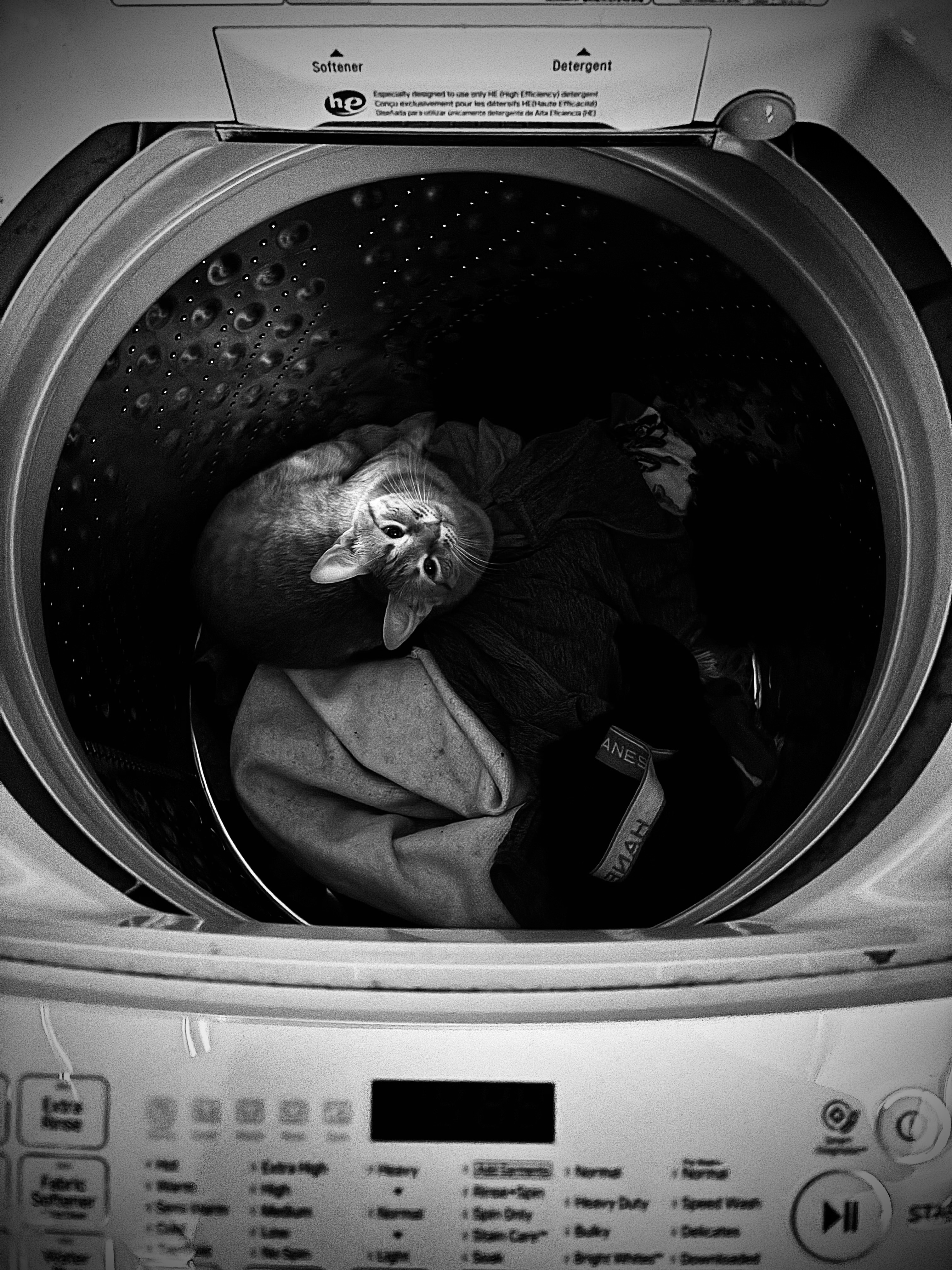
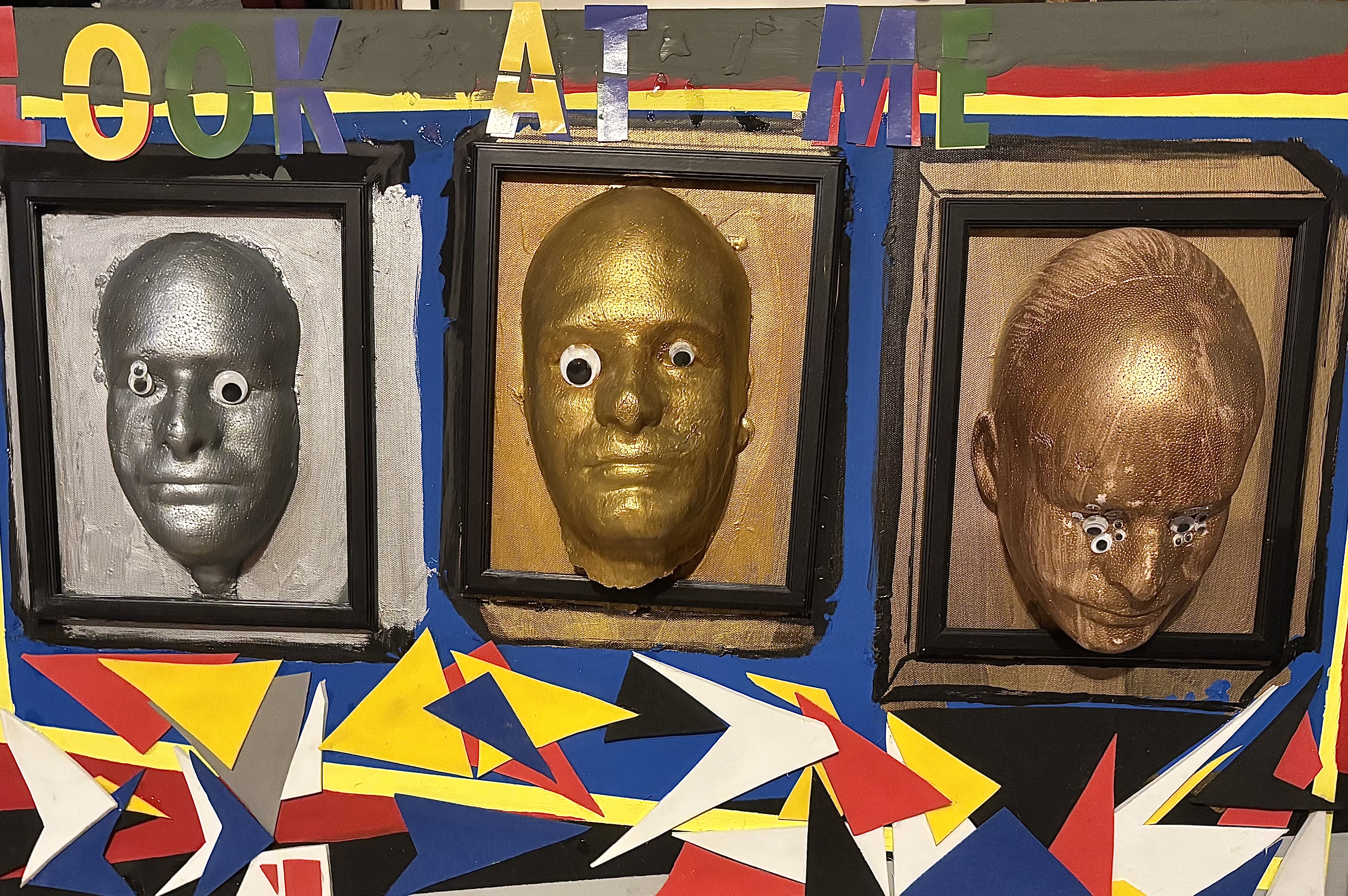
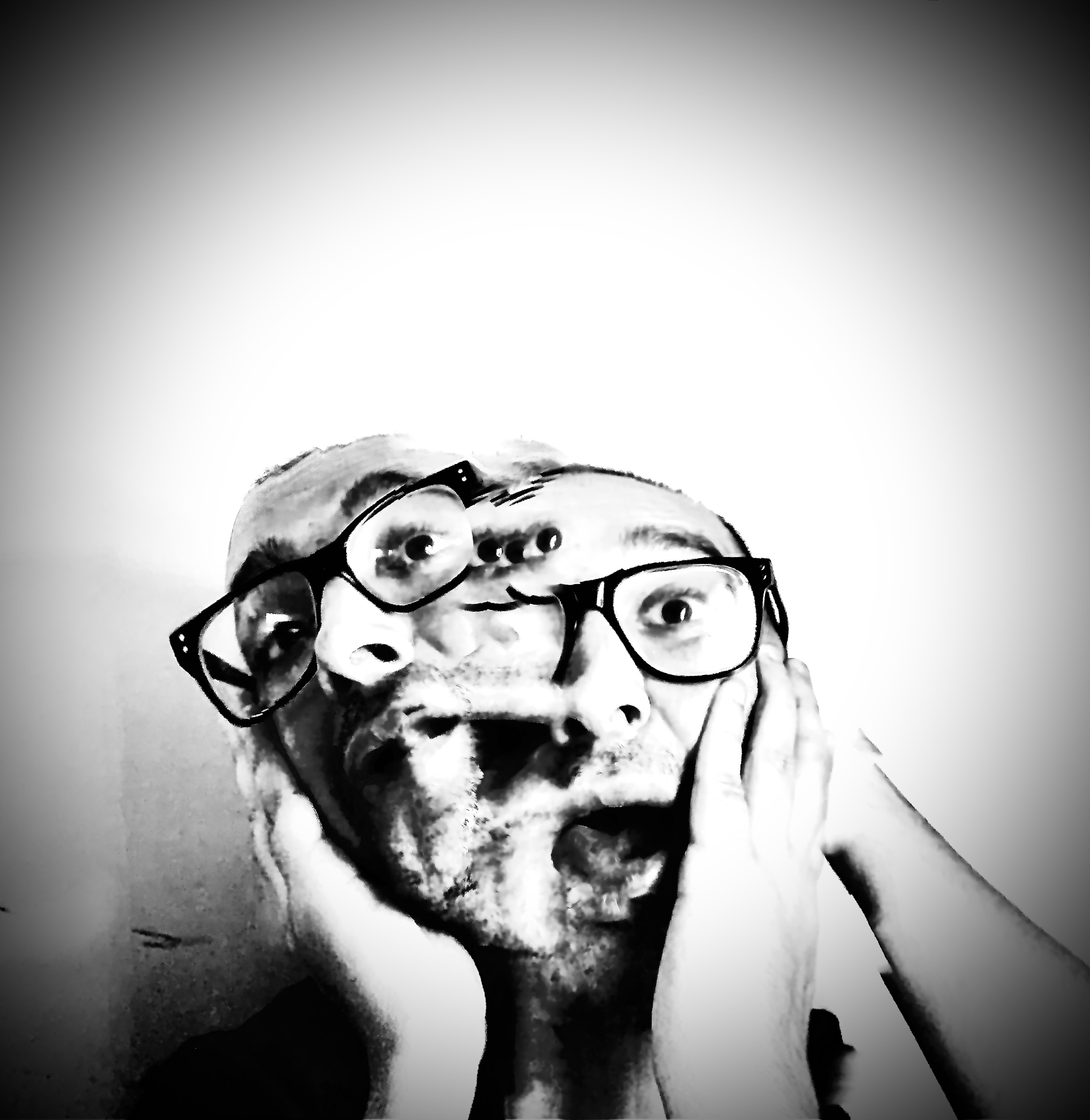
Debbie is not accustomed to spending money on activities for herself.It was forty-five dollars, but for a good cause— a school fundraiser.It’s not really for me, she reasons, it’s for the children.
The parking lot is dark and it’s raining— an autumn rain that would chill a colder woman.Somehow, her nurse-white New Balancesresist the water and the muck.
The school gym smacks of youth— vinyl, body odor, rubber soled shoes.She crinkles her nose at the rawness of itand remembers.
Reigning supremeas the cheerleader or the prom queenor both— it gets mixed in her memory these days.
She chats feebly with the women nearbymeaningless hellos about happy little accidentsuntil she identifies a kindred.
Her name is Allison.Her Instagram handle is AllisThreeBoys.She has dandruff and a slight potbelly.
“I’m not much of an artist,” Debbie confessesas she carefully coats her canvas in liquid white.Allison smiles. “Me either.”
Debbie may not be much at artbut she follows directionswith the alacrity of an assassin.
Allison, she learns, is a military wife.When Jerry proposedHer mother told her to take him, for god’s sake.
She may not find another manwho wants a girlwhose ass is two axe handles wide.
They mix alizarin crimson and phalo blue to create a sky.Debbie continuously tells Allison how beautiful, how precise, how imaginativeher painting is in comparison to her own.
They notice another woman, several seats downwho is not following along at alland they laugh together.
Their mutual admiration and deprecationbecomes like a contest— “Your trees look so real.”“Are you sure you didn’t major in art?”
“My sky is nothing compared to yours.”“Stop— I can’t even get the lake right.”“Yours is lovely, I just want to jump right in and move there.”
The teacher reminds them—“Don’t compare— as Bob says—It’s your world; you can make it how you want.”
Debbie wonders for a moment or twohow that world would lookand the possibilities frighten her.
“Look at this,” she says to Allisonpointing with her brush,“My happy little rock is just a sad little blob.”
They giggle and posefor an Instagram phototogether in front of the banner of Bob Ross.
Debbie signs her painting “Debet”like “Monet”and Allison grins at her cleverness.
Debbie thinks of hanging itor giving it as a gift.She cannot decide which and places it on a shelf in the closet.
She will find it after the season changeswhen she searches for her flannel bed linens,her nose full of must and Tide.
She will gaze at it for a few moments.My world, she will thinkplacing the painting back on the shelfnext to expertly folded fitted sheets.
Just because you love something doesn’t mean it’s good for you.
I have loved many things, gin and chèvre andMen. I have loved the sun brandished, hot,on my uncensored skin; the bite of boiled showers and old shoes.
I have loved you, your knuckles wound tight as aboa constrictor, mean as my sister’s laugh. I have lovedhis height and her eyes and the way her sighs crouchedin her throat, like a coiled snake weighted to strike.
You would think, in thirty years, I’dlearn to let go of thorned women andspiked men, youwould think, but you’dbe wrong.
My veganism does not extend to love.
Standing over the sinkshe bites into the peachand for a momentthe fruit remembers her mouth
the oval left behindholding each tooth separately
their impressions preserved in the fleshwith a fidelity her body hasn’t learned to manage
for her jaw has already forgotten
the arrangement the peach remembers
Around the bitethe skin continues moving backwardswithdrawing from the edgefoldingexposing more fleshthan was taken
The fruit arriving from itself
A revelation of brightness that seemed impossiblefrom the outside
as though the peach had spent monthsprotecting a colourfrom the air
At the lowest point of the wound
something begins
A slight thickening aching to become a droplet
a gathering of whatever sweetnessthe fruit can no longer keep
It remains therefor 7 seconds
attached
accumulating itself
until its own weight becomes impossible to ignoreand gravity enters the scene
Then the slow descent
Not a fall
Never a fallThe droplet lowers itselfalong the inside of the wrist
with such patienceevery hesitation becomes visible to the bare eye
At the wrist bone it pauses
Gathers another trace of itself
Continues
Changes shape
Narrows
The wrist is not smoothand the sugar has already begun dying
The skin tightens around itso that the wrist becomes stickybefore the hand understandsit has been touched
Another bite
The peach turnsHer thumb never doessteady through every alteration
The fruit becomes difficultto describe
Each mouthful redraws the border
New inlets
Small coves of exposed flesh
The peach accumulates coastlines
It becomes less fruitand more record of her mouth
At the corner of her moutha strand of hair drifts forwardand catches in the shine of the juice
For 7 secondsit belongs equally to her face andthe peach
She finds the strand
Place it behind her earand return
The kitchen remains silent
The refrigerator is bored
The sink waits below
whiteand patientand bleached
receiving nothing yet
The fruit continues changing.
One side disappears faster than the other
The borders collapse inward.
And at the centre
something dark beginspressing toward visibility
The pit
Waiting inside the fruit
with the patience of stone
Every mouthful has merely beenthe removal of concealment
It feels abruptand she flinches
Suddenly there is less peach than pit
The flesh clings to it
in bright remnants
The fruit that entered the kitchenno longer exists.
What remains
is a hard centre in the sink
a faint shine at the corner of her mouth
a wrist drying slowly in the air
and the smell on her fingers
which an hour later surviveswith the peculiar persistence
of a thingthat has misplaced its body.
The refrigerator, grumbling and barking. The retrograde acts of some tardy planet. July filled with clouds. Another slow day.
Squabbling crows drew him back to the rainy window. On the roof below, taunting, raising and folding black wings. One had something. The others would pester and shout. Their dance of angry noise.
In the tree-dimmed garden, a young man in swim trunks slept in a deckchair. Perhaps in sun, when he fell asleep. Now in rain. Minutes at the window, he thought the young man would wake, maybe shake like a wet dog, amble inside. But he slept. As rain struck his face, as rivers slalomed across his hard chest. The refrigerator creaking and snapping. The crows’ flurried jabs. Rain falling.
He saw the first, as clouds emptied and thinned. Quick heels, handbag raised to protect the black mortar that splayed her hair in strings. The gown loose wings at her shoulders. A face of makeup. Facing the rain. Then others, some with elderly people – parents, well-wishers – in groups of caps and gowns. Pupated from tall blocks of rooms, a species, their black and bright flashes distinguished from the woolly crowd.
He went out. It was none of his business. Planetary pressure, the weight of noise, of error. Outside was someone else’s concern. Damp air and the clatter of crows. They hopped the rooftops, insisting, sure of their claims. Their squabbles took him along the dull street, riled with each of their kind.
Among college buildings a song was swelling. A popular tune, streamlined for amateur choir, to gather gowns and mortarboards to their moment. To mark the passage earned by such work. He watched them congregate in weakened light. Shy to go in, they stood among indifferent weather, hugged classmates, took pictures, tipped those comical hats. They understood this as a beginning. None wanted to dwell on the failure of their happiest days, so this couldn’t be a conclusion but something fresh. Among tricky lies of adulthood, a moment, for some, to stake a claim, carve a niche, those tropes. For others, one further step in a leisurely education, the road to honour with disillusion and authority without spine.
As he moved between them, he called to mind his occasion in those clothes. Rented clothes. No one owned such things. A day like this. A few faces he knew. Keen appreciation the squads of other people’s friends should keep applauding, should not slack from applauding, when he took the stage for his reward: a blank card rolled in ribbon. When they claimed their paper torpedoes his classmates stood around, congratulating each other on years done. Some had lunch with friends, some had to get to jobs, already working. Early afternoon, the crowd thinned and gone. He returned his cap and gown to the room where rented clothes were inventoried. There was no one left.
These young people led better efforts. The sharing generation, anyone who couldn’t attend was in their pocket. They had great poise, these graduates. A lifetime standing for pictures readied their bones. Even these costume antics couldn’t knock them off balance. Even parents, ornamented, inordinate, capturing every angle, reminiscing their hopeful cap and gown days, couldn’t drag this velocity. Crows tumbled around the college lawns, inspecting each shiny discard, giving full-throated annoyance at all creatures. Yet even crows weren’t louder than triumphs to come.
He circled the celebration, assuming the crowd assumed he was with somebody, a speck of a party he hadn’t yet found. He wouldn’t speak with anyone. Wouldn’t detain them. Wouldn’t make dumb comparisons of this striped sash to another. A public spectacle of a closed world, these things held meaning as surely and as long as leaves held rain.
Clouds thickened. Raindrops fell. People hunched their shoulders, straightened some item of dress. Called it poor weather for this time of year. Which naturally led them to holiday plans, August escapes, invitations and modest evasion. Strands of connection spread between them. The young people: colleagues and rivals. The parents with their settled lives, their villaed lawns, the silted responsibilities of their professions. The lecturers, totting scores, grading talent, dismally fated to summer schools and outreach. Another paper published and one in review. New explorations in ethics, combustion, the lives of the celibates. Strands of connection never trammelled him, however much he stood in their way.
A tide caught the crowd. Some official, some starving accessory, their hoarse announcement transmitted chemically through the ranks. The crowd began moving, called to their ceremonial moment. This appointed ritual of passing grades. Some bowed their caps and clutched their gowns, relieved to make themselves small among friendly shoulders. Others stepped with imperial assurance, filmed by parents as they entered the hall, filmed each day of their life. Like rain through a grate, as crows fought for litter.
He couldn’t follow. The hall would be crowded. Lengthy recitals of names to try the most boosterish mater. Some senior gown would ramble old lines: the value of education, the premium on creativity, the splendid achievements of this gifted troupe of grand futures. For some, perhaps. Others would fade, deviate, find their conclusion. A few would sicken and some would die before making their mark. Some would leap to madness. Some land in a space six metres square. Those who succeeded would fade, as attention moved – as it must – to the next generation. Some would remain, under retrograde stars, alone here on a slow day.
With the crowd funnelled in, he was taken with an urgency not to be seen. A lone figure in a deserted square, rain gilding the gravel, his separation too obvious to be thrilling. The college husk lay open, changed only in paint from his time. Changed only in its absence of cigarette ends by the door and politics in the flowers. The guard occupied with some matter in back. A clear way in. Past faded rainbows soaring the walls, he took the lift one floor short and walked the last flight to the top. The stairs eternally grey and scuffed, streaked with spills from hands that long forgot a clumsy moment, on an unremembered day, long ago when they were in school.
The room unchanged in its essentials. The precarious tilted windows. Air pipes across the ceiling. Smudgy whiteboard ghosts. Dusty disuse of summer. Wedded to purpose, he had spent hours in this room, as days became months, as instruction stretched to parchment. At times he sat by the window, losing focus among shoehorned buildings, glimpsed views, each sudden flash of an opening window miles away. He wondered who sent those signals. What habit or sudden moment made them open the window. What they did since that fugitive connection. His classmates wouldn’t notice. They wanted value for their fees.
He didn’t see them since graduation. Didn’t hear from them, though he joined the chats. Their lives, he supposed, followed paths to plausible outcomes. Enough time had passed for their years together not to matter. For everything to rise and reshape their days. It was that thing they did, for a while, back then. That qualification they landed, three, four jobs ago. Important, no doubt. Not relevant. Not to skin so much more experienced.
The room’s comatose air webbed him. There was no purpose now. There’d be none till rigid September. The life of the mind, engaged through tuition, lay as dust. He didn’t want to watch the sky grow dim. The close to another lost day. He wanted this moment, the fractured clouds, the breezy light – the rest of his life this moment. Waiting for someone miles away to catch the sun on their window.
He did nothing. Thought nothing. Barely breathed. Time passed the same. Each second, a loosening tremor tumbled him down. Each second flying off from him. Dismantling him. Less of him in the world with each click of air in his throat. The sun slid between ruins of clouds, their memorials broken, their dizzy heights burned through. His hands gripped at this moment and this. He craved to hold time. To have this same afternoon. Sunk in the room’s scruffy walls the record of those lectures, the imprint of days when study was fresh, a comfortable padding of years before completion. When the week was no more than finding the reading, then precis and discursion, jotted thoughts for an essay not due for a month. Debates at the bar. On cold walks in winter twilight. The sense of things as significant, larger than oneself.
Noise from the yard, an updraft of jubilate voices, the cadence of bells across the cement to the streets and city beyond. He tore himself from the room, tore apart its stillness. A new recollection to sink, without thought, in the walls.
Clouds gathered behind the retreating sun. Crows, aloft, in raucous displeasure, their scavenging ended. Students streamed out, graduates now, clutching symbols of their success. More hugs. More pictures. More accumulated emotion punching holes in the weather. And summer ahead, its indolent rewards. Bodies released exuberance. Arms outstretched, capes rose and fell, wings beating, a delight that this moment could drive a hurricane at some far point in their lives. The start to whatever actions amassed their future. Smiling in these immortal pictures, never to be this young and feel this hope.
He turned away, done with it all. He wouldn’t speak with anyone. Wouldn’t detain them. Wouldn’t make dumb predictions that only faint successes, stinted achievements, could follow. When so much of the world was weight and retrograde motion.
Walking back to his apartment, celebration fogged his thoughts. The college yard two blocks behind but he could hear it. The hubbub of a thousand futures chiming together. The encouragement from those old enough to know better. Beating wings. But life, its generosity, brought corrections. Autumn winds would take every leaf from the trees.
His door closed and locked, he stood at the window. Between chimneystacks, crows harried each other, jealous of the slightest scrap of whatever useless thing. The young man in swim trunks was gone. The deckchair folded aside. A patch of yellowed grass that missed the rain.
If X is born to Bahá’ís perfecting pilaf & prayer in an 80s suburb made of water pistols & beer, what will X call home?
If X’s mystical father swallows X’s mother & eviscerates X’s brother, at what age will X unmute?
Reduce utopia/narcissism to simplest terms
If X’s lived experience = ½ Hubble, ½ wallflower, calculate the volume of his loneliness
If the house on Nims Avenue is Babel & every tongue a 1-year delay, how high will X’s silence tower?
Whereas X is both a group of 1 & the safest, tallest person in every elevator, determine the square root of his privilege
Whereupon X is raised to reject whiteness (because whiteness is a lie & a missile), how often will he misplace the key to his bones?
If there is no standard for X’s deviation, is he nothing?
If you find X’s story inscrutable, will you google Bahá’í Faith or ask X for the algorithm?
As the pendulum locked for 400 years finally & victoriously swings, should X wait for it to include him, seek pendulum prime, or study the grammar of trees?
Given X’s heart is a polynomial, find a world his asymptote will someday touch
If home is only a legal pad, an airport, her morning chest, find the quotient of X’s solitude
Whereas X was built as an exit ramp, find his probability of forward motion
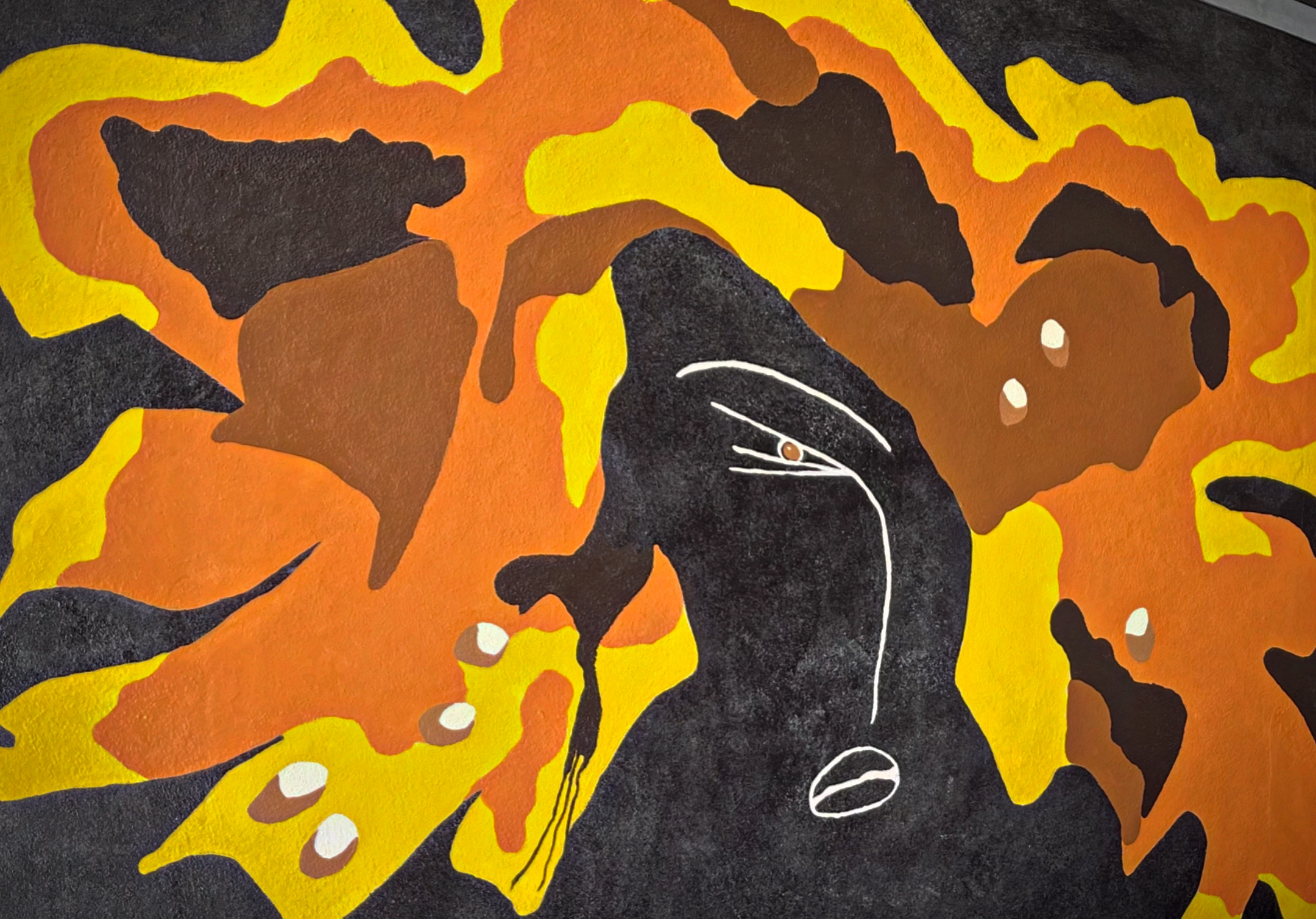
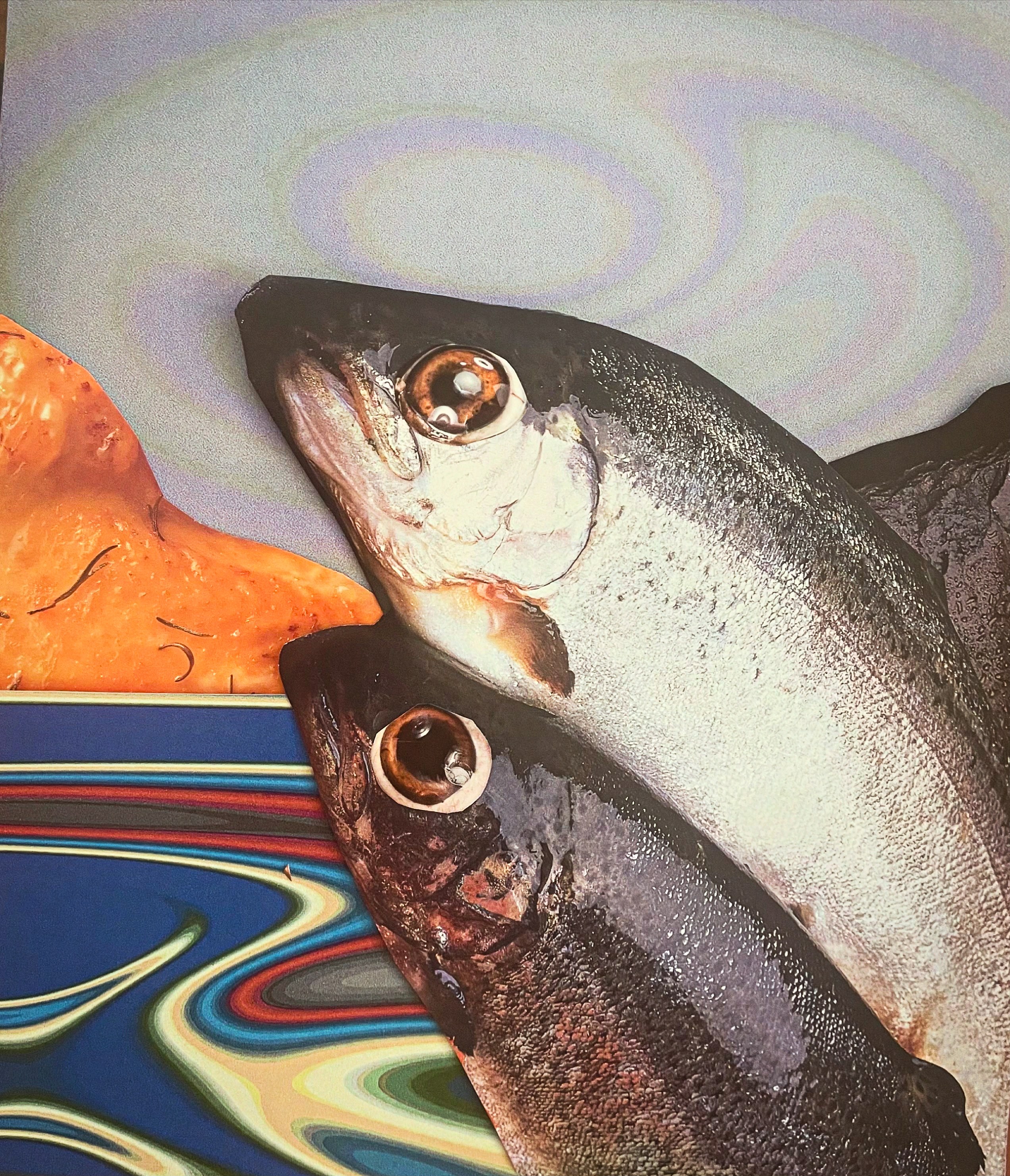
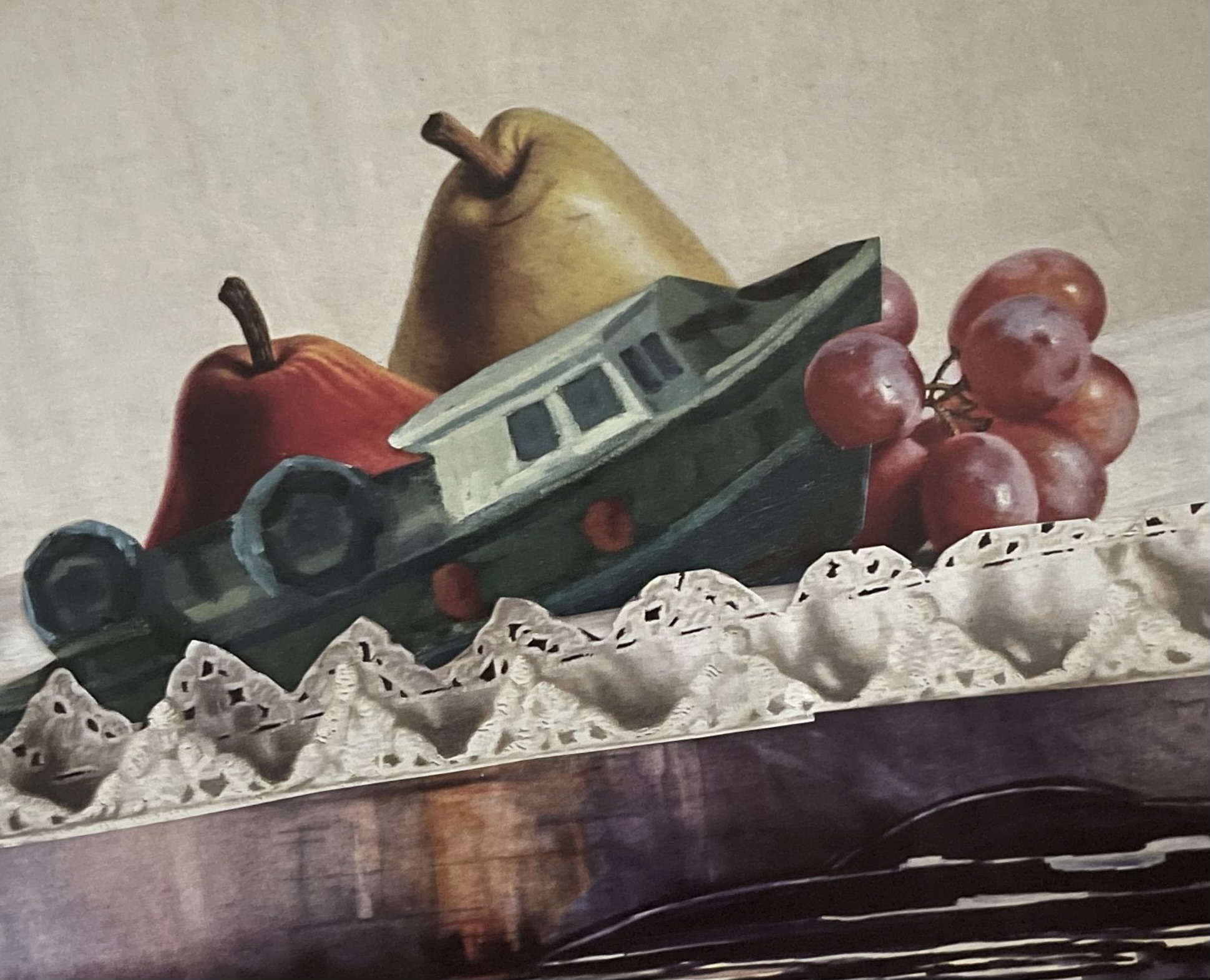
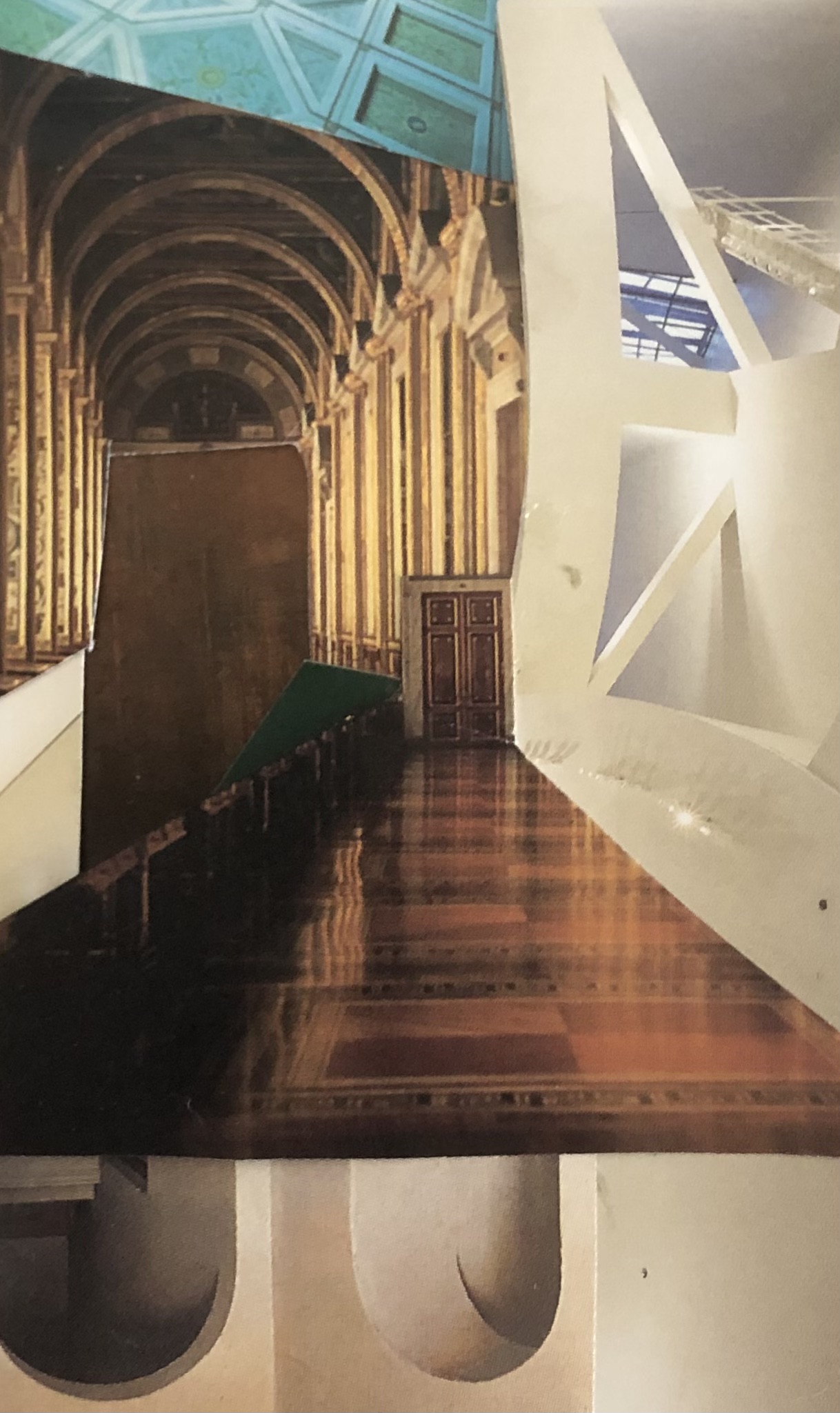
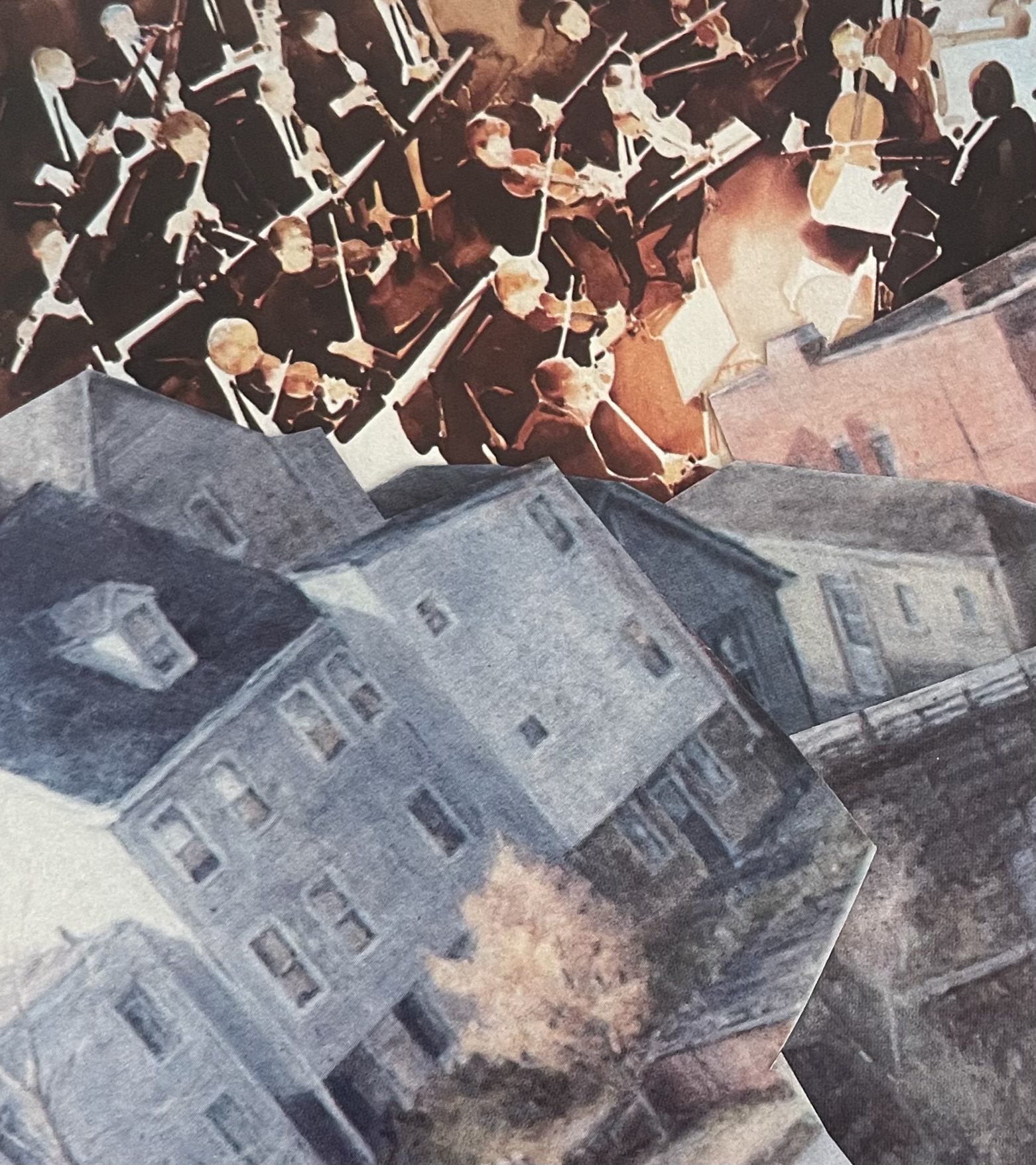
Way Down Yonder in New Orleans
Why the puzzled face brown girl, ICE is the spiceof rice at El Exquisito on Williams Blvd, ICE is the spice.
Federal Immigration is nice brown girl, here for a feast at KIPP Eastbrown girl, why so red girl, orange girl, gold girl, ICE is the spice.
Kenner PD will dance with you and me brown girl, salsain cuffs brown girl, it takes troops to tango, Catahoula Crunch Spice.
250 plates brown girl, 5,000 thousand waists brown girl, two month wait,But you say Taqueria Guerrero closed brown girl– ICE is the spice.
Let’s get low at Lowe’s on Elysian Fields brown girl, I’mNueva Galicia brown girl why the puzzled face- ICE is the spice.
With her paws tucked under her body in the breadloafing position, which signals tranquil contentment, the cat watches me fill her water bowl. The bedside lamp casts a feeble light into the hallway and is caught in her retinal reflection, evoking votive candles—and memories of being a kid sitting in a pew. She was a pandemic adoptee, who sat on my desk at home as I attempted to educate a screen of empty tiles forming a lifeless grid of sequestered high school students. I place the water pitcher on the bookshelf, sit cross-legged on the floor, and whisper her name. Her tail lifted aloft by the gentle hand of some spirit that’s either an ancestor of mine or hers, she approaches, purring, steps into the nest of my legs. Her head resting against my thigh, she gazes up at me. I blink slowly—the greeting she understands—and she closes her lids in kind, and then for longer.
Now retired from teaching, I’ve lost the preoccupations that reliably distracted me from the world’s troubles. Tonight, even after the TV’s been shut off, the cable news clings like burrs. The apartment is quiet, and I attempt a mindfulness exercise. I stroke the cat’s fur, watch her breathe, run my finger under her chin to feel her vibrating peacefulness. Her vibrissae, whiskers, fan out to constitute a complex appendage, sensing subtle air movement, atmospheric changes, and much of my body’s signals. Rooted deeper than the guard hairs and awn hairs that carpet her, the whiskers connect to an array of nerves. I’m having a hard time shaking that image on CNN of a mother and toddler detained in a pen, and my chest clenches. My rhythms and aromas tell the cat I cannot relax, and she looks up at me, stares into my eyes, feeling and divulging something I cannot understand. The shelter said she’d been the runt in an apartment where cats had been hoarded. I was the runt who sat on a bench at recess as the other kids played games I didn’t understand. Cats make many attempts at interspecies communication, only vocalizing for humans, never to each other.
Living with a cat piqued my interest in her kind, and I’ve read books by experts in felinology. Millenia ago, the wild Felis silvestris lybica was drawn to the vermin who were drawn to the granaries in the Fertile Crescent. Unlike their canid relatives, wild cats self-domesticated. Generations of natural selection, followed by selective breeding, have produced descendants that nuzzle our chins as they doze on our chests. Until recently, their full capabilities were as concealed as Greek soldiers crouching inside a wooden horse. Cats are the definitive host of Toxoplasma gondii, a microscopic protozoan that sexually reproduces in their intestines and releases millions of oocysts that ride feces and land in dirt and vegetation. Ingested by a small rodent or other prey animal, Toxoplasma gondii swims to the brain and tinkers with the amygdala, the nut-sized bundle of neurons that processes fear and fondness. In the millions of homes with cats, a litter box is the parasite’s nursery whose dust is laced with a love potion we inhale.
Toxoplasmosis alters perception—specifically, the emotions a cat’s presence kindles. An infected mouse or vole becomes less fearful—and is even attracted to their odors, especially urine, making them an obliging meal. In humans—like me, presently a warm snuggery providing massage service—the infection elicits devotion. With an estimated third of humanity affected, there’s no dearth of volunteer subjects to examine this biological seduction. In one study, researchers found that to men under the influence of Toxoplasma gondii, cat secretions become an alluring perfume. When my cat expresses her anal glands, which she sometimes does when affection makes her swoon, the aroma—albeit more pungent—is as sweet as a priest’s censer. I am another dupe of the sirens’ age-old ploy.
Since our species’ first, ancient symbiosis, humans have transported cats across distance and time, in Silk Road cargo crates, on Viking knarr vessels, English brigs; onboard exterminators, valuable trade, mitigators of plagues, guardians of our daily bread, tools, companions, witches’ consorts; muses, characters, memes, caricatures stripped of dignity. All the while, they’ve witnessed us launch wars and bloody crusades, bless invasions, burn heretics, concoct genocides, shackle nations, laugh as we pillage, silence tongues, exile gods, scorch land, spew fire, drop bombs, blight air and water.
I lean over to inspect the cat’s ears. Lattices of veins stretch across the pinnae—majestic as a pair of unfurled sails—which can independently pivot 180 degrees to trap sound. In the darkest of ages, their eyes saw eight times better than ours. I whisper: “You and yours are the intercontinental audience to our perpetual calamity.” She closes her lids, is in this moment, and invites me to follow.
Unaware or boundlessly forgiving, she assigns no penance, but sleeps between my legs. For the human custodian, a cat’s purring is proven to lower blood pressure, heal bones, and decrease the risk of cardiovascular pitfalls. After a while, my back stiffens, starts to ache, but my brain has been pixilated by a protozoan. Plus, there’s too much to apologize for, so I won’t move, just continue to stroke her cheek.
Elliott ran from Laurie like a colt from a lariat, and in the breeze of his passing I smelled lavender. Laurie was huffing along behind, her rolling pin raised high, floured and white like a pennant. “Ellie, you fuck,” she muttered when she thought she was alone. I was crouched in the wicker, watching like a cat. Her big thrombotic legs, sluiced and oiled, rattled like gelatin as she stomped back the way she’d come. I took a deep breath. When I heard the door to Laurie’s cabin slam, I pushed myself out of the hedge. I stood with my hands on my hips, looking down the road.
There was one road out of the Valley, a gravel path more like a walking trail. This time of year, with all the rain, it was washed in places and pitted like the surface of the moon. To either side ran a culvert full of stale water which reflected the pale trout bellies of the leaves above and the hydrangeas in bloom. The road was hooded by tall trees which bent, revealing and obscuring the grey plaited clouds with their riffling boughs. Standing crosshatched in shadow with the evening coming down and the hidden insects buzzing, you could feel the breeze kicked up like an old dog, and the lacey wingbeat of a thrush overhead. Standing on the roadside with the smell of lavender still hung drying on the air, and the sun like a cutlass gashing through the overstory, I could close my eyes, peering through that curtain of pink veinous tissue, listening for the rabbit in the heather, or the chipmunk on the stone. I could carefully attend to the growth of my fingernails, the smarting of yesterday’s rugburn, the slow dilation of my pores. I could stumble upon a new calculus of birdsong and white heat. I could sink very low, and stroke the shining backs of beetles, and relish in the unimpressive, the bystanding. I could see and unsee. I could look and be unlooked for.
So it was with summer.
I went down the road, my bare feet burning on the hot gravel. Ellie had been barefoot too, so I figured he couldn’t have run so far. The road curved as it made to leave the Valley, looping around a small pond overridden with marigold and pickerel. Butterflies stole across the smooth surface, and dragonflies lit on the bulrush. The pond was effusive with sunlight, the shine of it like a carousel mirror. Along the bank grew thick swaths of switchgrass. On summer evenings, there was no greater joy than to lie on the bank and watch the tips of the grasses sway. The moon would play fox in its cloudy warren, and the sun, a detracted hunter, would dip its head and slink over the horizon. All this observed from a bed of down, with the toads piping in the reeds and an evening’s cold coming on.
Ellie sat on the edge of the pond, his feet in the water, his hands tucked in his pockets. He had the lank posture of a coat draped over a chair. I could see the protruding bole of his spine through his sweat-sheer white t-shirt. He didn’t look at me as I approached, though I dribbled gravel coming off the road. His eyes, as my mother might say, were on the curtains, not the players. On the bank beside him was a white napkin wrapping something round and bulbous. When I was within a yard or so, he pulled his hand from his pocket and spread the napkin wide, revealing a golden biscuit. He nipped a piece with his finger and held it delicately before his nose. “Come here, girl,” he said, turning the biscuit in his fingers. The sound of his voice froze me midstride. For a moment I felt like running, attaining distance from the scene. I felt the need to defy all things under the sun. It was the clipped, offhand way that Ellie spoke to me. It raised my hackles, the inertia behind his voice, as if the words had been forming, snowballing for hours. And yet despite these apprehensions I stood transfixed, for he had spoken to me, and I had listened. In a heat to break the mold, in the capillary shadow of tall grasses, I walked delicately to stand at Ellie’s side.
He handed me the biscuit, then broke another piece from the whole and gave me a quick look. There was a kind of relief in his expression, as if he’d smacked a mosquito and been reimbursed with a smear of his own blood. He kicked his feet through the silt at the pond’s edge and we both looked out over the water. Or rather, he looked out and I watched him looking. His black hair was smeared back, matte with dried sweat and salt. The nape of his neck was red as a cherry. His skin on the whole was very pale, unbefitting a boy in summer. This was strange, for as far as I could tell he spent nearly every waking moment out of doors. And yet he did not wear the world on his skin, as most boys do. His skin was pearlescent, even waxy. To look at him, you felt a surge of protectiveness, near panic. You wanted to get him safely out of the sun, for fear of his melting.
“You ever caught a fish with your hands?” Ellie asked. He pulled his feet free of the water and deftly spun to his stomach, head leaning just slightly over the water. He peered into the pond for a long, elegiac moment, his nose nearly brushing the water. What he saw there brought to heel the rush of his boyhood, laid him low to ponder some infinitesimal verity. What he saw I could only guess. Maybe himself. I stood hexed at his side, too fearful to move. There was a certain horror in watching him grapple with wisdom. He couldn’t grasp it, not with hands still slippery with youth.
When the moment passed, Ellie shook his head and crinkled his nose. He had a tossed about look, a spurned appeal. He peered up at me, and his eyes were slightly red around the edges. He patted the grass at his side, and I lay down beside him. I too gazed into the water just off the bank, but saw only an impression of myself, sinewy in the late-day shadow. I peered through my reflection and saw the silt of the pond and the small aquatics that grew from the loam. Little fish moved smooth as whispers, their prismatic scales flashing. They maneuvered in complex geometries which belied the simplicity of their forms. I saw a small freshwater snail on a smooth stone, ensconced in its shell, the asynchronous revolving of its eyestalks.
“Why would you catch a fish with your hands?” I asked Ellie. I looked sidelong at his reflection beside my own. I felt the sudden urge to stir our two reflections together, to tangle us into one mess of shadow and light.
Ellie leaned slightly away from the water, still twirling the sliver of biscuit in his fingers. “Because it’s hard. It’s a challenge. Because I want to.”
Three reasons. I nodded, satisfied. “How is it done?”
He raised himself to his elbows. “We bait ‘em in with these biscuits. When they’re close enough to cuddle, we drag ‘em out.”
“They’ll be slippery,” I said.
“Of course they’ll be slippery. You think I haven’t thought of that?” Ellie reached behind him, into the back pocket of his jeans. He unfolded a dark red handkerchief, tattered with use. “I tie this to my hand to give me grip.” He demonstrated, wrapping one of the handkerchiefs around his left hand several times. As he wrapped, I noticed a set of embroidered initials on the fabric, but they spun away too fast for me to read them. After three tight loops, he tied the fabric off to itself and showed me what he’d made.
“That might work,” I said.
“Of course it’ll work!” he said. “I tried it yesterday, almost caught a bass. It was heavier than I thought, though, and I lost it.”
“That’s a shame,” I said. The sarcasm was unintended. I don’t believe I was even of an age yet to mean two things at once. Yet Ellie threw me a wounded look, a look full of dispirit. I realized that what he wanted was beyond my means to give him, my capacity for awe overruled by a chronic disinterest in anything I couldn’t hear, see, feel. He turned away from me, and I felt a subtle shift in his attention. He was no longer trying to impress me. He was trying to keep from crying. In a gush of pity, I wanted to touch him. I flexed my fingers and at that mere movement he cringed, dodged away. He shot up to his knees and I did the same, less gracefully. He held the biscuit firmly in his palm, then hurled it hard across the water. He threw the morsel with a certain angst, a bleary vehemence. He was angry, but not with me. The biscuit settled, soaked, garnered weight. We both watched the crumb crest the soft clear ripples it had elicited on impact. Something rushed from the reeds, a thrush. The sky was purpling, the wind staggered through the pines, its passage a rasp like the sea.
“How long does it take?” I asked Ellie, trying to reconnect.
“Shh,” he said, his eyes on the pond. His knees were black with dirt, his elbows too. The grasses around us hissed. Wordlessly we watched the rising and falling of the bait. It was a minute or more before it vanished. One moment it was there, the next it wasn’t. Ellie smiled slightly and nodded at me. I realized I was still grasping the crumb he’d given me. “Throw it closer to the bank,” he said. I tossed the crumb, and we shuffled back further from the bank to keep our shadows off the water. Again, the waiting. In the sleepy come-on of evening we huddled, our shoulders scraping. The morsel was snatched away, this time with a violence. Ellie almost clapped, so satisfied was he with our progress. He took another piece of biscuit and settled again on his stomach. Like a lizard he slithered through the grass to peer once more over the pond’s lip. I tried to follow, but he held up his hand and shooed me back. With delicious care he placed the last crumb only inches from the bank, where it hovered in the still, translucent water. He raised his kerchief-wrapped hand and set it high like a trap, his elbow a loaded spring.
His hand snapped downward with incredible speed, meeting the water with a galumphing splash, the spray of it in my face. There was a struggle. Ellie was keeled over, his torso half over the bank. I rushed to kneel beside him, holding his legs firmly to keep him from slipping further. The splashing was an unrelenting, fervent rain. Ellie yanked hard and I saw that in his hands he held a fish, a large fish with green scales and a wide gulping mouth. Its lithe warm body squirming, green against the red of the kerchief, water flung to shine elastic in the air. Its eyes were the wet black of rain-filled potholes, and when they found me I stumbled backwards, lost my grip on Ellie’s legs. Those eyes were ill-befitting a creature of the genus, they were a slack net capable of engrossing anything. When I let go of Ellie’s legs, he slipped further over the bank, such that his hair dangled in the water. Hastily I snatched his ankles. There was a smack, a curse, squelch. Ellie leapt up as though scalded.
The fish was gone. Ellie peeled his wet red kerchief, mumbling quietly to himself. As he unwound the fabric, I again caught a glimpse of the embroidered initials. ABH in gold thread. Ellie threw the kerchief away and looked at me. His hair hung lank in his seething eyes. “I slipped,” he said. “Where were you?”
“You told me to stay back,” I said.
Ellie wiped the hair from his eyes, reached down and took up what was left of the biscuit, shoved it into his mouth. He chewed quickly. “Foot and a half at least. Gum’d eat his other leg if I showed him.”
“I saw it. I can tell him all about it.”
“He won’t believe you. You’re a kid.” He stood up and stretched. He smelled of fish, but underneath there was still a lilting note of lavender. Evening dusted the wood line, and the shadows were near crimson. The birdsongs had changed; they were sorrier. Somewhere distant a bull lowed.
“Laurie’ll kill you when you go back,” I said flatly.
“Let her try. I may not go back, besides.”
“How come?” I asked.
Ellie shrugged, shouldering some new weight, testing its pressure. “I’m sick to death of this Valley.”
I frowned and said nothing.
“I’m through with plucking chickens and mending fences. I want to see those mountains, the ones Gum’s got pinned up in the garage. What about the ocean? I want to see that too. I want to go swimming in water that don’t stink you up for days.”
“Well,” I said. “You can do what you want, can’t you?”
“Yeah, I suppose I can.” He squinted his eyes. “Suppose I can, and more besides.” He peered through me, in the way a deer might peer through the trees, transfixed by something further along, something dangerous. Relegated to his periphery, upwind, I crept closer.
He stood in a venue of potential, a room of doors. His selection was slow, he had one key. Whichever door he chose would take him someplace I couldn’t follow, and so I lay in wait, my resentments rising. At last, I felt I couldn’t stand it anymore. “Why don’t you just go to hell!” I shouted. He was grounded immediately, shaking his head, dazed. His eyes were wide as he recognized me, recognized the tears in my eyes, the quivering of my lips. But before he could speak and so wrestle me to his will, I was bolting back up to the road, back the way I had come. I returned to the Valley, dust rising behind me. My feet stung; my lungs burned. I didn’t stop, couldn’t stop, until the smell of lavender had forsaken the air.
The bell chimes. The woman behind the counter calls out a greeting that he can’t understand. She reminds Victor of a song-bird, small and chirping.
He sees Peter immediately, tapping at the screen of his watch, frowning in concentration. It would have been hard not to notice him. He’s the only other Englishman in the room, the only other person not Japanese. Peter wears a dark coat and bright red scarf that is the most colorful thing in the muggy restaurant on this winter day. Mittens sit next to him on the table. Though it’s only mid afternoon, the dark of the alley is deep enough for a pink glow from a sign across the street to fall across half of Peter’s face. At the bell, he lifts his eyes and his mouth drops open at seeing Victor standing in the door.
“God,” Victor whispers, walking up to the table. He thought he was prepared to see him again, a very young man this time, but no. Peter’s face is more boyish than it had seemed halfway across the world on a screen when they had spoken before meeting. His eyes are large, his features soft, pert nose and full, pink cheeks. No, Victor was not prepared for the reality of him, this warm body that makes small movements, for hands worrying at the end of a scarf. Peter is smallish and clean, his hair shining, his fingernails impeccable. He wears his clothes layered against the cold of the day, though the restaurant is overwarm from many bodies and the heat of cooking. Peter’s lips have gone slightly chapped and red and he worries at them with his front teeth as Victor crosses the restaurant.
Peter stands. He pushes back the bit of gray at the front of his hair that is the only concession to his age, an anomaly. Victor watches Peter shift in place, trying to make himself move forward toward him. He watches the smile spread over Peter’s face. Finally, Victor reaches the table.
“It’s you.”
“It’s me,” says Victor.
They gaze around the crowded dining room, currently full of middle aged men on their lunch breaks eating alone and frowning, and settle for sitting across from one another, hands clasped in the center of the table. A few men look up at the sound of English and spend a moment studying the foreign faces, but only that. They go back to slurping their soup, to the projections on their watches and to their newspapers. Victor’s mind races and he sputters the first thing that comes into his mind.
“You’re so young.”
“Twenty four,” says Peter.
Peter’s proclamation is half defensive and half prideful, preening a little at the success of meeting up so soon, at least in his life. Victor reaches over and touches Peter’s hair, caresses the familiar streak of gray. It has been there in eight other lives and this movement, brushing it from Peter’s forehead, makes the reunion real for him.
“Still this, though.”
Peters smiles at the feeling of Victor’s hand against his forehead. He is rather cat-like, moving his face subtly along with the stroking. That is all it takes for the restaurant, the chatter of Japanese around them, the rain, all of it, to go away for Victor. He wishes they could leave. His body has met with Peter’s and even the table length of distance is painful. He lowers his hand and Peter takes it again.
“You don’t…I don’t know, you don’t hate it do you? A gray twenty-something.”
“I won’t answer that ridiculous question.”
“And you?” Peter asks Victor. He worries at his chapped lips again. “How old are you?”
Peter knows. Victor knows he knows because he’s told him, but it’s something they need right now. An easy question. An easy answer.
“Forty one. We can never get it right.”
“It’s fine. It’s always me anyway. This way there are-”
Victor’s heart thuds.
“Years,” he says. He croaks. “Years and years.”
The woman from the counter comes to take their order and speaks to Peter in Japanese and he answers in the same. They chat like old friends, which Victor isn’t sure they aren’t. Peter motions across the table once and says something that makes her laugh. His eyes are bright, animated as he speaks. The waitress leaves two small glasses of hot tea, bows slightly, and walks away.
“I hope you don’t mind,” Peter says. “I ordered for you.”
“I’ll eat anything. Your Japanese is good. I think, anyway.”
Peter laughs. His hair is just long enough to tuck behind his ears and he does.
“It should be, after three years of speaking it every day.”
“I saw that you teach now. English?”
He knows that to be the case as they’ve spoken about it before, after the agency found Peter for him last month, but he too needs something to say as they ease out of these first minutes together. Peter nods and Victor squeezes his hand tighter. It is, in this cold winter afternoon, the only skin Peter has showing besides his face and Victor wants to drink it in.
“I found you. I can’t believe this face. I’ve always wondered what it would be like to see you so young, to really see you as a young man. And this is a very good face.”
At this Peter begins to blush. Two blooms of pink appear on the apples of his cheeks.
“Aren’t you going to ask what I ordered for you?”
“No,” says Victor.
With a quick movement, he kisses Peter’s hand.
“I suppose we should introduce ourselves,” he says. “Really, not just talking over these-”
He motions with his head to the bulky watch on his wrist, flashing messages at him even now. He doesn’t like it at all. Letters, it used to be. Letters that took ages to reach him, letters sent when they were called different names and the world moved more slowly. Peter nods. He laces their fingers together.
“Peter.”
“Victor.”
⁂
They go to the hotel after eating, to collect the bag Victor dropped off that morning.
Peter waits downstairs while Victor goes up. He only has one large duffel bag, left sitting in the middle of the still made bed.
He never slept here, was never really going to.
Victor settles his bill and he and Peter walk back to the subway together. He follows Peter’s lead; paying for the ticket, walking, where to sit. Drowsiness hits when the train moves. He tries to keep his eyes open but slumps against Peter.
“Almost there,” says Peter.
He thinks Peter wakes him when their stop comes, but he isn’t sure if he slept or not. Their hands brush and Victor follows the red scarf through the crowd.
His apartment is hardly more than a room, and a small one at that.
There is a tour anyway, including an explanation of what all of the buttons on various appliances, written in a language Victor doesn’t read, do. He peeks in the refrigerator and it is full of unfamiliar foods, or familiar ones in strange packaging.
He is jet lagged. He lies down on the small bed and Peter sits next to him, massaging his wrist with his free hand while he speaks in Japanese to someone on his watch. Victor nearly falls asleep like that, a soft hand rubbing his wrist, listening to his love’s voice. Forty one had not felt so old in London, getting on the plane. Forty one had not felt so old when he wasn’t in the bed of a man almost two decades his junior. But he consoles himself with the thought of how long they’ll have this time. Twenty four, he thinks to himself over and over. He’s only twenty four. Even his youngest death before was thirty seven. They could have thirteen years this time.
He takes a deep breath, rolls over to press his nose against Peter’s hand, and realizes that Peter smells the same as he always has. It anchors him in this storm of newness and he clings to it. His exhaustion takes over.
When he wakes, he has been undressed. Peter is asleep beside him, naked. Quietly as he can, Victor gets up from the bed. He cracks the blind. Darkness. The city’s glow just peers over a neighboring building. Peter lives in a hidden pocket of quiet and shadow.
Not knowing why, he dresses and puts on his shoes at the door. He steps out onto the landing and goes down the stairs. At the street, he crosses and then walks until he reaches one of the convenience stores and enters. Another bell. Another greeting. The store feels as clean and safe as a hospital.
He fills his arms with food and goes to the counter. The man scans his purchases and says something Victor doesn’t understand. Victor blinks and the cashier turns the screen of the register toward him so he can see the total. He fumbles with the money in his pocket and holds it out to the cashier helplessly. The cashier motions at Victor’s watch and, obviously exasperated, says something in Japanese. Victor shrugs and the other man shakes his head, says something else that commits itself to Victor’s memory along with the grin it’s delivered with. The cashier plucks a few bills from Victor’s hand and then hands back his change, which Victor pockets.
“Er, thanks,” says Victor.
Finding his way back to Peter is easier than he had hoped. When he opens the door, he sees that Peter is awake and sitting on the bed, still undressed. The look of worry on his face eases as the door closes.
“Food,” says Victor a bit lamely and Peter smiles, patting the space next to him on the bed. Victor joins him and drops the food onto the mattress.
“What have we here?” asks Peter.
“I,” says Victor, “have no idea.”
Peter reads each label to Victor, feeds him bites of the new foods as he teaches him the words for what he eats. He draws the characters on the back of Victor’s hand with his finger and the two of them laugh. Peter never dresses, so Victor tries to replicate a few characters on his bare stomach. When the food is gone, they lie down. Victor begins to fall asleep, but suddenly remembers a question he had and lifts his head from Peter’s chest.
“Hey,” he says. “This man said something. In the store. What does it mean?”
Victor repeats the phrase as best he can and Peter laughs.
“He called you a grandfather. He means you’re old, I’m afraid, which is simply not true.”
“It’s these watches,” Victor says. “Never got the hang of them.”
“But they’ve been around since you were small.”
Victor sighs tiredly.
“I really don’t think I’m suited for this life, love. I was better before.”
They talk until nearly sunrise. Victor’s eyes droop and he is barely aware of being undressed again. Peter murmurs to him to relax, to rest. The warmth of Peter’s body envelopes him and then, he sleeps.
⁂
The apartment is half filled with steam from a shower the next time he wakes. Morning brightness fills the little apartment. Peter is not in the bed, his shoes are not by the door. A wet towel hangs on the bedpost.
He left a note, a handwritten one and not a message on the watches. Victor thrills at it, to see his handwriting again. It’s not as neat as it was before and he spends some time getting to know how his love writes now, charmed by how messy the mix of cursive and print is.
“Work. I’ll come home at lunch for you. Rest. Love, Peter.”
Small pieces of paper are taped onto the walls and the appliances, decorating the place like a party, like a holiday. On each, an English translation is written for what a nearby button does. There is a poem of sorts next to the shower, describing how it works. Verses laying out the steps in this sweet, sprawling handwriting, handwriting that brings Victor back over a century to a letter clutched in his dirty hands. He was a soldier then and letters were all they had. Victor reads the note Peter left for him carefully, lays it just as carefully atop his clothes so that it doesn’t get wet, and follows each step. Soon, he is rewarded with warm water flowing down his back.
There is a spare towel laid out for him, thin and green. He wraps himself in it and walks back to the bed.
It isn’t long after he picks fresh clothes from his bag that the door unlocks and Peter arrives home.
That night, Peter cooks them an intricate meal, or what seems to Victor to be one, on the small range in his apartment. Victor watches from the comfort of the bed as Peter shreds cabbage and mixes up some sort of batter. Peter appears comfortable, hardly thinking about his task at all, or about the messages his watch sometimes projects onto the wall in front of the stove. Occasionally, a face will appear, one of his friends, and Peter has a short conversation that Victor can’t follow. The words are anyway half swallowed by the sizzle of the food frying on the stove. A few times Victor hears his own name. A Japanese television program plays on Victor’s watch, but he changes to the news and is grateful when English fills his ears again. Peter looks back once when he hears the change, but soon returns to his cooking.
“Nine lives is all it took you to learn to cook,” says Victor with a laugh when Peter brings the plates to the bed. Peter eats with chopsticks but has brought a fork for Victor.
Peter doesn’t smile at him in return. Victor knows what’s coming. Panic tightens around his stomach.
In his ears, the sound of screeching tires. A blaring car horn. He’s had forty one years to think about this, forty one years and a few weeks spent at the end of his eighth life to think about how Peter died before, and he’s not sure at all he hasn’t invented the sensation after having so long to think about it. His body goes cold and then hot, leaving him with prickles all over his skin.
“Will we talk about it?” Peter asks softly. “About last time? We must talk about it.”
Victor looks down at his feet. His heart begins to thud again, pounding in desperation, but it’s too much and he feels like it’s choking him.
“I’m sorry,” he says. “I shouldn’t have gone. I didn’t know though. I didn’t know it would happen while I was away. It’s never been an accident before.”
Peter’s warm, gray eyes flash with anger.
“You weren’t away,” he says with uncommon force. “We had a fight and you went back to England and left me in America. I was alone when I died. I haven’t been able to shake it, Victor. It’s dug into me. I think it’s a part of me, now.”
“Me too,” says Victor.
Peter’s lips narrow, pressed together, and his brow furrows. It’s a strange thing for Victor to see this anger. Peter has never been really mad at him before and he recoils from it.
“It’s a part of you? I see it at night,” says Peter. “I see the ambulance, my mangled bike on the side of the road, my stupid shoe next to it. The blood on the ground. There are sirens in my ears when I dream. I feel myself trying to call out for you. I can’t breathe. I feel my bones break, Victor. And you weren’t there.”
As the words hit Victor, he begins to cry and seeing it, the expression on Peter’s face softens. He sets his plate on the floor and moves closer to Victor, placing his hand on his knee.
“We need to talk about it,” he says.
“I’m here,” whispers Victor. “I’m here, where you are. I’m going to learn Japanese. I’m going to-”
“I know.”
Victor had known when it happened. A week had passed since arriving in London after their fight and, despite the unbearable strain of being apart, he hadn’t even tried yet to speak to Ellison, whom he had left in America, where he’d been born his eighth life. His world collapsed over tea on a Thursday morning as he readied himself for work. He felt a snap inside his gut, something in him breaking, and there was a horrible bleachy smell in his nose. He dropped his cup to the ground as dizziness hit, as his senses flooded, and it shattered at his feet. The hot tea scalded the top of his foot. His head smacked the table on the way down and there was pain and red in his eyes, painful flashing dots. He lost consciousness to the sound of American voices, to a tingling in his fingers and toes. Darkness like a vice, wringing out the light. When he came to, he was in London again, on his kitchen floor with a gash in his forehead. His neighbor leaned over him, a bloody rag in her hand from trying to clean him up, and he knew without a doubt that Ellison was dead. Eight deaths and he had been there for all of them but that one.
“You didn’t have to do what you did,” Peter says. To Victor’s relief, he reaches over and smoothes his hair back. “I’m just as mad about that as I am everything else. Why in the world would you do that yourself?”
“It was all I could think of to get back to you, to try to make it right. I didn’t want to wait. I wanted to get started again so I could see you.”
Peter pulls him close and presses their foreheads together.
“I was safe. I was safe and waiting.”
The two men sit for a while like that, Victor sobbing on Peter’s shoulder. Peter moves his hand to the back of Victor’s neck and strokes his hairline. Victor lifts his head and looks Peter in the eyes.
“We’re okay,” Peter assures him, kissing his cheek. He picks back up his plate and begins to eat. It’s a shaky moment, somewhat forced, but it helps Victor to breathe again.
“Can I use those?” Victor asks, motioning to the chopsticks.
“Sure.”
Peter hands them to him and places his fingers where they need to be. With his hands on top of Victor’s, he helps him secure a bite of food between the chopsticks and then helps Victor lift it to his lips. Peter then does the same again, except for the last step, when they put a bite of food to his mouth instead of Victor’s. They finish eating this way, every movement slow and done in tandem, and Victor puts the plates in the sink.
Peter’s watch blinks at him, and for a moment a young woman’s face appears on the ceiling. She’s Peter’s age; her long hair straight and to her shoulders and she wears big glasses. Peter shuts it off mid-message.
“A walk?” asks Peter.
“That sounds great.”
A drizzle starts as Peter shows him the neighborhood. They go into a few shops and Peter buys him an ice cream and tells him about his day at work. Victor’s feet begin to tire and the walk works, does what he thinks Peter wanted it to do. Exhausted, distracted, he lets go of things a little and untenses. The last stop before home is a large toy shop. It stretches, tall and thin, up several stories. A skylight displays the moon like a painting on the ceiling. Peter shows him a hologram dog that he wants to buy. It sits sweetly at his feet looking up with big eyes.
“It’s a bit silly…” says Peter.
“Not at all.”
Victor moves toward the dog, this collection of light, unsure what to do when it yips and rolls over. He puts his hand out but quickly draws it back.
“Do you remember Pippin?” he asks. “That dog we had in 1937?”
“Of course. He kept me sane when you were gone.”
For a moment, he wishes he could go back. When a warm dog lay on his feet and his love wasn’t so brazenly young, wasn’t someone whose death made such a clatter in his ears now. His love had been named Daniel then and had worn small reading glasses, had a few wrinkles just around his eyes. Victor understood that world better, having tea from a stained cup, sitting up on a night dense with fog at the window, a homemade quilt pulled over them. He doesn’t know what to do with this bright, hard world that makes him feel like he’s trapped in an eggshell, or with the pain on Peter’s face. Peter’s youth is beautiful and disconcerting and unfamiliar.
“Peter. I want to go home.”
Peter squeezes his hand.
“Of course.”
They leave the store and arrive back to their apartment damp and change before getting into bed, leaving their clothes to hang in the shower.
That night he has another Japanese lesson, a few words Peter teaches him as he falls asleep.
Boy. Girl. Birthday. Green.
The grip Victor’s last life had on him for the evening loosens further hearing Peter’ s voice and putting, or trying to put, these new words to memory.
Orange, Peter teaches him. Victor repeats it in a drowsy mumble. His eyes are heavy, but the horrible noise of shattering glass has gone from his ears. Peter smells the same as he has in eight other lives.
“Umbrella,” says Peter in Japanese with a yawn.
Umbrella.
Victor isn’t sure if he speaks it or not. He rolls over and places his cheek against Peter’s bare chest. Peter holds the back of his neck with his soft hand.
“You can sleep.”
I feel my bones break.
“More?” asks Victor.
His body moves with Peter’s sigh. Lips against his temple.
“I think that’s enough for today.”
Basak Devrim Andreutti is a visual storyteller and oil painter with a BA in Communication. Having lived across three continents, she brings a global, human-centered perspective to her artistic practice. Her work explores memory, emotion, and the unspoken, translating inner experiences into layered, atmospheric compositions. Drawing inspiration from nature, floral forms, and portraiture, she creates paintings that balance realism with subtle imaginative elements, inviting viewers into contemplative emotional landscapes.
Erin White is an undergraduate student of Creative Writing and English Literature at the University of British Columbia. Her work was recently shortlisted for Room Magazine's 2026 Poetry Contest. When she isn't writing, Erin finds spaces of resonance and connection in the woods with her dog, and as manager for her local community choirs.
David I. Hughes is a British story writer and poet living in West Cornwall. His fiction explores landscape, attention, and the hidden systems that shape human behaviour, and has appeared in journals including The Berlin Review, Shadowplay, and 149 Review. Recent recognition includes placings in the Flash500 Short Story Award and the Writers' Magazine Grand Short Story Prize, and shortlistings for the Julia and Martin Wilson Prize and the Mairtín Crawford Short Story Prize. He is the author of the novel The Listener.
Tim Stiles lives in the San Francisco Bay Area. His poetry-photography collaboration with photographer Jay Tyrrell, Botmerica: Repeat After Me, was published in 2016. He won the Seven Hills Review 2020 Creative Nonfiction Award, LitFest Pasadena's 2021 Jonathan Gold Award, and the 2021 Thirty West Publishing Broadside Pt. 2 competition, and wrote the lyrics to two Kurt Elling/Stu Mindeman songs: "What Word" and "A Thousand Stars." His Bichon Frisé is named Paleta Konnichiwa.
Mark Simpson's work has appeared in a number of magazines. He is the author of Fat Chance (Finishing Line) and The Quieting (Pine Row Press). He has a Ph.D. in rhetoric and writing and currently tends several acres of forest, fruit, and vegetables on Whidbey Island, Washington.
Sarah Weir is a multidisciplinary visual artist working across painting, drawing, photography, and ceramics. She is currently pursuing a BFA at the USC Roski School of Art and Design. Her work explores identity, power, and emotional tension through psychologically driven figurative imagery, using the body as both subject and symbol to examine control, vulnerability, and transformation. A Scholastic Art & Writing Awards Gold and Silver Key recipient, her work has been presented at The Metropolitan Museum of Art and MoMA, published in The PERCH, Vol. 7, and is forthcoming in Griffel, The Words Faire, Wild Roof Journal, Radical Catalyst Art & Literary Journal, and Red Ogre Review. She has also created original and licensed artwork for film productions including Mean Girls (Paramount Pictures, 2024), Kiss of the Spider Woman (Artists Equity/Lionsgate, 2025), Office Romance (Netflix, 2026), and the upcoming Netflix film The Last Mrs. Parrish.
Krystle May Statler (she/her) is a Black-multiracial interdisciplinary artist living in Portland, OR and is the author of Prayer for Relief (2024). Her poems are featured in The Black Fork Review, Poetry South, Epiphany Magazine, and Fugue Journal, or are forthcoming. A 2026 participant of the McCormack Writing Center Summer Workshop (fka Tin House) and a partial scholarship recipient for the 2023 DISQUIET International Literary Program prize, more of her work can be found at krystlemaystatler.com.
Kersea Calhoun is a queer educator and mother. She holds a B.A. in English from Colorado Mesa University and an M.A. in English from Arizona State University. Her work has been published in the CMU Literary Review, Velvet Grey, Portrait of New England: A Literary Magazine, Porchlight: A Journal of Southern Literature, Wailing & Gnashing, and is forthcoming in Beyond Queer Magazine, Quillkeeper's Press, and Poet's Choice. She lives and teaches in Maine.
Leslie Rourke is a fiction writer based in Mountain House, California, whose work explores relationships, memory, family, and the quiet moments that reveal who people are.
Reiner Heidorn is a German painter with a focus on freshwater microorganisms, plants, and chlorophyll, translating the pointillism of microscope photographs into abstract expressionism. In the Schoolmaps Project, he collects old school maps — including maps from the Nazi regime — and paints over them, leaving only their titles as a silent reminder of a dark era: a warning against forgetting, trivialization, and denial of history. "Growing up amid Germany's layered history, I am formed by guilt and responsibility. My work interrogates how national narratives are remembered, and how the past persists in the present through images."
TaJuan Skai is a poet & spoken word artist based in Ohio. Their poetry, concerned with human connection, has been published under Eunoia Review & Bottlecap Press. They value laughter without walls, conversations traveling nowhere fast, & a white chocolate mocha (with oat milk!) from essentially anywhere.
Franklin is a poet and aspiring novelist born and raised in Michigan and currently living in Boulder, CO. He was a poetry editor for the 50th issue of the Bombay Gin Literary Magazine published by Naropa University. Franklin has been reading and writing since before he could read or write and in his free time loves to watch movies. He is seeking representation for a novel he is currently working on.
Nate Gunter is a writer and editor who spent the past eleven years as the editor-in-chief of Oklahoma Today magazine. His writing has appeared in This Land Press, the Times of London, in two anthologies of the Woody Guthrie Poets, and on CNN.com's Opinion page. He was named Best Writer by the Great Plains Journalism Awards in 2013. He lives in Oklahoma City with his husband.
J Cedarstrom is a trans writer of horror and historical fiction whose first publication, an erotic horror story set in a medieval monastery, appeared in The Ana Magazine.
Jacoby Davani's recent visual work spans mixed-media large-canvas pieces and experimental photography built on "techn-organic" strategies. No digital editing software is used: the glitch effect in the photographs is produced in-camera, using the phone's panorama setting on subjects that are not panoramic in nature — an approach the artist has been developing for several years.
Sarah Taylor-Foltz is an artist and writer living in a magic cottage, surrounded by birds and full of rescue animals, in rural Pennsylvania. When she isn't writing, she runs a circuit bent device business with her partner of fifteen years. She enjoys hiking, fiber arts, and Stardew Valley. She is unsure whether she is a good witch or a bad witch.
Caitlin Featherstone-Priester is a writer, actor, and educator based in the Twin Cities. She holds a BA in English, Theatre Arts, and Education from Simpson College, and is the Director of Education at CLIMB Theatre. Her work explores LGBT+ issues, love, loss, trauma, and the cycle of abuse.
Elli Mari is a Greek poet and writer based between Athens and the UK. Her work explores memory, identity, inheritance, and intimacy, and she is the author of the poetry collection Transit, published by Melissa Publishing House. Her work has appeared in Sky Island Journal and 34th Parallel Magazine. She recently completed a BA in English with Creative Writing at Goldsmiths, University of London, and will begin an MA in Creative Writing (Poetry) at the University of East Anglia as an International PGT Merit Scholar.
Mark Wagstaff's work has appeared in Sunspot Literary Journal, Novus Literary Arts Journal, Bryant Literary Review and The Ana. He is a two-time winner of the 3-Day Novel Contest — the 39th with off-kilter romcom Attack of the Lonely Hearts and the 46th with sci-fi roadtrip caper So We Blush Less When the Phone Rings, both published by Anvil Press. His raucous teen thriller On the Level was published in 2022 through Leaf by Leaf, and Cinnamon Press published his latest novel, Mascara, in 2025.
Matt Pasca (he/they) is the author of A Thousand Doors (2011 Pushcart nominee), Raven Wire (2017 Eric Hoffer Book Award Finalist), and work appearing in more than 60 publications. A NYS Teacher of Excellence, Pasca has taught high school seniors since 1997 and college students at Adelphi University since 2024, co-hosts the monthly poetry series Friday Night Fire, and was named Long Island Poet of the Year by the Walt Whitman Birthplace Association in 2022. His new manuscript, Bahá'í Boy, was recently a finalist for Trio House Press' Louise Bogan Award.
Robin Young, based in Borrego Springs, California, works in mixed media, focusing mostly on collage and contemporary art making. Her collages — built from magazine clippings, masking tape, wallpaper, jewelry, feathers, and foil — allow her to develop deep into the whimsical and intuitive.
Cid Galicia is a Mexican American poet who has been teaching in New Orleans for over a decade. He earned his MFA through the University of Nebraska Omaha and is a poetry editor for The Good Life Review and a reader for the CLMP Firecracker Poetry Manuscript Awards. He was the recipient of the Richard Duggin Fellowship, runner-up for the Academy of American Poets Poetry Prize, and Assistant to the Editor Kate Gale at Red Hen Press. His work has appeared in The Indianapolis Review, The Watershed Review, The Elevation Review, The Peauxdunque Review, and other journals.
Bud Jennings's work has appeared in New Letters, Complete Sentence, Hobart, Gertrude, and Word Riot, among others. He completed NYU's Graduate Creative Writing Program, was a Massachusetts Cultural Council Artist Fellowship finalist, and received residencies at the Blue Mountain Center. He lives in Salem, MA, where he and his husband are the obedient minions of two adopted cats.
Dylan McDonie is an aspiring author from St. Augustine, Florida. He studied Literature at Florida State University and has had his work published in The Words Faire. He hopes to one day capture a vestige of truth in his work, like a moth in glass.
Heather Whited grew up in Tennessee, later spent two years living in Japan and Ireland, and has called Portland, Oregon home for nearly 15 years. She teaches, writes, reads, and sometimes acts. She lives with her fiance and their three cats and aspires to one day make it on Jeopardy, which would impress her partner very much and the cats not at all.