The nurse writes no known allergies in a box
too small for what I would enter.
Date of last procedure. Date of birth.
Do you have a living will.
I watch her hand move across the grid—
each cell a question that expects a number,
a yes or no, a single name—
the body keeps its own records:
the scar that maps a summer I can't place,
the left knee that predicts rain three days out,
my father's hands
now at the ends of my arms.
She asks if I'm in pain on a scale.
I say four—
present,
manageable.
The clock on the wall has no second hand.
Time in here moves in the administrative tense—
appointments, intervals, the allotted.
The form pauses—
a blank line that holds.
Something unentered
remains unentered.
The scar again—at the wrist—
a line the form would call minor,
if it could read it.
She asks who to call in case of.
I give a name.
The name is accurate.
The name does not describe the person.
Outside, a pigeon walks the ledge
in a preoccupied way—
continuing.
She dates the form. She signs.
She hands me a copy—
I sign where it says patient.
After eight hours of cleaning tourist filth in a cheap hotel on the edge of the city, I went back to the neighborhood where my chronically unemployed husband and I had spent the last thirty-seven years of our lives.
We were young back then, giddy with the life that lay ahead of us. We came across this apartment just in time. Our first day in the apartment was to be our zero year, this tiny, sweet, boxy apartment was to be the wedge of the great run we would challenge life with. The wall had collapsed before our eyes like a tower of cards. All of a sudden, when we least expected it. The whole city was drunk on ecstasy, and so were we. Everyone and everything was so drunk that we could only utter a few sensible sentences after one too many drinks. When a friend of mine told us about an empty apartment and its price in this neglected, partially ruined East Berlin neighborhood, we just stood there, bug-eyed. Newly married, looking for a roof over our heads, we didn’t even think about it. At night, we would cheer up as that decrepit, golden-hued wallpaper peeled from the corners, and we felt like important people as we looked at the bullet holes on the exterior of the house from the war.
Thirty-seven years later, a lot has changed, except for us. Houses, roads, shops, streets, traffic signs, tram lines, trams running on them, clothes, prices, everything! Most of all the people have changed, my husband Karl and I woke up one morning and realized that the people around us were not like us anymore and this hurt us a bit. A cafe had replaced the greengrocer’s shop across the street, whereas the East Germans like us lining up there to buy exotic fruits were replaced by young English-speaking people lining up to buy drinks with exotic names in paper cups.
I walked past the place where those young people were drinking their coffee, strutting yet timid, as if someone might snatch those paper cups from their hands at any moment. Then I ducked into a side street. I went to the pub at the end of the street, drank my chronically unemployed husband’s half-finished whiskey-coke, and we headed home together. We didn’t talk much on the way. We’re not a couple that talks much anyway.
As I was looking for the key in my bag in front of the apartment door, I noticed that the opposite door was open. “It was open this morning when I left,” I said to Karl, not showing any agitation.
Karl and the sickening smell of cheap alcohol emanating from his body answered together: “It was open when I left at noon too!”
We stopped and stared at each other for a second. “Do you know their names?” Karl asked. “No,” I said, “just the last name.” As I inserted the key and opened our door, I asked, “Do you think we should do something?” Karl, after glancing sideways across the apartment through the slight opening, said, “Like what? Should we call the police?”
I didn’t answer. I was too exhausted and despondent to worry about a half-open apartment door in my apartment building. “I don’t know… Maybe we should call the property management,” Karl said as he came in behind me. “Never mind, Karl,” I said, “we don’t even know who they are. Let’s have dinner.”
Until a year ago, an elderly woman lived alone in that apartment. There was a strange sparkle in her eyes that made you want to hold on to life, no matter what. Perhaps it was the remnant of another time, another era, one we couldn’t begin to comprehend: like hope left over from a pain. It was one of the rare luxuries of my monotonous life to spot that sparkle and comfort myself by looking at her. When she suddenly died last summer, her daughter came, sold her belongings, emptied the apartment, and left us that lampshade that we threw in a corner of the living room and almost never used.
Less than a week after her death, the apartment was cleaned up and put on the market. I remember one Sunday morning, maybe fifty people gathered in front of the building. Mostly young, excited, enthusiastic people. When I went downstairs to buy bread and walked among them, I felt them eyeing me as if they were looking at an exotic animal, a relic from ancient times. It seemed like they were embarrassed for me.
We went into the house and turned on the TV, Karl and I. He put two plates, two knives, two forks, two glasses on the kitchen table. I took out butter, cheese, salami and bread from the fridge, and Karl poured us each a glass of cheap red wine from the box. But there was something strange about his demeanor. He couldn’t stop fidgeting, the knife in his hand was suddenly freezing midair as he was about to take the butter and spread it on the bread, he was getting ready to say something and then not finding the drive to say it.
I actually love my husband. I love him despite all his foibles, his chronic unemployment, his lack of discipline, his indifference, his misplaced satisfaction with life, his festive laziness. Because Karl is a child. And I love him most of all when he is like that, when he is exactly what he is, when he behaves like a child, when he throws off the yoke of old age, responsibility, dignity and becomes what he really is, a child.
After taking a bite of my buttered-salami bread, I looked at Karl with a slight grin and asked, “What do you think, shall we go and have a look?” Just as I thought, Karl, the naughty boy of the class, was freed from his voluntary captivity. His eyes lit up, he was excited, he tried to hide it, but in vain: “Yes,” he said, “we are neighbors after all, aren’t we?” When I couldn’t help laughing, he seemed offended for a moment, but quickly got over it.
The old woman’s death was followed by the renovators, prospective tenants, armies of triumphant real estate agents and finally culminated in the arrival of a middle-aged couple with two children. One weekend they quietly moved in across us. They seemed like a nice, good-humoured couple. Whenever we met, they would smile and give a slight nod. It wasn’t fake, but it was a routine, monotonous warmth, carefully planned and rehearsed.
We stood in the doorway. “Mr. Elsner, Mrs. Elsner,” Karl called. No answer. “Maybe,” Karl said, “something urgent happened and they had to leave suddenly.” “Yes,” I said, “or they thought it was closed this morning. You know how sometimes you push the door gently and rush out without looking back, thinking it will close anyway… Maybe they’ll be back soon.”
Although it was not very late, the apartment was quiet. At that moment we heard the door of one of the apartments below open, and we involuntarily flinched at the same time, as if we had been caught red-handed. We went back to our flat, locked the door and never spoke about it again that night. I was already asleep before ten o’clock, while Karl was immersing himself in a darts game on TV.
The next day I woke up and went to work. I always wake up in the morning and sometimes, on those gray, dull winter mornings, I find myself wondering what would happen if I didn’t wake up. But then, on just such a morning, as I make my coffee and watch from the living room window the street below slowly coming out of its shell, I find myself carried along by a quiet contentment, like a river winding its way somewhere; I think to myself, then, that this must be the uncalled-for contentment of having woken up one more morning. On that Friday morning, I left the house touched by that unexpected joy of being alive and realized that the door to the apartment across us was still open. I went, worked, got tired, came back, picked up Karl, shopped, went home, and the door was still open.
We live on the fourth and last floor of the apartment building and there are only two apartments on each floor. We are probably the only ones in the apartment who are aware about the open door. Maybe that skinny cleaning guy noticed it too, but didn’t care. Anyway, why should he care?
Our Friday evenings with Karl are mapped out in advance. Half a kilo of pork from the fatty part, potatoes with bacon in the frying pan, no upper limit on the wine ration, and if there’s still time, we go out to the pub around ten and shot-glass our way until morning. It was the same on that night too, but unusually, the meal was followed not by lethargy and sleep, but by an unexpected surge of energy, a wave of joy that felt temporary and uncanny. “Come on,” Karl said, just when I expected it, “let’s go out and continue at the pub.” I looked at him - I don’t know what happened to me at that moment, but something happened to me at that moment - I said:
“Forget the pub. Let’s continue at the neighbor’s!”
Karl was like a schoolboy getting ready to taste the first alcoholic drink of his life. Unsure of himself, terribly confused, but at the same time exuberant. But it wasn’t the schoolboy who prevailed—it was that wild animal inside, smelling blood. “Okay!” he said, raising his voice and downing the half-full glass of wine in one gulp. “Get up and let’s go!”
We were drunk, but not so drunk that we couldn’t think of not wearing shoes so as not to leave a trace. We entered our young neighbors’ apartment barefoot, Karl in front and me behind. We agreed that it wasn’t a good idea to turn on the light, so Karl went back to our place to fetch a flashlight.
As he left and I stood there, in the darkness at the entrance of an apartment belonging to people I didn’t know, something else happened to me: I still wonder what happened. It was like the first step into the sea on a cool summer morning. It was an impulse, a call, missing the last exit before the bridge. In the unfamiliar stillness of this living room, which wasn’t anything like ours, where I could barely make out the huge works of art on the walls and the uncomfortable looking furniture in the center, standing on the edge of the living spaces of people I didn’t know, I felt an otherworldly palpitation I had never experienced before, and I took a dark pleasure from it. I wanted to disappear there, just like that. I wanted to strip down and sharpen whatever was inside me, in that brief period of time waiting for my husband to fetch the flashlight.
Karl sensed it as soon as he returned—a hunter catching the scent of blood. When he shone the flashlight down on his own face, I thought I could have sacrificed thirty-seven years of my life for that sly, sinister, uncanny gleam in his eye—which, in a way, I already had. I asked him to shine the flashlight across, gesturing with my hand. I slowly walked to the living room window overlooking the courtyard. I put both hands on the glass and leaned in. I stripped off my nightgown, pulled down my panties. “Fuck me here,” I said. Karl approached. He fucked me there, in front of the courtyard window of our neighbors’ fancy apartment, like he had never fucked me before.
We collapsed on the floor, breathless. My thighs in the fresh polish of the monolithic wooden floor, my mind in the vast countryside of a village sixty kilometers outside Berlin, I felt so light, even though I am considered to be an overweight person. “We need a cigarette,” Karl said. I didn’t bother to answer. He jumped up like a boy let out of school and went to our apartment to get a pack of cigarettes and a lighter. Then I got up too and put my panties and nightgown back on. I looked around with the flashlight Karl had left and caught a glimpse of a liquor bottle on top of a tall, thin, glass cabinet. It wasn’t until Karl returned with a cigarette that I realized it was a whiskey bottle. “My dear,” I said with all my good humor, “would it be too much to ask if I asked you to bring two glasses?”
Karl suddenly snatched the bottle from my hand, but not aggressively, rather playfully. He took the cork out and put the bottle on his head. When I saw the look on his face, I couldn’t help laughing. He pretended to be offended for a moment, then grinned and said, “It tastes like stove.” Then, holding the flashlight, he examined the whiskey’s label and said, “And I thought the Japanese were good at whatever they set their minds to. They’ve obviously failed at whiskey.” Naturally curious, I reached out and grabbed the bottle. The moment I had lifted it up the bottle, the living room light came on.
I stood there, wearing a simple nightgown, my feet bare, my hair disheveled, and the bottle raised like a trophy in my hand, facing the living room door. In front of me is Karl, the look of horror spreading across his face. A young man in fear behind him, and a young woman instinctively trying to embrace her children to protect them in the face of unknown danger.
I noticed the woman pulling out her phone while the man was trying to shield his family with both arms spread, as if we were going to devour them right there. At that moment they probably realized that we were their next-door neighbors. So much so that the man, after looking at our faces intently, let his guard down and seemed to calm down, but in fact his demeanor and expression were more frightening than that first moment of surprise. I broke the silence and said to her, “Mrs. Elsner, please, don’t call the police, we are your neighbors.” Karl was still in shock, unable to move. “Nina,” the male Elsner turned to his wife just behind him, “please don’t call the police. Let’s work this out between us. You go put the children to bed now.” The younger of the children was in his stroller, probably asleep, and the older one seemed strangely calm, as if he had witnessed such a scene every evening.
At first the woman attempted to protest, but then she decided that it would be a good idea to take the children away from this hodgepodge, so she took them and went into the back room. I put the bottle down, locked eyes with Karl, signalled to him that we should make a quick getaway, and we both headed for the door. “Stop!” the man shouted with an intensity that surprised us both. “Where are you going?”
He was a tall, well-molded man, probably in his 40s, who obviously worked out regularly. It wasn’t that I was afraid he was going to do anything to us directly, I had already judged him to be a pushover despite his size the first time I saw him. But still, we were the villains of the story and we had to stop.
“Sit down!” he said, and Karl and I sat side by side, like two brats called to the principal’s office. I felt embarrassed, but that uncanny excitement was still there, haunting me somewhere deep down.
The two of us collapsed on the couch, side by side. The man took the white single armchair opposite us, which looked extremely uncomfy to sit. After looking us up and down as if we were insects, he slowly got up and picked up the bottle of whiskey I had just left on the cabinet. “So,” he said, “let’s have some whiskey together, what do you say, neighbors?”
He took a big gulp from the open bottle and wiped his mouth with the back of his left hand. “Now,” he said, “I’m trying to understand this, but I can’t. Normally I should call the police, but I don’t like the police.”
“So,” he continued, pointing his index finger at each of us in turn, “I am counting on you to help me understand this! I may not like the police, but that doesn’t mean that a crime can go unpunished. Now, can you please tell me in detail why you broke into my house!”
Karl and I suddenly stood up and headed for the door, but Philipp blocked our way. We sat down again. He recovered instantly, back to his composed, calculating self. “I’m not going to let you leave until you explain yourselves,” he said.
Knowing Karl’s tendency to crumble in such confrontations, I felt compelled to step in. But the words wouldn’t obey me. It wasn’t drunkenness, it was something else: A kind of dizziness, some sort of lockdown from experiencing such extremes in a few hours while living probably the most monotonous life in the world. “When we saw your door open,” I said with difficulty, “we were worried… I mean, we are neighbors. Since we are neighbors, we wondered if there was a problem… I mean, if something bad had happened…”
As I tried to mumble with my head down, my eyes fell on his face, obviously my words were not making any sense. “Okay,” I said, suddenly looking up, defiant, even a little insolent, “we’re sorry, we were a little out of control, can we pay for the damage we did to you tonight and go home now?”
Just as he was about to continue, his wife entered the living room. “Philipp, what are you doing?” she said in the calmest, most tiresome voice in the world. “Either call the police or let them go!”
“Don’t be silly Nina, stay out of it!”
It was the dream scenario—they left us and started arguing among themselves.
“These people broke into our house and you’re sitting there drinking whiskey with them.”
“What would you like me to do? Beat them up? Throw them out the window?”
“Oh… Your macho complexes are on the rise again.”
Hearing this, his cool demeanor suddenly evaporated. He stiffened, made a strange, perhaps involuntary gesture. Then he regained his composure and switched to English, thinking we wouldn’t understand. A few sentences passed between them, which we really couldn’t discern. Only when we heard the word “whiskey” did Karl and I involuntarily look at each other again. Somehow I felt relieved when I saw that dirty grin on the corner of his lips. I thought of the worst-case scenario, as I always do when my already not-so-good life is turning to shit. It wasn’t that this asshole Philipp was going to beat us up, of course, I knew for a fact that he wouldn’t dare. So he could call the police. Not much would come of that either, because we hadn’t stolen their money or damaged their property. We weren’t going to go to jail for ten years for two sips of whiskey. So to hell with them! What’s done is done.
While I was making these calculations, the fight between the neighboring couple intensified. In my broken English I sensed that the woman was actually inclined to take our side just to spite Philipp.
When she said, “Whatever you do, I’m not interfering,” and went back to the children’s room, he sat down across from us again. “Yes,” he said, visibly straining to regain his composure, “I’m listening to you, neighbors! Why did you break into my house and drink my whiskey?”
Karl, who hadn’t spoken the whole time, was about to mumble something like, “But as your neighbor,” when I stopped him. “Well,” I said, “why did you break into our building, Mr. Elsner?” It was just as I imagined it would be, he was stunned for a moment. Seizing the opportunity, I started to gurgle:
“What happened now? You are surprised, aren’t you? You didn’t expect this from me, did you? You wanted us to bend down before you, to apologize, beg for forgiveness, didn’t you, neighbor? We have been living in this building, in the apartment across from you, for thirty-seven years. Until you came and disturbed our peace. You and people like you. Okay, I’ll tell you why I broke into your house, but in return you also have to convince us about your reasons. Why did you come here and disturb our peace? Before you, an old woman lived here. A woman who had seen two wars, who had seen poverty and hunger, who had spent her youth shivering in shelters and gnawing bark in forests. She had that specially reserved smile for me some mornings, you know, Mr. Elsner, such a smile… I wouldn’t trade the sparkle of those eyes, that beautiful silky face, the way that smile comforted me for not one but a hundred thousand of your Japanese whiskey. In fact, I wouldn’t trade it for all the whiskey in the world!”
I stopped, looked at him. He had listened to the whole tirade without interrupting me, peacefully, even with a look of cheeky satisfaction on his face. But the real surprise for me was not his state but my own flow. You know how in spring the snow melts in the Alps and all those streams, cascades, waterfalls merge into one thundering flow toward the sea? That’s what I wanted too—to reach the sea, in one violent rush.
The neighbor waited for me to finish, ran his hand through his beard, eyed his belongings around, trying hard not to catch sight of my face. Then he picked up the bottle of whiskey lying on the floor and took another sip, but unlike before, it was a cat’s sip. Then he said, “I understand you, but there’s something you didn’t consider.”
This unexpected softening, this relationship of equals which made itself felt for the first time since the beginning, had a cushioning effect on my nerves too. Was this what I was craving for maybe? A relationship of equals.
“Look,” he said, “you are from Berlin, I am not. I am an immigrant, yes. But isn’t this also a city of immigrants? Hasn’t this city grown and swelled with immigration and migration from the beginning? Haven’t people from outside like me always come and upset the order here? Always-”
I don’t know what happened to Karl, but he interrupted him like a guillotine falling. “You’re cleaning your conscience, Philipp, you’re digressing,” he said.
You should have seen Philipp then. Karl couldn’t call him “you” or by his first name, his name was “Mr. Elsner”, where did this intimacy come from? Who are we to enter his house, drink his whisky and call him Philipp like a school kid? Karl’s astonishing intervention was enough for him to lose it, funnily enough not with its content but with the form.
As it got noisier, the wife came back to shout the words, ‘Shut up, Philipp,’ so loudly that all of us, including Philipp, fell silent. Then she opened the apartment door, turned to us and said, “Go away, please! If nothing is stolen, we won’t call the police, I promise. Please go home now!”
Karl was about to get up not to miss the opportunity, but I took him by the arm and made him sit down. “Mrs. Elsner,” I said to her, “what theft? Are we thieves? We may not have as much money as you, we may not have as much stuff, but that doesn’t give you the right to insult us.”
Philipp’s eyes were wide open at this time, a dirty smile on his face, trying to appear like he’d seen it all. “Very good, very good,” he said, standing up again. He was overacting terribly at that moment. He picked up the whiskey bottle again. “Do you know how much this bottle costs?” he said, looking at us. I shrugged, he continued. “I paid 115 Euros for this bottle and you have half-finished this bottle without my permission. Now, isn’t that stealing? Your sense of morality seemed to be wounded because the word ‘theft’ was just mentioned. ‘Uuuuuuuhhh we are poor but we are not thieves’? I don’t know what is theft if this isn’t, Ms…”
“You don’t even know my name, do you?” He really didn’t.
“Don’t change the subject,” he said, watching his wife, who was still standing in the doorway.
“Now this thief-”
Karl interrupted him again and said something that made me chuckle every time I remembered the incident: “But we were going to fill that bottle with cheap Aldi whisky and put it back!” So that’s what my wise husband was thinking while he was gulping down the stove-flavored Japanese whiskey.
The husband laughed hysterically, forcing himself a little too hard. Taking advantage of his showboating, I intervened. “Yes,” I said dryly, “that’s what we were going to do, and you were going to drink it without realizing that it was 5-euros worth of Aldi whisky, saying ‘Wooooovvvv, how unique, how exquisite’, and you were even going to make your friends drink it. Isn’t it true?”
Now it was our turn: Karl and I started laughing like we were lunatics. Oddly enough, the man was laughing with us too. At that moment, the woman still standing at the door shouted again, this time even louder than before, “Enough!” We fell silent again. Karl got up. I stayed where I was.
When the husband moved and closed the apartment door again, the wife completely went off the rails. “Do what the hell you want!” she said to us. Then she turned to her husband and gave him one of the most degrading looks I’ve ever seen in my life and said, “Philipp, I’ve been wanting to tell you something for a long time. Today is the day.”
All eyes were on her now, including Karl’s and mine. She took a step closer to him, lowered her voice slightly, acting utterly malicious and insidious, her voice like venom, and said, “I hate you!” Poor Philipp just froze there. With a huff she turned her back on him and went back into the room where she was putting the children to sleep. The sound of the door slamming startled both Karl and me, even though we knew it was coming.
I felt incredibly exhausted at that moment, like a monkey sent into space against its will, like we had fallen into the middle of an unfamiliar fairy tale. The man picked up the whisky bottle again, took another sip, checked us. “Well,” he said, “how do you know this isn’t cheap Aldi whisky?” This time the three of us burst out laughing. It was as if the madness that had descended on me when I entered this apartment was now spreading to everyone in the room. More than the joke, we were all laughing at our own pathetic state at that moment, at our own wounds, fragilities, our own crookedness as human beings. But, as expected, our neighbor was the first to snap out of it, not gradually, not like water cooling down. He abruptly stopped laughing, straightened up, forced himself back into that calculating, sly, cold-blooded man. “An eye for an eye, a tooth for a tooth!” he said, again with his index finger raised. “I won’t let this go until I get my revenge on you.”
Then he went and got two glasses from the kitchen. He poured us each a glass of whiskey and served them. He sat across from us and began to explain in earnest how this revenge plan would work. Karl and I lent an ear to him, sipping our whiskeys, as if we had been long-time friends, discussing the plan together.
Just then there was a knock at the door. As the neighbour got up to answer it, his wife came out of the room. “I called the police!” she said. The man buzzed them in without even looking at her. He turned to us. “Don’t worry,” he said, “I’ll send them away and we will continue!”
The year I was born,
the world cracked open
to reveal a new language.
New words that cut my
teeth in ridges.
Words handcuffed my wrists,
bound my hands,
dropped me to my knees.
These words were hatched
in January,
cut their eye teeth in Memphis
In April—
tattooed themselves onto my tongue
when I dropped
from the womb of December.
These words stacked
side by side,
built a prison wall.
My mother packed them
in my lunchbox.
I devoured them
between two slices
of Wonder Bread.
Do not tell me
racism does not exist.
It told me bedtime stories,
collapsed before me
like Humpty Dumpty.
Sometimes I wake
dreaming of the child I was
still tumbling.
1959
Don’t know why I remember my father killing
a nest of cockroaches beneath our kitchen sink
in the three-room apartment for our family of five
maybe because at ten I was afraid of cockroaches
and maybe because I was not unafraid of my father
and maybe because of the stark sight of my father
on his knees in his underwear wielding a shoe
like a hammer the heel smashing cockroaches
making smashing squishing crackling sounds
or maybe because such real-life midnight violence
loomed larger than earlier murderous noir menace
via The Untouchables on our tiny black & white TV.
Your memory is a vinyl record, and each swirl of the turntable wears its grooves down. Over time, the needles scratch the record’s waxy surface. Your psych professor from college used to say that you never really hear the same song twice - not from vintage records baring their B-sides in corner antique shops, nor from your memory of a memory, or at least, that’s what you remember he said.
⁂
You pull down your face mask as you shut the taxi door behind you. Now that you’ve been away for a few years, the mid-afternoon sun strikes you with a sharp freshness. You look up at the straggle of HDB flats overhead. There is the stillness you recognise that shuffles through the heat and its long, undulating corridors. When you were five and came here every day with your mother, you would head for the lobby at the foot of the apartment block. You would wait patiently as the lift ground to a begrudging halt, stopping only at odd-numbered floors like a child skipping two steps at a time.
The ripe bite of incense fills your lungs. You step through the sheltered walkway where plumes of wreathed flowers line both sides in muted yellows and pinks. At the end of the aisle, a small pavilion sits at the heart of the estate with white canvas sheets draped across the balusters. You remember why you’re here. Closer to the pavilion, you hear the gravelly screech of plastic on tile. Someone is standing in the sea of folding tables and stackable chairs. She waves. You lift both hands to replace your mask, stringing its loops easily around your ears. There is a thermal scanner beside you, so you dangle an outstretched palm - these days it is instinctive, like the telltale beep that follows. The lady approaches you, wearing a plain T-shirt and dark khaki shorts. Even under her mask, you recognise the upturned eyes and catch the splash of acne across her cheeks. Big Sister, you say in Mandarin, as the low hum of Buddhist sutras enfolds you into its lull.
⁂
You saw her on Friday nights. Around ten o’ clock, you’d hear the bone-dry rattle of a turning lock and see Big Sister wrapped in the glow of the doorway. You liked her the least of the three Ng sisters. Everyone else made time for you - even Third Sister when she wasn’t on the phone - but Big Sister was hardly around. Years later, you’d reason that the eldest daughter in the Ng family had other priorities than the five-year-old boy her mother babysat for the neighbours. Back then all you knew were the long days Big Sister worked in a bakery with her husband, and the buoyant scent of bread that lifted her through the Ng family’s three-room flat when she visited. One night, you stayed up to watch cartoons and heard Big Sister come out of the shower. As she settled lightly on the couch, you noticed coin-sized webs of red and purple edging down the lengths of her sides. What’s that, you asked. Big Sister said nothing as she reached for the TV remote, but you kept staring, and eventually she tilted her head. Kisses, she said as she ruffled your hair. Meanwhile, the TV blared its late-night carousel of Hanna-Barbera cartoons and overwrought prat falls. The warm, toasty notes that trailed Big Sister had been replaced by the heady sting of supermarket soap. From? you asked. Tom twirled his whiskers, pouncing towards a doe-eyed Jerry. Bread and butter, she said, turning to the TV with her sinewy fingers clutching her arms.
⁂
It’s better now, Big Sister says as she shows you inside. She tells you that a month ago the maximum capacity for wakes was only ten people but now the restrictions had been relaxed. You nod politely. Bold, red X-marks are taped on the pavilion floor, ossifying rows of tables and chairs in their place. Safe distancing? you ask. The relatives sit in a circle to fold offerings for the rites - already the tabletops overflow with ingots of murky gold and silver joss paper. It is a blueprint for grief you recognise from your grandparents’ funerals. This time, the masking-tape arrows at your feet resemble a factory line, but Big Sister is already presenting you to the others. As Second Sister rises from her seat to greet you, her silver glasses sit too low on her aquiline nose. Your shoulders lighten as she thrusts a packet of soy milk into your hands.
⁂
When Second Sister cleared her driving test on the third attempt, the Ng family decided they would go for a test drive the same evening. Big Sister was still at the bakery, and so the rest of the family squeezed into the Honda sedan with Third Sister holding you tightly in her lap. At first the vehicle throttled in jerky motions as Second Sister wrestled with the biting point. Her father chided her good-naturedly, and you felt this nervous thrum in your chest that you usually got before a movie started. We’re moving! Third Sister announced brightly when the car pulled out of the parking lot and began slow, meandering orbits around the neighbourhood. Looking out the window, you saw vehicles overtaking the car, then your kindergarten, then the reservoir with the glassy-grey surface. The family kept telling Second Sister to go faster but her face was beaming the whole time.
When your parents picked you up after, you told them about the joyride. Your mother furrowed her eyebrows as you gushed about how Second Sister’s car was the slowest on the road. Your mother told you not to do that again. Your father nodded as he cleared his throat and declared that new drivers were always the worst. Your parents’ steely faces made you feel like you’d told a family secret. You would not mention how everyone had egged Second Sister on to take a detour to the car wash on the way back - as far as you knew, the car hadn’t looked very dirty. Still, you watched the high-pressure jets smashing against the windshield as Second Sister parked the car in low gear and began inching forward. Are we safe? you shouted over the roaring outside. I rolled up all the windows, Second Sister laughed in the rearview mirror. You wished you could have stayed in that car with the kaleidoscopic colours darting in and out the windows like a celebration.
⁂
Have you eaten? Mama asks as she joins your table. She pulls up a chair next to Second Sister and you notice that Mama’s glasses are identical to her daughter’s — the same set of too-tight, oval crescents seem to be swaddling their faces. You’re never around when I call your mother, she says flatly, but then you never knew Mama to be a sentimental woman. Her hair is the same trimmed bob with leafy curls on the sides but there are more grey streaks now. You say you’re back because of Covid. Second Sister mutters that it is much safer here in Singapore and there is a precipitous hush at the table. Three years ago he had his first stroke, Mama continues, as your gaze falls on the framed portrait at the other end of the pavilion. Fresh chrysanthemums adorn both sides with a panoply of seasonal fruit at its feet. Do you want to see him? Mama rises from her seat. You’d always assumed that the Ngs would be here in this sleepy estate with the old Honda sedan. When your parents eventually moved you to a condo on the other side of the island, you’d said you would visit. Now you are right behind Mama as you gingerly approach the altar. You try and fail to remember the contours of his face, but with the mahogany casket before you, you see that the family chose an old photo where the man in the center smiles broadly at you. He wears a large-striped shirt with flared collars so common in neighborhood coffee-shops. The veneer of the casket is oddly smooth against your fingertips, but something catches in your throat. You look directly into the face of the man you called Ji Zhek - godfather, it is the only word in Teochew that you know.
⁂
In those days, childcare centres were a luxury for parents who worked full-time. So your parents asked around the block for a babysitter, and that’s how on weekdays you started staying with Mama and her husband, Ji Zek — namesakes of faux affection with room for your real parents. Mama was a homemaker with three grown daughters, the youngest of whom had yet to graduate from secondary school. Ji Zek was a lorry driver, and like most kids, you thought that was the best job in the world. You liked to imagine Ji Zek at work, one hand on the wheel and the other slung out suavely with the window rolled down. Mama must have told him about the Hot Wheels collection you kept in a used chocolate tin. One day when he got home, he called you over - usually Ji Zek would set his keys down and grab a can of beer from the fridge. This time, you rubbed the sleep from your eyes and saw a miniature electric car in the living room - about waist-high, fully motorised and painted a deep, lustrous red. You stared at its shiny plastic grille and sleek racing stripes, ignoring Mama’s disapproving tongue clicks. Want to try? Ji Zek had a ruddy smile on his face.
Soon, you were behind the wheel in your sports car, trawling steadily along the void deck downstairs. You were even slower than Second Sister but felt the electric joy of an actual steering wheel in your hands. After your first lap around the pavilion, you were bold enough to ask Ji Zek if you could drive on the road, but he only laughed and shook his head. So you tore up the footpaths at full speed instead, weaving past pedestrians on a placid weekday evening. Of course, you were so caught up that before you knew it, you’d veered into a foreign part of the neighbourhood. Years later, you’d marvel at how small the estate was, but back then you’d never even gone past the pavilion by yourself. So you looked around nervously, hoping to catch sight of Ji Zek. No one was on the footpath. You were almost in tears, like on your birthday in school when your parents had been late to pick you up. But then you heard the loose shuffle of sandalled feet, and saw the striped polo you knew so well behind a big angsana tree. He waved. You honked back to reply, and more playful honks would follow as the sunset heaved a deep lilac across the sky.
⁂
You must be tired, you say after completing the circuit around Ji Zek’s casket with Mama. I shouldn’t keep you. Second Sister insists it’s not a problem, we’re taking turns and Third Sister went upstairs to rest before you got here. There is a wistful look in her eyes and it tightens the band you feel around your chest. Call us sometime, Mama says, and then you are turning away from all their worn, masked faces and back in the sheltered walkway where you came, dialing a Grab on your phone. You pull down your mask - the air is sweet this time, with hints of jasmine from the familiar grassy knoll that borders the estate. Once, Mama had found you in tears before your parents’ big move. First, she’d looked at the cleanly-hewn pieces of Third Sister’s vinyl record on the bedroom floor. Then she glanced up at you - it was still some time before Third Sister returned from school. Mama picked up the black, glossy shards, handling them delicately like splinters. With cracks streaking rapaciously across the rim, the vinyl grooves on each fragment looked muted and dull. You followed Mama breathlessly as she stepped into the kitchen, which had a clear view of the pavilion below. Outside the air was still, cradled by soft ebbs and flows from the banks of the nearby reservoir. With all of her strength, Mama flung the jagged half-moons from the window. For a few moments the shards floated languidly in the air, suspended. Mama and you looked at each other, the pieces landing noiselessly on the grass, side by side as you remember.
— — —
“Circuit Breaker” was the official name for Singapore’s 2020 Covid-19 lockdown.
When you walk in you’ll find,
at 3 o’clock: a long glossy bartop
curled around a bend,
in the corner—maybe a boozebag,
or a hungry cougar, a local businessman
or an everyman jack. But right in front of you—
at 12 o’clock—empty space;
a smaller bar, a touch less lacquered,
and behind it: A sushi genius.
This is where I sit, among bags of
To-go orders, comings and goings
at the front desk, alone and content
with a Keno machine high above.
A perfect Chirashi arrives;
it summons an electricity
where salmon and hamachi land
on a noumenal pillow of tight rice—
chopsticks in my left hand,
cocktail not far off to the right.
The maestro and I share a few
glances as the headlights
from the long parking lot
line the shiny window. Patrons stumble
into the liquor store, they de-char
out of the tanning salon;
the candlepin alley readies for league play,
and the axe throwing bar
swings its threadbare door ajar.
In Sunday School they never taught us
that Eden was moonlight
over a Strip Mall
on a Friday Night.
Milkweed for the monarchs
who travel so far on wind-battered wings
to land in quiet desert gardens
and on violent highway shoulders.
Cherry tomatoes for the sake of plenty,
and so I can complain about excess,
and collect them in baskets for the neighbors
who likely already have too many of their own.
The table where I sit on dry evenings with cider,
a book, and a can of wasp spray, because my love
for living things does not extend to winged
murderers and thieves—not even in their own home.
Chives.
Because I can’t fucking get rid of them.
Garlic bulbs that were only planted because my father’s
green hands itched when he saw them wasting away
on my counter, casualties to procrastination,
too far into November to be ideal.
A strawberry patch, annually decimated by a
family of voles who eat the roots and dig
caverns among the carcasses, but which comes
back each year despite the violence against it.
Yerba buena around the faucet,
so that every passing abuela knows
my home will smell of chile and masa,
and that there will be tea for her here.
The shift always ends with bleach and Lysol. Trauma Bay 11 smells different, thicker, something the chemicals can’t catch.
Seventy-one years. Knees grinding like gravel in a mixer. The terrazzo tiles echo it back, every step, every push of the yellow mop trolley. Seen them all, the violent, the quiet, the ones who whispered to the walls, the walls that whispered back. This is the work, to wipe away what’s left so someone else can start clean. The air in 11 still holds its shape.
Thirty-four years old. Male. Uremic frost on the skin. White dust, glittering faintly under the yellow light, the body’s last effort at beauty. Start with the trash. Plastic wrappers, the intubation kit, empty vials, gauze that still holds the shape of where they pressed. Every object once intended to save. Purposeless in my hands.
The monitors stand dark. Wipe the screens, the rails. A reflection moves in the glass. Don’t look too long.
The dialysis shunt catches the light. Cleaned around hundreds. They look like plumbing, not people. The left wrist aches today. The hands have their own memory of this room. They do not need the lights on.
Kings County. Clarkson Avenue side, 11:07pm and all the hours like it. A siren climbs the block, high and wide, then drops as it turns into the bay — that falling note, the same every time, the sound of something arriving that was already too late before it left. Bad coffee going cold on the nurses’ station. In a kitchen in Flatbush, 1987, a hand went slack. A different room, which is the same room.
The mop goes in. Water clouds, pine-sharp. Start at the far corner, always the far corner, draw the mop back toward the door. Erase the doctors’ footprints. The nurses’ scuff marks. The salt that fell from his skin.
The back tightens on the fourth arc. Breathe through it. There is a right way to do this.
Not sad. Tired in the way that lives in the joints, behind the eyes, in the ache of hands that have wrung out this weather a thousand times and will show up tomorrow because 11 and 14 won’t clean themselves and someone has to, and it might as well be me who knows what holding costs.
Appointment at nine. Same floor, different wing. They’ll take the blood, read the numbers, say what they say. Come back Monday with the bucket either way.
Hope someone mops for me one night. Same light, same smell. Start in the far corner. Don’t rush the fourth arc.
Turn off the yellow bulb. The room exhales.
“Lord, how can I have joy when I struggle with depression or addiction?” The church is silent save for the sound of patrons shifting in their pews. “How can I have joy when I am faced with illness? How can I have joy when my loved one has died?”
My dad and I make a late-night drive to Pittsburgh when it becomes clear his mother is dying. By now I know the mountainous route by heart, but it’s been years since he and I traveled it together. The turnpike is desolate. It’s one week before Christmas, and Dad intermittently rolls down the window while driving 70 mph to exhale a plume of vape smoke. The satellite radio in his Altima plays a tinny version of the Zombies’ “Time of the Season,” which is the closest we get to holiday music.
The house my dad grew up in, a towering six-bedroom Tudor made up of brick and rust-colored shingles, is still when we arrive. The car rattles up the cobblestone driveway, a sensation that always shook me awake at the end of the long trek. I have a flashback of Nana appearing on the porch to greet us, no matter the hour. Instead, we’re met with only the sound of the wind and its rage against the frost-covered chimes.
My dad never understood his siblings’ refusal to move their parents out of this massive, crumbling home as their faculties diminished. But maybe he wasn’t meant to understand. After all, he was the only one who’d left Pennsylvania, who’d slipped away from religion and allowed his children to do the same. He bore the guilt of not being around to help with doctors’ appointments and grocery shopping, which somehow disqualified his vote when it came to their fate.
We enter through the back door into the tiny kitchen, with wall-to-wall Formica and plastic wrap covering the window to keep out drafts. The white ice cream parlor chairs with curled iron legs are pushed in neatly under the counter. Next to the refrigerator, jugs of diet soda sit where Nana used to keep her gallon of sherry.
On our way upstairs we pass through the living room, which I know every inch of even in the dark. Golden frames display the high school portraits of my dad and his three siblings. My parents’ wedding picture is atop the mantle, as if news of their divorce never reached my grandparents. Nana’s grand piano, where we’d once gathered singing Christmas songs, still occupies the center of the room.
Each unchanged element unlocks a series of memories. The fake fireplace where presents would be piled on Christmas morning. The sea of brown carpet where my cousins and I put on plays and argued over Monopoly and dug through our Easter baskets. The tattered photo albums placed carefully on the end tables. The only difference now is a hospital bed under the window.
In the morning, the cheerful greetings from my dad’s sisters, Jean and Irma, make me question whether the necessity of our visit had been overblown. Nana has an impressive record of bouncing back, outlasting the cancer and the falls and the confusion. They wheel her chair up to the dining room table, where she dozes silently as we eat breakfast. We talk about work and the weather.
Our family has always valued the unspoken. We stick to comfortable topics and avoid anything that borders on feelings, negative experiences, and addiction. When Papa spent his final Christmas in the hospital, we barged into his room with poinsettia napkins and Tupperware full of cookies, pretending this was what we did every year.
When pivotal life events occur, they stare us in the face, daring us to ignore them.
When the hospice nurse arrives, we pile into the den. The living room is not for this type of discussion. It’s for light conversations and big gatherings, rays of sunlight spilling in through the windows, voices carrying up through the second floor and into the third. The tiny den is where we end the day in silence, spilling from the sofa onto the floor, facing a TV that none of us really watch. We quietly shuffle through books, magazines, or the mail until it’s time to go to sleep. Nobody sits in the recliner where Papa spent his final years.
Papa sang “Blowing in the Wind” as he was dying. His bones stiffened and aching, getting downstairs in the morning was a long, painful process that finally resulted in the begrudging decision to install a chairlift. The descent felt tauntingly slow. Down in the kitchen, I would hear his wavering voice getting closer as he sang the opening lines, peppered with sighs and yelps of pain.
Papa never once commented on his wife’s dementia. Back when her household routine was becoming more askew every day, he acted like he didn’t notice. One morning I sat with him in the den while she brought him his breakfast three times. The third time, his cereal was in a giant serving bowl. He looked down at it, shook his head, chuckled, and picked up his spoon.
The hospice nurse tells us, with a firm but delicate conviction, that these are Nana’s final days and she’s in the process of transitioning. Jean sits next to me on the couch, holding my wrist the way Nana did anytime we crossed the street. Dad sits on the floor against the opposite wall, staring into his laptop. The nurse assures us Nana’s not in pain, and she calmly rejects everything my aunts propose to try to treat their mother’s condition. Irma offers the nurse some Christmas cookies.
Grief doesn’t spread uniformly through a family like a blanket; it greets everyone at different times and intensities.
After the nurse leaves, Jean cuts through the silence by announcing her need to buy salad dressing and apricot jam. When I offer to join her at the store, she admits she’s going to church on the way home. She’s surprised that I still want to come along. I need relief from this house, to confirm the world is, somewhere, churning forward.
No matter how long I go without attending church, I can’t shake the habits that come along with it. The genuflecting in the direction of the altar and quick sign of the cross feel hollow, yet I can’t help myself. As an infant I was baptized in the same church where my dad had been an altar boy. Family celebrations revolved around sacraments, and weekend visits meant following Papa to whichever mass he ushered at. When he came around at collections and passed us a small woven basket, Nana opened her pocketbook and gave each of the grandchildren a dollar to contribute.
I always viewed the obligation of church as an impediment to our fun. But now, an hour to gather my thoughts is a relief. The absence of religion from my life has weakened its engulfing power, and on this night, I can see the allure in hunting down a beacon of solace.
The priest arrives at the pulpit under the glow of candlelight to deliver his homily. Though this is historically when my mind starts to wander, I stare intently ahead. He speaks of the pain the celebratory holiday season can bring in the face of life’s imperfections. Grief and heartbreak follow no calendar. For the first time all weekend, I sob as he looks around the room and asks, “How can I have joy when my loved one has died?”
I think of those words so often. Yet I have no recollection of what the priest’s conclusion was, how he came back around to reassure us that surely, joy exists somewhere in the darkness.
That night, my uncle Larry lifts Nana into her chair and wheels her to the dining room for dinner, as if she can’t possibly be dying if she sits at the table with us. Opposite her is a picture window looking out over the small yard where Papa loved to feed the birds. We eat dinner as usual, with everybody hoping to avoid discussing what brought us together, the events of the previous 24 hours, of the previous ten years.
The anticipation of grief hovers above us. I can feel each of us thinking about the things we won’t be able to say to Nana once she’s gone, as if we have all forgotten that though the woman we love drifted away long ago, her shell is still sitting at the table with us.
I suggest we tell Nana what we love about her while we have the opportunity. One by one, my dad, Jean, Irma, and Larry break into tears as they talk about the rides to and from school and practices, the brownies and meals waiting when they walked in the door no matter the hour. At the end of it all I walk around the table and give Nana a hug. I’m not sure whether to mourn all we’ve lost already or rejoice in the part that remains, staring up at me blankly.
The next morning, the priest arrives at the house to perform last rites. We gather around the hospital bed in the living room, which feels empty despite the crowd.
Before my dad and I leave, I hold Nana’s hand and tell her she was the best grandmother ever. “You could have lived a little closer though!” I say. She turns to me and nods, squinting faintly as if trying to smile.
Nana was a musician and a librarian. She loved going out to nice restaurants and ordering martinis, which she claimed to only drink for the olives. She showed love by making us sandwiches we didn’t necessarily want, sending cards for even the smallest holidays, buying sheet cakes for the most mundane occasions. Every July, no matter what, we spent a week together in an oceanfront beach house. She cared for her mother in her final years, just like her children would care for her.
She was a devoted Catholic, mother, and wife whose husband still called her his bride half a century after their wedding. She never missed a holiday or birthday. She never wanted to be seen making a mistake. She never wanted her roots to show. And by ignoring all our family’s flaws, she made us out to be perfect, a prophecy that was simultaneously empowering and crushing.
In the slow descent of her final years, we were left with only the most rudimentary parts: the frail body, the reflexes, the instinctive human emotions. Was the woman inside fading away piece by piece, or was the woman inside finally being revealed?
She would have been horrified to learn how her life boiled down to Depends and nutritional supplements. And how there would come a day when she would never again climb that grand staircase to her bedroom. And how the last time I saw her sleeping, she was curled up and smaller than I ever realized, looking no more powerful than a baby.
But maybe, as her spirit drifted away from her, she recognized that this is what it was all for. Not the permed hair and pearl jewelry, but the four children and five grandchildren who wouldn’t have a place on this earth if not for her, who now keep her warm in her final days.
The night before the funeral, my sister and I sift through the clothes in Nana’s closet and cry over empty hangers. We dig through her dresser drawers, through the anniversary cards from Papa and photo negatives and a bracelet with four charms engraved with each of her children’s birthdays. It feels like we are crossing a boundary, but the truth is that once you’re gone, boundaries no longer matter. Privacy ceases to exist when there’s nobody left for it to belong to.
In the church, I recognize the priest standing on the altar. He talks about coming to the house to anoint Nana that Sunday morning, the morning after his homily about finding joy. He tells the mourners how three generations had been in that living room as she lay in her hospital bed. The living room that had held all those years of Christmas mornings and Easter egg hunts and family gatherings, that had been the backdrop to our entire family’s existence, where Papa and Nana would both die one week shy of five years apart.
I am once again crying, this time sandwiched in the pew between my dad and my husband, as the priest reflects on the home Nana’s children had sacrificed so much to allow her to remain in. When Irma gives the eulogy, she speaks of how, after Nana lost nearly all her ability to speak, the final words she would mutter were “I’m sorry” as she was bathed, fed, and carried. “You didn’t need to be sorry, Mother,” Irma says through tears. “It was an honor.”
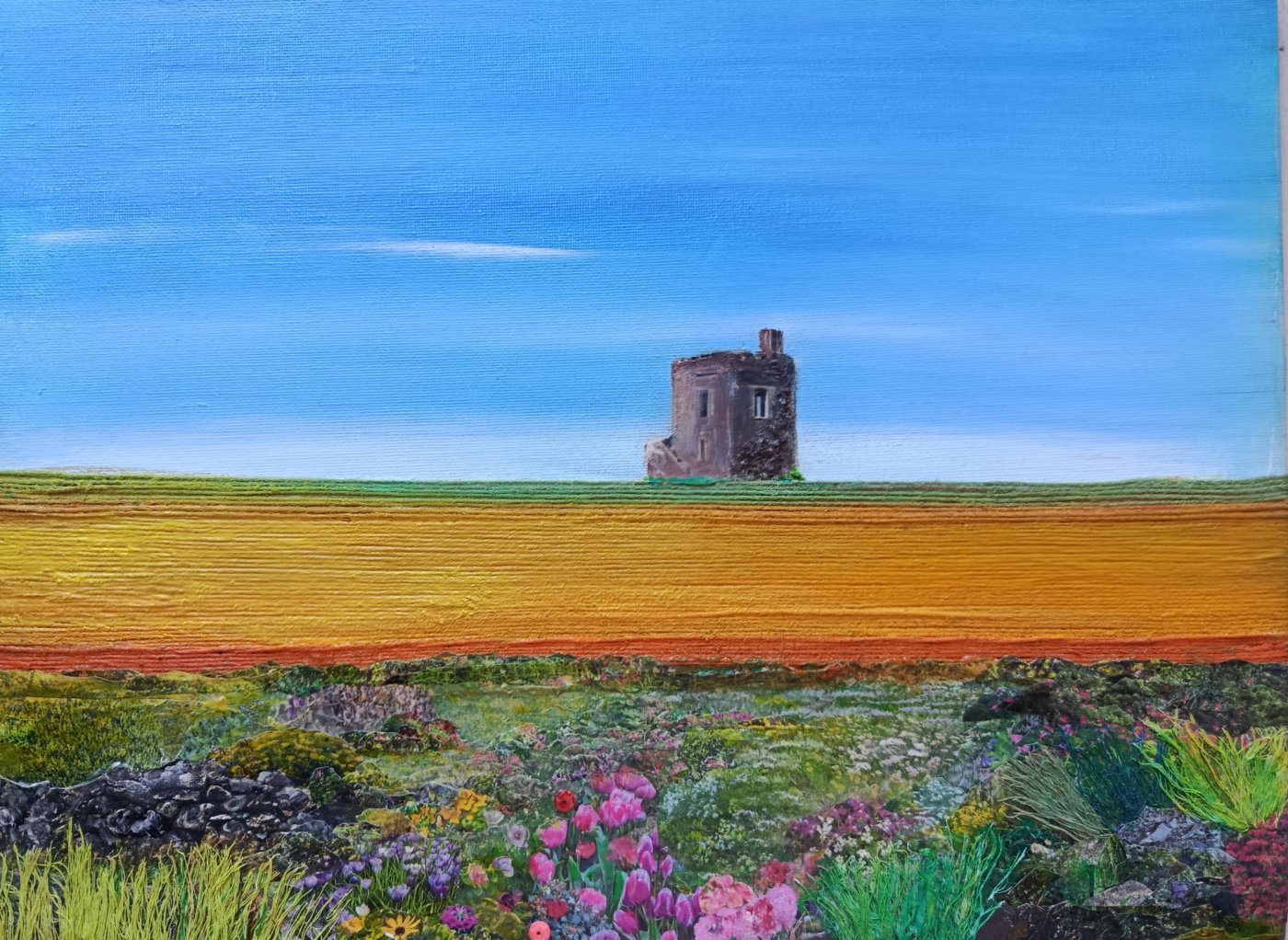
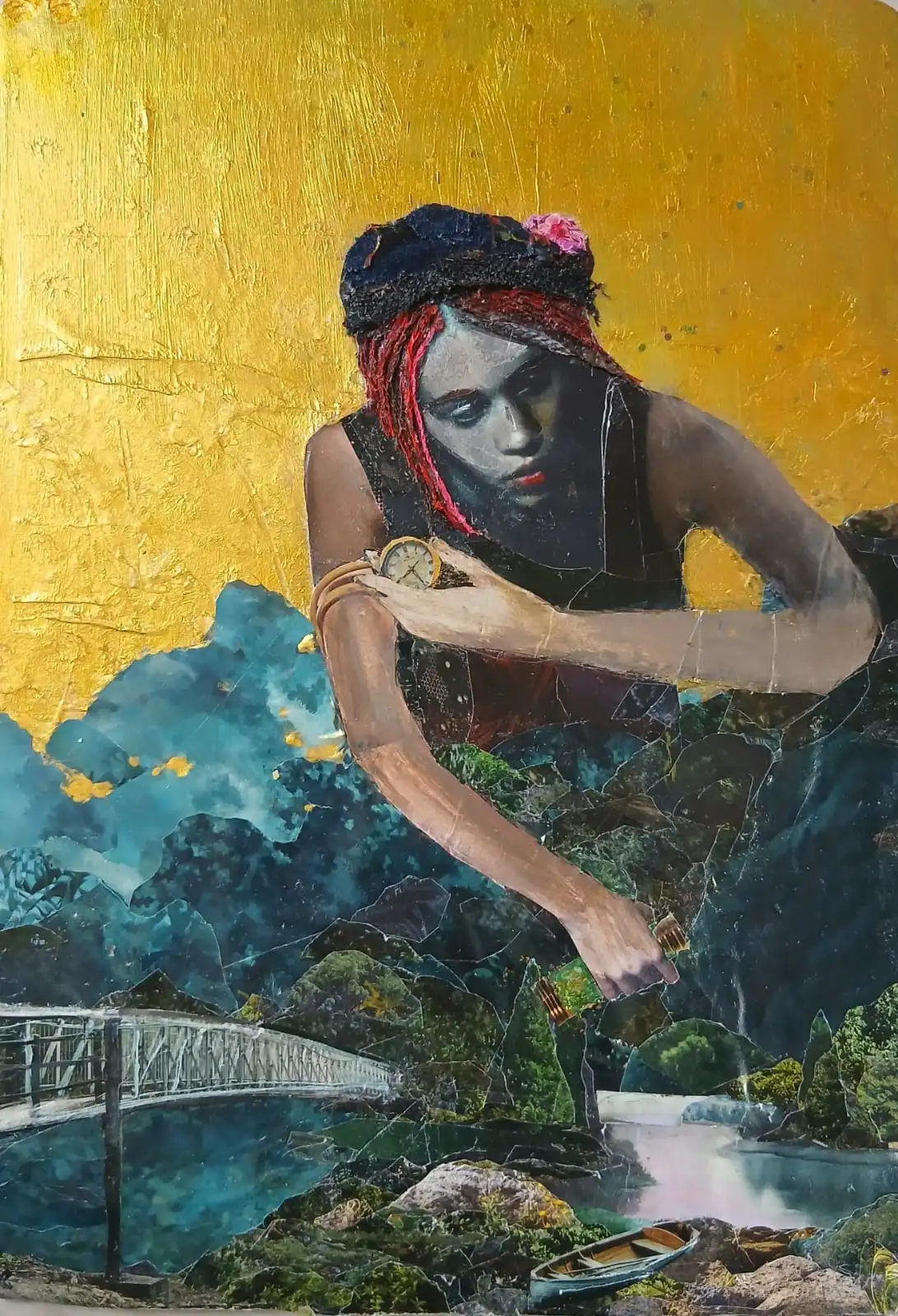
A melancholic Cornish tale set in the nineteenth century.
“A foot?”
The well-dressed young gentleman distractedly glanced at the interloping bone-picker. “Well, it most certainly looks like a foot.” He gestured. “A child’s foot!”
The well-dressed young gentleman stood near the great mud-pile that had come down the hill a day prior. It had demolished the back corner of the kindly baker’s disused stable in which the bone-picker temporarily sheltered.
The bone-picker shook his head. “‘Tis wood, sir.”
“Eh?”
The bone-picker stepped forward, carefully assessing the young gentleman’s well-stitched, double-breasted frock coat, silver pocket watch chain, and smartly folded, canary yellow handkerchief. “Wood, sir.” He gestured. “That there, jutting out, ‘tis wood.”
The well-dressed young gentleman pushed his dark blue hat back, as if perturbed, and then took a finer look at the bark-stripped, slightly crooked protuberance.
“Hmpf, so it is,” he said, straightening his back and readjusting the hat. “Edern While,” he said, and extended a hand.
“Jonah,” the bone-picker said, and engaged a strong, firm grip.
“Good thing no greater damage was caused by such a force.”
“Mister Millar claims an interested party will be carting the bulk of this richly soiled bounty to Looe Isle. Day after the next, ‘tis the word.”
Edern looked at the rear of the baker’s house. “And, pray tell, good sir, Jonah, where will you be venturing, the … day after the next?”
The bone-picker’s tongue flicked between gaps in his upper teeth. Tailored cotton trousers and wide, durable shoes. Heels moderately worn. Nothing overdone. Right natty. “Weather cooperating, sir, this time tomorrow, I’ll be bound fer Truro.”
Edern nodded. “Good pickings there, I imagine.”
“I be a most-fare discriminator.”
Edern’s face darkened. He raised an accusatory finger. “Your eyes … like cold black pits. Dead, dark things.”
Jonah grinned. “Blame me father, sir. Me mum’s was clearest blues. Lovely, lovely gemstones, they was.”
“Be you more man than beast?”
Jonah shrugged. “I make it a point to wash. Aye, and I skirt a stranger’s business. Truly, I mean no harm, sir.”
“More beast than man?”
Jonah took a step back.
“Beast!”
The bone-picker crossed himself.
Edern yanked on the stick. It made a hollow sucking sound as it came free of the muck. To Jonah’s eye it had the look of a crude dowsing rod.
“No…” Edern said. “‘Tis decidedly not a foot.”
A train rumbled past. Pebbles and larger rocks bounced down the hill, littering the periphery of the great pile.
“Blast!” said Edern, turning and casting the stick into the sodden earth.
“May peace shadow your way, sir,” Jonah said, and retreated into the damaged stable.
Up in the light of a sunny day, I saw thee in thy April-bloom…
Early morning. Few souls about.
Not that the infernal trains respect otherwise comfortably quiet hours during their obliviously violent transits. Ten hours from Penzance to London? Unfathomable but a few years earlier. Now a cruel fact. A loud, congested, maddeningly irrefutable fact. Must find proper method to—
“Edern!”
Engage a round, familiar face. “Mr. Martin.”
Out in the open street, while not ideal, is leagues better, encounter-wise, than the man’s cramped office. Thankful to have outlasted the seemingly endless stream of notary-stamped paper!
“Good to see you out and about,” Mr. Martin says, a hardy handshake-too-many. “Today the final day, hm?”
Lower quaking hand and flex fingers. “Indeed, it is.”
“And your journey abroad, settled on a final itinerary?”
“Oh, well, um, Caen, as a—a jumping off point. Wonderful abbeys…”
“Caen?” A wrinkling of the man’s profuse eyebrows. “Oh, yes, a well-worn destination. Hopefully, the remainder of your journey will be a tad more adventurous, exceeding those temperance tours organised by Mister Cook and his ilk.”
“Well, I’ve compiled a list…”
“What time’s your departure?”
“Tomorrow morning, first thing.”
“Ah, so soon, so soon.” Great jowls quake. “Seems only yesterday…” Red, callused fingers plough a swath of snowy white. “You and Kerra, skipping past my window. The dog, that beagle you had, what was…” Abnormally long blink. “What was…?”
All fled. “A lost world.”
He squints at the friendless sun. “Well, yes…” Two rapid blinks. “Mr. Willson mentioned the changing of the locks. Yes. Later today. S’pose you’ll be spending your last night at the inn?”
“Oh, most likely.”
“A guest in your place of birth.” Bloodless gums grotesquely exposed. “We must get together. Later. Bissell’s. I insist.”
A curt nod. “Yes, of course.”
“Take care, dear boy.”
“Good day, Mr. Martin.”
Opposing directions. Like duelists measuring requisite paces.
Foxtail. Gone, near a score. That long? Yes. Long dead and gone. Mining interests wholly divested. Ancestral homestead sold off. The majority of material worth reduced to a precisely fixed number. Sloughed weight. Observe the immaculate reduction of Edern Herbert While, erstwhile gentleman of leisure and ruined gadabout. Lately: semi-refined miserabilist. Speak well of him…
Beside the sheltering moss-crown’d wall, I’ve placed, to shadow thee, my sweet…
Michael the Blacksmith roots in the garden. The voracious creature respects no civil boundaries. Certainly, Mrs. Velland no longer cares. When Kerra still tended the beds, the old woman diligently minded Michael. Now the black-headed ram roams free. Munch! Munch! Munch! Tiny eyes impossibly serene. His master’s garden untouched. Radishes. Michael the Blacksmith can’t stand them. His preference tilts toward large leafy things. Bear witness to Kerra’s ravaged garden. The buyers will undoubtedly repair the trampled fence. Michael will bleat in protest. None will care. He has no idea regarding the future that awaits. Enjoy your last pilfering, rude beast. Now, where—?
The comforting familiarity of the click. The lock was of top quality a half-decade back. Newer models, compression bronze, and similar, have supplanted. It’s certainly beyond Michael the Blacksmith’s capabilities. Odd sight, just past the threshold and no tables. History of While-occupied tables now finished. How many generations wiled away their time at a succession of sturdy, black-lacquered and gilt-accented Davey Elms? Disruptive children below. All the whispered gossip and rancorous debates, the clatter of porcelain cups and floral-patterned plates. Someone at the piano forte. Life at a full roar. The room appears so much larger, comically vast in its transient emptiness. Shortly, a new table, followed by topical discussions. Playful toddlers underfoot. Continuum of the daily art.
For what reason the space exists.
Carpenter—Ove Parker—has done fine work. Floorboards level. Stair steps silent. Firmly stamp each one, especially the previously unsettled fourth.
Always laud exemplary craftwork!
Upon the crest of Camborne hill … Nature decreed it in her will…
Wall hangings no longer decorate the upper landing. Bright-box reminders of previous occupants. How many Whiles perished here? How many were born? Last breaths and nascent cries. Stacked over time. Like the tables and other auctioned fixtures. Ghostly echoes of a once-restless inhabitance.
Short rap and a faint creak. “Mr. While?”
Stand petrified before the door that refuses easy trespass. Such awesome tension. Too powerful to—
“Mr. While, excuse me, but are you up there?”
Contrive an embracing visage. “Ah, Mr. Willson, so glad we didn’t miss each other.”
“Yes, and I as well.” Firm grip and warm bearing. As genuine a chap as necessity demands. “Sadly, I could not find a key to the upstairs room, the one just down the hall from—”
“Yes, well, it shouldn’t be a problem. Nothing of substance remains.”
He pauses. “Oh, yes. Very well, then. So, we’re all in order. There are a few documents left to sign but I’ll forward those to—”
“Mr. Martin.”
“Mr. Martin, yes. A most comprehensive gentleman.”
“That he is.”
“Wonderful. Well, off to other business. I’ll let you finish your farewell inspection.” Checks watch. “Be well, Mr. While.”
“Of course. And you as well, Mr. Willson.”
A less firm handshake and he’s gone, practically skipping toward the next profitable prospect.
As if propelled by Mr. Willson’s words, the kitchen’s inspected. The window above the sink is ajar. Latch it tight. Leave nothing to chance.
A red-billed chough lands on the sill. Expectation quickly evaporates. Wee little bird-brain. Quick twists of a never-still head, and off to a superior perch.
Like minds.
Secure the lock, pocket key, and depart. Michael the Blacksmith has wandered back to his yard. Garden’s a total loss. Kerra’s spirit, if ever liberated, will be sorely disappointed. She can harry the defiler, haunt the dreams of a sheep who likely counts prancing children to better summon sleep.
Transplanted thence into the town … To deck the poet’s garden there…
Mr. Millar stands before his shop, fixing a weathered sign exhibiting the carved image of a sweet roll.
“Morning, Edern.”
“Mr. Millar.”
The hanging announcement has gone askew, excessive slack surrendered on its right side. The baker patiently corrects the misalignment. “Last day amongst us?”
“It is.”
“Probably a good thing. Kerra wouldn’t have wanted you to become a grey-haired bachelor like me, rutted to one spot. Good to get out, experience other lands.”
“Agreed.”
He finishes the chore, steps back, and is pleased. “Care for a hot roll?”
“Oh, most certainly.”
Like the majority of the town’s proprietors, Mr. Millar lives above his business, his public and private spaces neatly subdivided. Kerra might have drawn her final breath in one of the rooms above, had she agreed to the convivial baker’s proposal. ‘Tis doubtful the man’s age put her off. Most likely it was the notion of stupendous predictability that doomed the affair.
“Mind your fingers…”
Warm bread is a deathless delight.
He wipes his hands. “Saw you up and about, earlier.”
It’s not a question but a compulsion to explain overwhelms. “A last stroll.”
“Ah.” He nods. “Quite understandable.”
“I enjoyed a close inspection of the mud.”
He glances over his shoulder, even though the mound’s obscured from view. “Yes, most fortunate the damage wasn’t too extensive. There’s a buyer from Looe. Islander who grew up near here. He made an offer shortly after the unexpected tumult.”
“Yes, the squatter mentioned it.”
“Something about wanting better clod for his land.”
“Offer him a fair deal?”
Mr. Millar smiles. “Charity brings us closer to God.”
Will definitely miss the baker’s fresh rolls. “He moving on?”
The man pauses, and then nods. “The squatter? Oh, yes. Way of that lot. Discards and castoffs. Ever unsettled.”
“Odd way to live.”
“We all walk a singular path.”
The kindly baker will die alone, somewhere upstairs. No one to hear, or to grasp a faltering hand. “Hope he doesn’t abscond with a pocketful of mud destined for Looe.”
The baker chuckles. “Another roll?”
Politely decline and wish the generous bachelor well.
Clouds driven by eastwardly winds, no doubt seeded with Greater London smog. Acrid rains are increasingly common. Miners advance on surrounding hills. Is it really so different, this last day? Perhaps a slight variation of the same day; six generations’ worth of earthly toil. Save for the noticeable uptick in pace, of course. The propulsive Great Western Railway embodies Brunel’s bold engineering feats. Truro and Falmouth, linked. Now Penzance has acquiesced. How long before a bridge to Looe, so that flat-bottom rail warrants no virgin swath of earth remain unspoiled?
Progress eclipses formerly reliable sightlines.
A memento, dear to me, thou smiling angel of the dells!
Tippett’s shrewdly caters to the increasing swell of tourists. Very Latest Fashions! Special Discount on Last Season’s Formal Wear! He’s a few years younger, dark-haired and slim. Impeccable chap, head to toe. He studied in Paris, has Great Notions regarding Haute Couture. Gaunt reflection in Tippett’s polished glass reveals an outfit that is clearly out of date but hardly shabby. Father shunned old suits, came from a time when even the tiniest details mattered. But these threads are comfortable, familiar. While it might not be an ensemble worth spending eternity within, it nonetheless retains more than enough style to merit a leisurely trek across town.
And I shall see within his bower, and think upon them every hour…
Sally Donning appears in the display window, carefully adjusting the variety of outfits adorning headless, armless mannequins constructed from papier-mâché. She realises she’s closely watched. A slight crinkle mars an otherwise pristine brow. She’s a year older, still unwed. Something might have happened, in the flower of youth. The boat ride along the Fal and subsequent picnic on the shore, beneath the shadow of Pendennis Castle. It’s one of those idyllic afternoons that gets fixed in the mind, as if preserved in a treasured scrapbook, home to dainty keepsakes and dried primroses; comforting artefacts that never wholly diminish.
Sour-faced Sally. Never quite measured up to her nobler designs. Difficult to surpass something contrived in the imagination of another. No helping a person’s inborn limitations, and especially in comparison to imperishable ideals.
I’ve set thee in the border neat, and green leaves, where the sunbeams fall…
Cross muddy fields that smell of sunbaked manure and wild gorse. Corfield’s stables remain unchanged. As a boy, tramped through the muck and yearned to be older, intensely impatient for scrawny limbs to lengthen so that he might competently drive a pliant colt or willing filly. Attending auctions at the equestrian market in Falmouth. Ah, to slip behind the memorial curtain and enter a place bereft of pressing cares; safely eluding dark harbingers relentless in their thorny torments.
Gravemounds overrun the cemetery’s boundary fence. Grey and white headstones encroach upon the heart of the old village. Only blackened rubble remains of the church that burned in ‘29. Tall edifices represent the founding families. There is a While stone from the early 1400s. Earlier markers have eroded. Thomas, who made a living on the water, and participated in the rebellion of 1497, lies here. Namesake Edern rescued the future Duke of Cumberland, Prince Henry, a hundred years past, after the royal vessel foundered off the coast. Mining rights that subsequent Whiles enjoyed—and grew increasingly indolent as a result therefrom—granted not long after. What great achievements stunted by so magnanimous a gift? Was it the beginning of the end for a lineage now singly embodied and so embarrassingly adrift?
Such visits unavoidably terminate at the same, tidily kept marker: Kerra Bryluen While, Beloved Sister. An angel immanent among us.
“I’ve nearly memorised that poem in the Journal you liked so much. Married it to the prettiest melody, similar to one you used to play. I only wish my thoughts didn’t wander so … Lately, I can’t seem to focus. Not as well as I used to, anyway.
“I…”
No more cares, dear Kerra.
All still.
Thou should’st unfold thy virgin flower, and there the miner mused beside thee, across the balmy evening hours…
Sun arcs past noon. Equal parts parched and famished. Approach from east end. Bissell’s is patronised by the usual crowd. Hasty greetings followed by welcome refuge in a quiet corner, out of reach from the main host.
Roast gammon, black pudding, and Extra Stout. Stray weeklies litter tabletops. The chatter veers from mundane to braggadocios. A reliable custom, going on two centuries, and that’s merely accounting for the first generation of Bissells to wait on millers, miners, coopers, cobblers, and inclined men of leisure.
“Backalong, I recall them engineers, standing up there, surveying the estimated lay of track. Trying to figure out how they’d bend the land to their will. Bend and bow, that’s the great challenge. No flat terrain like inna Fens. No, sir. That was the quandary. Pushed matters back apace. Yessir.”
Royal Cornwall notes completion of broad gauge from Truro to Penzance. Two pages later: Explosion at St. Allen Powder Works, outside Truro. Fourth time in the past three years. Why is that? Is no one accountable? Fatal Accident on Truro River. Boy crushed to death by boat while attempting to make launch. A wink of time, perhaps considering his next meal, or a dusk-lit swim…
“Be a cattle plague up in Ash.”
“Sad state of affairs, truly.”
“North Devon’s got an outbreak of the cholera.”
“Giss on!”
“‘Tis true. I heard a man, he says…”
Plates cleared; beer flowing freely.
Tin, silver, copper, tungsten. Deep and deeper, ‘til there’s nothing left but a gouged world. Simple-minded creatures digging their own graves, returning to the bosom of our perpetual unmaking…
“I spurned thee in the summer’s hour,
All heedlessly, I trow…”
Clapping, some in unison, most lagging behind the rhythm.
“Ah, but grim winter proves his pow’r,
And how I miss thee now!
Dream not these rhapsodies are bosh,
Macintosh! My Macintosh!”
What memory will brighten the dotaged reveries of these men more fondly than a night of shared drink and verse amongst old friends?
“I sought thee when the showers came,
O’er that dear form I bent—
I saw, with mingled dread and shame,
Within they skirts a-rent,
How useless now! You will not wash,
Macintosh! My Macintosh!”
Leaden thoughts, a shadowy vale … eternal flight of a most clever corvid—
“Edern.”
“Nuh—?”
Stained rag over a slumped shoulder. Ruddy cheeks and sleepy eyes. “Edern. Near dark out. Best be on yer way.”
He’ll die on his feet, perhaps cleaning a glass, or rousting a boozy laggard.
Dab chin with father’s favourite handkerchief. “Yes, Mr. Bissell. Much thanks.”
“You got a room, the Gull?”
“I … yes, all is in order.”
“Well, then, a good night to you. And if I don’t see you tomorrow…” He yawns. “Have a grand time abroad.”
“Oh, yes. That is the wish.”
“Any place, in particular, you mean to see?”
“Oh, too many to list, actually. It’s all very exciting.”
“Been meanin’ to travel myself, years-along now…”
“Tell me, did Mr. Martin make an appearance?”
The man shakes his head. “Can’t say as I seen him.”
Terse but warm shake. “Well, take care, Mr. Bissell, and thank you, again, for everything.”
Gloomy out. Lanterns unlit. Lax Mickey Watters. Off fishing and lost track of time, most likely.
That Sally, retreating in the distance? Like a dark charcoal outline fluttering against a hazy blue background. Raise a hand and eclipse the shape. Fist clenched in mock triumph.
Circumvent the great pile and trot upward. A steep but surmountable grade. Astride the track-laden summit. Broad gauge steel. Terminating in Penzance. How many steps until the end? Single-purpose vision. All and everything. Least resistance. Ten hours to London! Nearly a week by horse? Yes, at the very least. Remarkable.
And while it bloom’d, sweet fancies came, and flitted thro’ his tender brain…
The bone-picker roots below. Is that a better way? Practical hardships, certainly, but there’s no denying the merits. When one lives so close to privation, survival must become like a second skin, an armour against adversity. His speed matters not. He tracks discards, and more abundant do such items become with each passing day.
The coming world belongs to him and his grubby, roving congress. The whole of creation: a great carcass mercilessly picked clean.
Descend at a sensible trot. Angle for the house, away from the main road. Approach cloaked in shadow. Be as a most dapper apparition.
‘Till all the scenes in life’s young dream, came dancing along his path again…
But, no, the lock. The damnable lock! Useless rattle. Bottle curses. No need to draw undue attention, disturb sweet Mrs. Velland. How she reddened the cheeks so long ago, a viciousness in her manner, pinching and smiling while tousling the hair with a free hand. That’s how it is with lives lived in close proximity over time. Resentment and presumption, roiling rages and ossified opinions become the norm…
Penzance to London, ten hours. Beyond comprehension.
Heavy rag plucked from the hand-pump ‘round back protects knuckles as the glass shatters. New owners can forward a bill for damages to Address Pending, Hold for Future Collections. Slip through kitchen window like a most proficient prowler. Thrill dampened by lack of occupation. Not a soul stirring. It’s—
Home?
Dash to the top of the landing and … Oh! Ajar. Lock gone. It’s gone. No. No, that’s all wrong. Blasted locksmith! The binding contractual agreement clearly stipulated—
Mr. Martin, he…
Exhale.
Just a peek. Assurance that everything remains as it was that final day.
What right did—?
She shouldn’t have been alone. Coward! Unable to…
All lost, all fled…
Incapable of holding her shrivelled hand and transferring the barest warmth. Such a simple, decent act…
No right. None whatsoever.
Retreat to empty room. Retrieve blankets from cracked wardrobe. Fusty, but will have to do. Just a short rest. Perhaps one final look before…
Settle, for a little while.
Clearly stipulated in the contract…
Copenhagen. Rome.
Bucharest.
Binding…
Split.
Blessed sister…
Samarkand.
Saipan.
Bound…
Spensonia…
And did’st thou know how much I prize thee, oh! thou precious Cornish gem!
Bounding sheep, crossing idyllic brook and dale. One, two … five … nineteen … thirty-six … changing at some unknown count to amorphous sulphuric puffs. In the distance, a remote whist—
The bone-picker crossed paths with Digger at the top of the hill, the town a fair distance behind.
“Jonah, that you?”
“Digger.” The bone-picker halted. “How be Truro?”
Digger spat. “Oh, not nearly picked clean, that cluttered hovel.”
“On yer way to Penzance?”
“Aye. Makin’ good time. Weather’s a cooperative mistress.”
“That she is.”
“And you?”
“Tracking east. Greater London, thereabouts.”
“London?” Digger considered the bone-picker’s well-shod feet. “No lazy stroll, that venture.” He reached out and examined the right lapel of the bone-picker’s coat, as if seeking a genuine mark of ownership. “My, my, such fancy threads, Jonah! Who’d so carelessly toss such expertly stitched cloth?”
The bone-picker pulled back. “From a man who no longer had a-need.”
Digger grinned. “Not takin’ to plundering graves, are ye now, Jonah?”
“Graves?” He crossed himself. “No, sir. Not I.”
The young man who’d introduced himself as Edern While appeared at dawn. Half-awake, the bone-picker watched him strip naked and neatly stack his clothes at the base of the mud-pile. In the early morning mist, he looked like some impossibly pale, newborn ghost.
“Just good fortune, is all.”
By the time the bone-picker reached the orphaned clothes, the man had entered the great mound, burrowing head-first where he’d liberated the dowser-stick the day before.
“Aye. Well, maybe I’ll find me own well-dressed gentleman down-aways.”
The bone-picker had reached in, but his attempt to pull the man out proved futile. He thought about going for help, but knew there’d be questions. Too many, and a wayfarer such as himself with no candid answers. Honestly, what point was there in saving someone who so willfully spat in the face of salvation?
“Always another to be found.”
Digger nodded. “Be hopin’ so.”
“Be well, Digger.”
“You, too, Jonah.”
The two men parted. Digger began his descent while the bone-picker moved even with the train tracks, confident of reaching Truro by the last of the day’s light.
I am going to tell my waiter that I
consent to them holding my hand while
we sit by the fire in a mutual dream we
will have tonight.
I am going to say that it is even ok to
kiss me and rub my earlobe like a sage
leaf while they hum the sea shanty they
know I like. I have said little
else than “thank you”
to them when they serve me chicken
strips, but in the dream they will know
I like Barrett’s Privateers and listened to
it on repeat when I was eighteen,
alone, closing every door like the song
was a secret.
I am going to tell them that it is ok to
think about me with a bedsheet
between their legs before they go to
sleep or after they wake up and wonder
if there is an alternate universe where
we live together in a treehouse on
another continent and must throw down
pots and pans on slick pink heads of
mutated men to defend our home.
It is ok to then wonder why every plane
where our lives entwine is in the middle
of its third or fourth world war and/or
climate event.
I might say: O, we have so much in
common. I also obsess over basic shit.
I am going to tell my waiter that it would
be completely fine if it turns out they
can’t live without me.
I am a messiah or a college education
or both, since once you know me I am
impossible to be unknown.
It would only take a bit of reading-in, a
movement swift enough to glimpse
the tapetum lucidum behind my tongue,
for them to understand that I am not just
being nice
when I say that their Hufflepuff sweater
is cool –
I am offering the evergreen pinpricks of
our future together. At that point,
I should probably tell them that I have a
partner but that this is a non-issue. I will
explain I am polyamorous
born to it like a turtle to the ocean, and
that the journey to self-acceptance had
few casualties, no broken men in
Halifax.
Not to worry, I will say – I have split up
no marriages
besides that one
and they didn’t even break up before
they stopped talking to me, and that I’m
sure that venus trap snapped shut as
soon as I wasn’t in their DMs
and they’re fine.
I am going to tell my waiter that I do not
tip them extra because I don’t play
favorites
but if I did I would give them the tip
that when someone lets their hair down
while you’re talking to them it means
they want to waft over to you like leaves
darting through wind.
I would also give them maybe about five
to seven dollars and tell them to get an
ice cream, a pistachio gelato, even
and say to think of me the entire time
their blood pressed against their eyes
while they ate it.
I would say: it is alright to want to eat
gelato so fast so badly.
I am going to finish this poem to give to
every bartender in every close-talking
cocktail bar in every tight black shirt
instead of my phone number.
If you are reading this, I do not have a
phone number. I do not have any
means of contact or entry into my
person.
I have no origin and no home.
I have put myself out of it over and out
of my love for you.
The first sound is wrong.
You expect the muller to move smoothly — the heavy glass bell riding its own weight across the porphyry slab in the figure-eight the manual describes, the pigment submitting to the medium with the quiet efficiency the hand expects. What you get instead is resistance. The smalt from the Saxon glassworks is not a powder. It is debris — cobalt glass ground to a coarse grain, thirty to fifty microns across, each particle a shard with edges. When the flat base of the muller meets the slab and the weight comes down — fifteen, twenty pounds of downward pressure, the arms finding the pattern — the sound is the sound of a window being slowly destroyed. A bone-dry crunch, mineral against mineral, the glass fighting the stone for the space between them.
This is not a failure of technique. It is the material telling you what it is.
You cannot grind smalt finer. This is the constraint the painters knew and worked within and occasionally forgot at great cost—both physical and financial. The cobalt that gives smalt its blue is not chemically bonded to the glass matrix in the way that the sulfur gives lapis lazuli its blue. It is present in the structure of the glass, and the glass holds it, and the glass is transparent, and the transparency is why the blue is visible at all — the light enters the particle, encounters the cobalt, and returns to the eye carrying color. But reduce the particle below a certain size and the physics changes. The smaller the shard, the more surface area relative to volume, the more the light scatters at the surface before it can penetrate, and the scattering produces not blue but white. Grind smalt to a flour and the blue vanishes. What remains is a pale, chalky dust that has given up the only thing it had. The painter’s muller must be heavy enough to shear the particles without pulverizing them. The figure-eight must be thorough enough to coat every shard without crushing it. The margin between the blue that holds and the blue that disappears is a matter of pressure and patience and the knowledge of when to stop.
※
The pigment in the dry state is mute.
This is the fact the muller is working against. Smalt in a jar, surrounded by air, does what all dry pigments do in air — it scatters light at its surface and returns it to the eye as a flat, chalky approximation of its color. Air has a refractive index of 1.00. The smalt glass has a refractive index of 1.49 to 1.52. The mismatch between these two numbers is the reason the dry powder looks dead: the light hits the boundary between the air and the glass and most of it bounces back immediately, never entering the particle, never reaching the cobalt, never returning to the eye with the depth the material is capable of.
The linseed oil changes the arithmetic.
Its refractive index is 1.48 — nearly identical to the glass of the smalt. As the muller works the oil into the pigment, the oil displaces the air from the microscopic spaces between and within the particles, filling every crevice the air previously occupied. The boundary between oil and glass is almost no boundary at all. The light that previously scattered at the air-glass interface now passes through the oil-glass interface with almost no deflection, entering the particle, traveling into the material, encountering the cobalt at depth before returning to the eye. The color that emerges from this encounter is not the surface color of the powder. It is the interior color of the glass — deeper, richer—the blue the material was always capable of producing and could not produce alone.
The paste that forms on the slab is not the powder made wet. It is the powder made capable.
The sound changes as the oil wets the dust. The bone-dry crunch of the early passes softens as the oil fills the spaces between the shards — the grit giving way to a wet, rhythmic suction, the muller now moving through a medium that yields without surrendering, the resistance becoming the resistance of a thing that is being organized rather than destroyed. The painter reads this change by ear as much as by eye. The shift in the acoustic signature of the slab tells her the wetting is proceeding, that the oil is reaching the particles it needs to reach, that the suspension is forming correctly. She does not stop to look. She keeps the figure-eight moving and listens for the moment the sound tells her the paste is ready.
※
In 1643, Jan van Goyen stood at his panel in The Hague and reached for the smalt.
He was not being careless. He was being economical, which in the studio economy of the Dutch Golden Age was not a moral failure but a professional survival strategy. Natural ultramarine — lapis lazuli imported from the mines of Badakhshan in Afghanistan, shipped through Venice, ground by specialists and sold by apothecaries — cost more than its weight in gold. Van Goyen was prolific in the way that the market demanded: landscapes completed in a day, sometimes two, the tonal style he had developed requiring fast decisions and materials that were available and affordable. Smalt, produced in the Blue Color Works of Saxony, was brilliant, blue, and a fraction of the price. He reached for it the way a working painter reaches for what works, and he painted the sky over Leiden with a material that was, on the day he applied it, as vivid as anything lapis could have provided.
The painting is in the Alte Pinakothek in Munich. The sky over Leiden is not blue.
What happened in the three hundred and eighty years between the brush and the museum case is a chemistry Van Goyen could not have fully anticipated and that the physics of the material made inevitable. The cobalt glass of the smalt is not a stable compound. The potassium in the glass matrix, present as an impurity from the glassmaking process, reacts slowly with the fatty acids in the linseed oil — a process called saponification, the same chemistry that makes bath soap, but is here producing metallic soaps that migrate through the paint layer and alter its optical properties. As the potassium leaches out, the glass matrix that held the cobalt loses its structural integrity. The refractive index of the degraded glass shifts. The oil, which has also been oxidizing and browning across three centuries, no longer matches the index of the glass it surrounds. The boundary between oil and particle, which was almost invisible when the paint was fresh, becomes visible again. The light scatters. The blue fails.
What remains is a translucent, clouded film — the ghost of a sky, the glass still present in the paint layer but no longer functioning as glass, the cobalt still technically there but unreachable by the light that once found it. The brown of the oak panel bleeds through. The underpainting, the dead-color layer Van Goyen laid down before the sky, is visible beneath the smalt’s failure. The sky over Leiden has not faded in the way that a watercolor fades, There, the color is simply diminishing. Here, the luminance has been chemically replaced — the blue dissolved into the medium that was supposed to hold it, the substance of the sky returned to a transparency that was always latent in the glass.
The invoice arrived late. It always does with smalt.
※
Forty kilometers from The Hague, in Delft, Johannes Vermeer was bankrupting himself.
The word is not an exaggeration. When Vermeer died in 1675, his wife Catharina Bolnes faced debts she could not discharge. The inventory of his estate included paintings he could not sell and debts to the baker who had accepted paintings as payment for bread. Part of the problem was productivity — Vermeer finished perhaps two or three paintings a year, an output that could not sustain a household of eleven children by any reasonable accounting. Part of the problem was the ultramarine.
Vermeer used natural lapis lazuli the way other painters used cheaper materials — not as a luxury reserved for the most visible passages of a painting, but as a foundational material applied even in the underlayers where no viewer would ever see it. His conservators have found ultramarine in the grey underpainting of the Girl with a Pearl Earring, in the preparation layers of the Milkmaid, in places where the expense was invisible to any eye but clear to the gaze of chemistry. He was not painting for display. He was painting for duration — laying in a material whose molecular architecture would hold the light for as long as the painting existed, regardless of whether anyone would ever know it was there.
Lapis lazuli is a tectosilicate — its structure a rigid, three-dimensional cage of aluminum, silicon, and oxygen, the sulfur that produces the blue held inside the cage in a form that does not react with the organic acids of linseed oil, does not saponify, does not leach. The refractive index of ultramarine is approximately 1.50 — nearly identical to smalt, nearly identical to linseed oil. The light enters the particle and finds the blue at depth and returns to the eye carrying exactly what it found. Three centuries later it still does this. The cage holds. The blue in Vermeer’s paintings is the blue Vermeer mixed on his slab, slightly darkened by the overall yellowing of the aged oil but structurally intact, the sulfur still in its cage, the light still reaching it.
He paid the invoice on the day he ground the pigment. Van Goyen deferred it to the museum.
※
The painter scrapes the finished paste from the slab with a palette knife.
The motion is clean and final — the blade angled low, the paste gathering ahead of it, the slab emerging behind it in a state that is almost but not quite what it was before the session began. Almost: because the stone is porphyry and the porphyry is slightly porous and the oil that penetrated the surface during the grinding has left a residue no scraping will remove. The slab is permanently altered by the work done on it. Not visibly — the surface looks the same to the eye, clean and grey and ready for the next session. But the oil is in the stone now, filling the microscopic spaces the grinding opened.
The painter does not think about this. She has the paste and the paste is what she needed and the session is finished. The muller goes back to its position beside the slab. The palette knife is wiped clean. The paste goes into the lidded vessel that will keep the air off it until it is needed.
The air is what she is always working against. The air that surrounded the dry powder and kept the light at the surface. The air that the oil displaced, particle by particle, in the figure-eight on the stone. The air that will eventually return — through the slow oxidation of the dried paint film, through the years the painting hangs in the light, through the chemistry that no sealing varnish can permanently prevent. The painter knows this the way Van Goyen knew it and did not fully reckon with it — that the paste she has made is a suspension, a temporary condition maintained by the oil’s ability to hold the particles where the light can reach them, and that the oil’s ability to do this is not permanent, and that the painting she makes today is a negotiation between the mineral and the medium — terms she can establish, but not enforce.
The smalt is ready. The sky is possible. The invoice has not yet arrived.
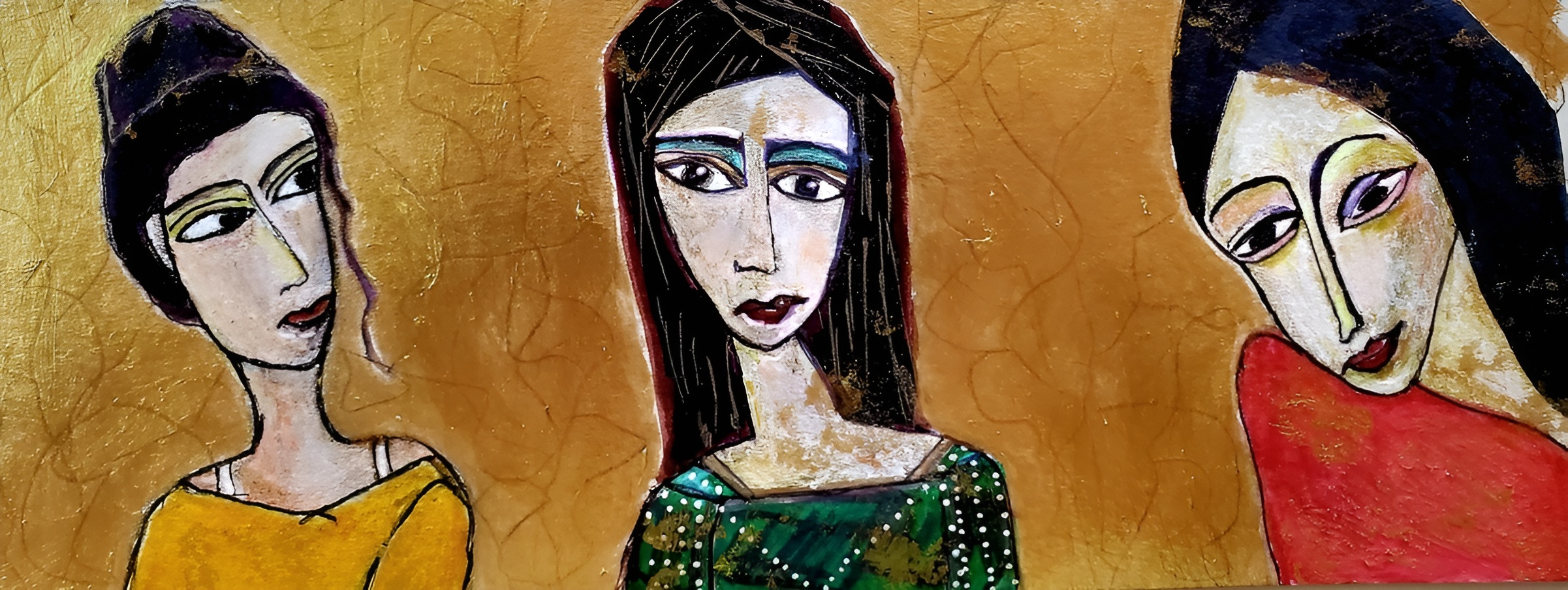

“The least thing shall not be forgotten.”
— Julian of Norwich
Breathe in, see Cosmos.
Hambone wears Cosmos like a shirt, buttoned tight to
the neck, well-fitting shoes, armor. In black soil, he
plants the hazelnut. From it: every thing, all, every
choosing, all celestial bodies, every atom, grass,
heartbeat, yearning.
One-Cent empties, opens.
Grace, GirlJane seeks, in the organ tone that echoes,
echoes the ceiling mural, a flash of raptors. Cosmos,
ordinary as meat and salad, toe-nail parings, aspirin,
fire circle smoke, good acts, good touch, good words.
Body knows Cosmos, like a twin. Good is. Every thing
in tune, all melody. Dance the air. The still point —
Child of the Century hears the still small voice. Every
thing to all, all is every thing.
Joy in three degrees, pain passing amid breathing. Pain
of blood, pain of heart, hardest. All suffer, every one.
One of every thing, Cosmos. Each creature and every.
Cosmos is.
Sin necessary.
Denmark Jones feels no blame. The outcast embraced.
Pry open the Cosmos to the hazelnut. Closed within
three words. Lucy searches for every thing, seeking is
finding beyond the grit of logic.
Every thing well in the Cosmos. Faith is. Secret without
answers. All is full in the Cosmos. The black and the
planets and the stars, just. Freedom, GirlJane found.
Each and all miraculous, mysterious. Each flaw, perfect.
Hambone’s fall, joyful pain. The grace of the Cosmos.
Child of the Century: Yearning for all. Cosmos, pleasant,
terrible.
Lucy walks the rhythm of all.
All is large with every thing. Darkness not dwelling. Let
all pray, soaked in wonder, the song. Drink down the
Cosmos. GirlJane shown all. Nothing between all and
every thing. The duty to embrace surprise. No anger in
the Cosmos pulse.
Fail fall full.
The grace of all, endless lines beyond the horizon. The
archangels of the Cosmos are every thing. A garden of
Cosmos. Parent, child, spouse — all. More and less and
every thing. Lucy present at the mingling. No start to all.
In and through all. Cosmos is fidelity and wisdom.
Lincoln Scarlet, Cosmos stone. Through eros, Cosmos.
Through appetite, Cosmos. Through dirt, root, bark.
All and every thing before the great blast. Sensing all
and every thing, Hambone. The grace of stars, planets,
black.
All well.
Lucy, born into the wait for birth. Knit into Cosmos,
knit into meager atom. GirlJane is father, daughter,
spouse to Cosmos, face of all and every thing. Denmark
Jones, born a galaxy. The hazelnut, Cosmos seed.
Over-arching compassion, Cosmos. This is Cosmos: still
and bang. Goose and goslings, Cosmos. Cosmos, child
and all and every thing. Stone and rock, lightning. In
Child of the Century, all who breathe and have and will.
Music of lines connecting all and every thing. Fire and
ice, Cosmos. The energy of ground, roots. We mingle
all and every thing.
One-Cent, a city larger than sea and land. Tempest and
ache, breathing. Weight of breathing, Cosmos. All is
ignorance, wisdom is every thing. Forgive, Cosmos. No
planet refuses its sun.
Fear is moonscape shadow, broken with light. All is
drunk with every thing. Cosmos flows and holds still.
Creates. Lines like roots from here to the edge of all.
The dignity of Cosmos. Each beach pebble, an archangel.
All in the still point and every thing. All in light and
every thing. All is sin and saint, hard and soft, green
growth. The showing of Cosmos.
Deep Cosmos, black fabric, a moment’s glimpse. The
showing of Cosmos, wonder and awe.
Well and right.
Listen up.
I’m only a few chapters ahead of you
in this book, but lemme tell ya:
it does
not
end
well
for either of us.
Well, nothing ever ends, not really.
But I promise,
it’s going to hurt.
When they braid that crown of thorns,
be thankful you’ve got a head to hang it on.
Circumstances are a funnel.
They will separate you into your constituent parts. Turn you into
something else.
A pincushion. A Christmas ornament. An effigy
of the God of Abraham.
The doubt and the pain are more than momentary,
they are the water you walk across.
They are what binds you
to the distant shore.
The surrogate sustenance that fills our lungs until we are born,
they are the medium
of your baptism.
Here's the good news:
you can stop weighing your worthiness.
You. Are. Ready.
When you turned down that deal in the desert,
you placed a bet on your own infinitude.
So stop asking for permission to enter
and walk straight into the temple.
Audacity is the key that opens every lock, it’s the only reason
these motherfuckers keep getting over on us.
Don’t worry about that, though.
This empire, that empire.
It is impossible to interfere with beauty.
And in the morning, shedding
the cocoon of your burial shroud,
stigmata scabbed over, face still puffy
from crying your eyes out in the garden,
wondering why your father left you,
press the perfumed mug of grief to your skin,
cast worshipful noticing on the landfill of creation,
Love uncritically,
and dance yourself
out of the tomb.
They will arrive at the flag football field in ones and twos and threes, those with licenses driving those who lost them to DUIs or other infractions.
They will be men with boys’ names, the core of their old high school team, the ones who won the city championship twice but never made it to state finals. Tommy and Johnny, brothers two years apart and still living in the back room of their mother’s paint-blistered bungalow. Billy of the sculpted pecs and biceps, dropped off in his girlfriend’s white Trans-Am, face red beneath an artificial tan from the inevitable fight on the way over. Donnie and Denny and Bobby, the three musketeers, who work third shift at Bolton Machine, red-faced from their breakfast boilermakers. Joey and Bobby, nine-to-fivers with houses and kids and practically identical green station wagons. Georgie and Markie (Mahkie in the local dialect) who work at Smitty’s, their father’s bar, arriving in the Smitty’s van. James—never Jimmy—the lone exception regarding names and the only Black player. No one will ever know what he does outside the team.
Some will come dressed for the game—shorts, cleats, jerseys, and striped socks pulled just below the bulge of their calves. They will lean against their cars or lamp posts draining the last of their gas station coffee and whatever they poured from the flasks they plop onto their cracked front seats. Others will strip off Friday night clothes behind open doors and shimmy into their unis.
One by one they will toss their cups at overflowing trash cans, shut the car doors, and make their way toward the field worn to dirt down the middle in the loose shape of a fuzzy football, popping their necks and stretching, hands clasped above their heads. A few will jog on the cinder track. Others will drop to the grass, stretch their legs, bend their noses toward their knees.
Johhny, the younger brother and unofficial team manager, will look at the piece of paper he pulled from his pocket and unfolded. Tommy, the elder, the backup QB, will sidle up to Johnny, look at the paper, then look into the parking lot and shake his head. Johnny will look into the parking lot, then look at the paper and shrug. He will mark the page with a golf pencil.
Ryan, the quarterback they cannot win without, will finally drive over from the slump-porched duplex he had until recently shared with his wife, having eaten a bowl of cheerios for breakfast in milk just this side of going sour. He will be dressed in the gear his wife washed and folded before she left, for good this time, she said, wrung out by his family’s drama, his father laid off, his brother in rehab they can’t afford, his mother in bed most days. His shoes will rest on the passenger seat next to a football. Circlets of turf will drop from the cleats as he hits the potholes on McAllister Avenue.
Ryan’s Plymouth Horizon will bottom out on the turn into the parking lot. He will park facing the field. He will see his team scattered on the grass, doing their personal warm-ups with the enthusiasm of teenagers in study hall. He will lay his forehead on the steering wheel, close his eyes, and for an instant float free, of the breakup, of his family, of the team. He will think about re-starting the car and driving away. Then he will hear the thump of punted footballs and distant shouts. His eyes will pop open. He will push up from the steering wheel, and before he can change his mind, he will grab the cleats and football, swing out of the car. He will hip check the door closed, palm the football in his throwing hand (the left), his long fingers on the laces. He will carry the shoes in his right hand and scuff across the asphalt in untied high tops.
Grinning, Tommy will smack Johnny on the arm and point to the parking lot. Johnny will refold the paper and put it in his pocket. The team will notice Ryan and gather in a half circle behind Johnny and Tommy. For a moment, Ryan will feel the weight of their faith in him and think again about turning back. He will not turn back. As he makes his way across the lot, Ryan will pull back his shoulders, lengthen his stride, and lean into a quarterback swagger, transforming before their eyes. When he hits the grass, he will flick the football their way. One of them will catch it.
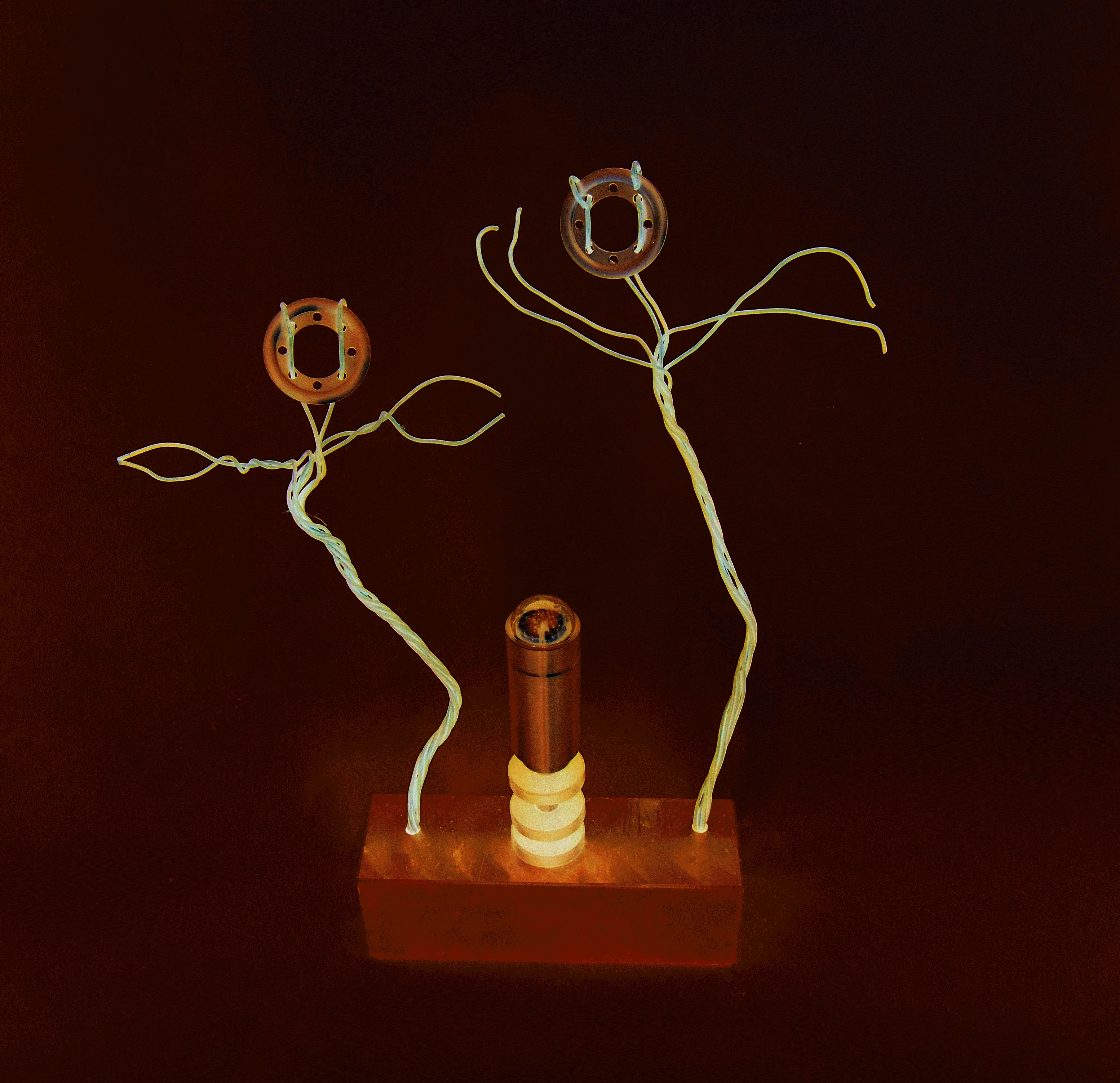
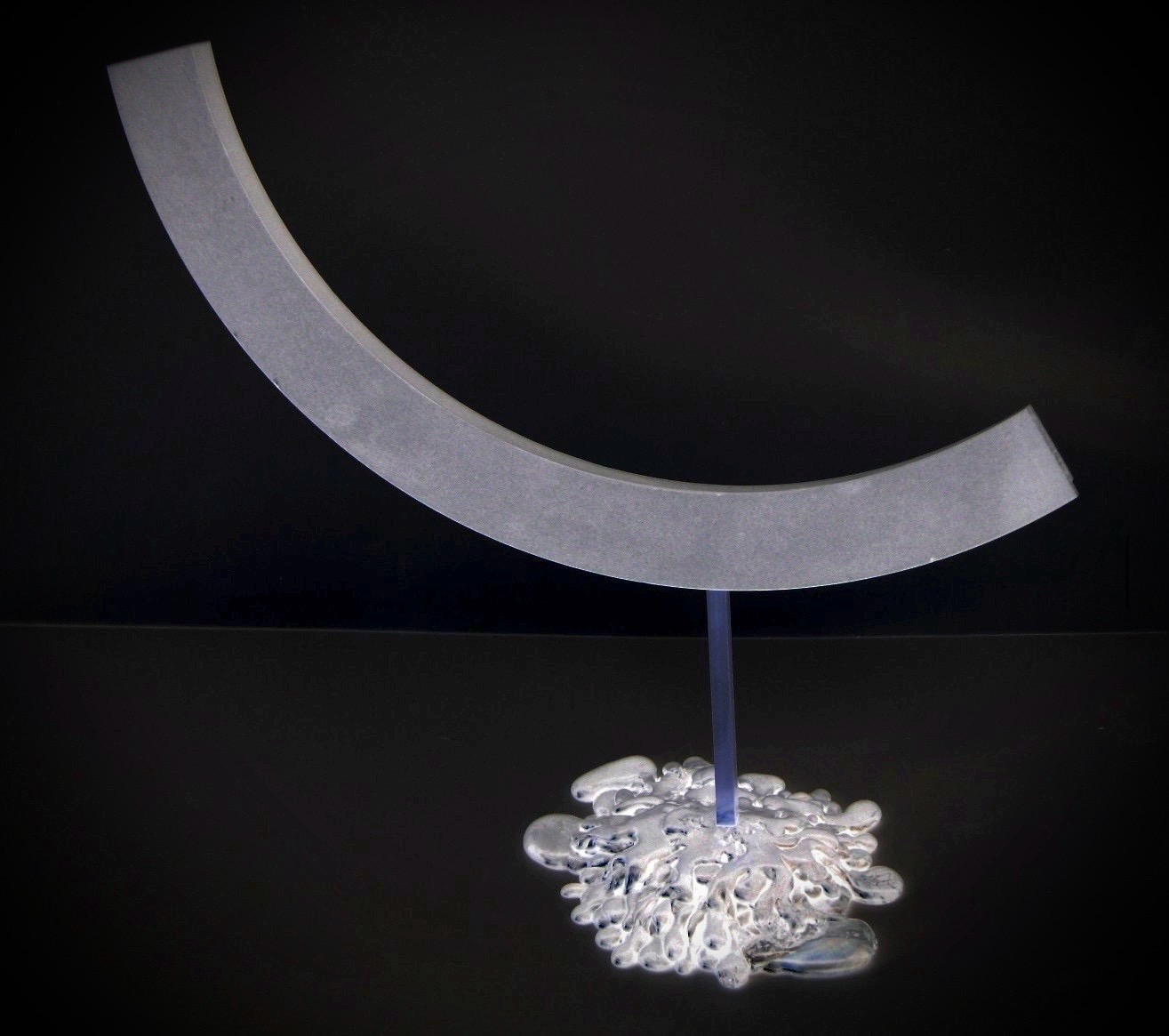
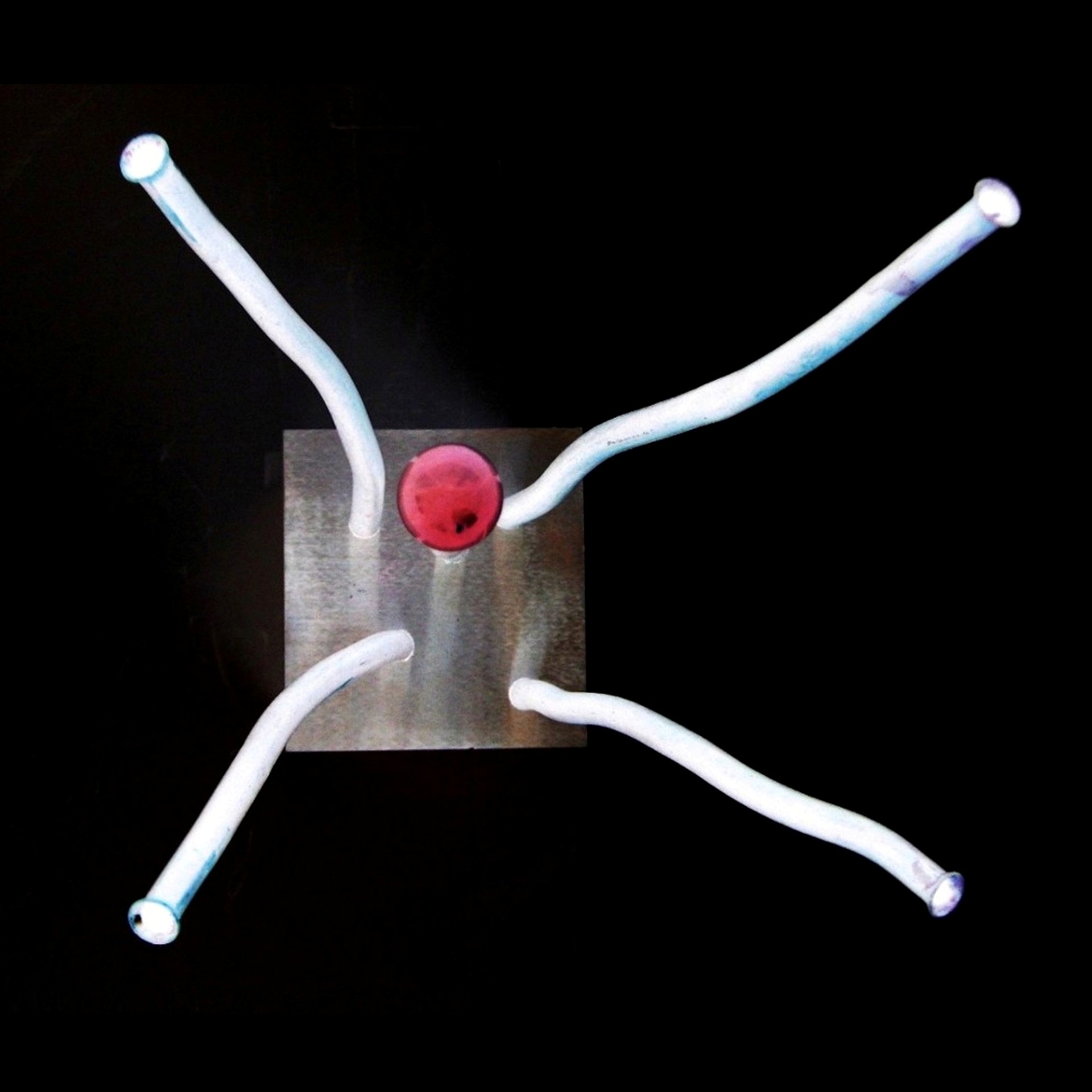
Philip is a Chicago-area based artist and designer. He holds a BFA in Furniture Design from the Rhode Island School of Design and has since studied digital painting under Devin Korwin. Principally a digital artist, Philip creates both fine art and commercial images that capture a sense of light, and maintain clean visual control. With a focus on strong graphic gestures and shapes of color, Philip aims to bring painterly construction to printmaking. Philip is a member of Chicago’s Fulton St. Collective and the Evanston Made arts organization.
Topher Shields is a poet from Aotearoa New Zealand. His work appears or is forthcoming in Puerto del Sol, Northern New England Review, The Shore, Mantis, and Cordite Poetry Review, among others. He was an Editor’s Choice Finalist for the 2025 River Heron Editors Prize and was shortlisted for the 2025 Bedford Competition Poetry Prize.
Deniz Arslan is a Berlin-based Turkish-German writer, translator, and screenwriter. He is the author of Rehavet Havası (2015) and Vatandaş Bērziņš (2018), and the co-writer of Eye Am, which received the Special Jury Prize at the Moscow International Film Festival in 2014. His fiction has appeared in Wild Word Magazine, The Offing, and The Blizzard.
Katerina Canyon is a poet and writer based in Harlem New York. She is the Executive Director of the Peace Economy Project and is an MFA candidate at the Mississippi University for Women. She holds a Master of Arts in Law and Diplomacy from The Fletcher School at Tufts University. Her work explores memory, language, race, and the body. Her poems have appeared in literary journals including The Closed Eye Open.
Robert Eugene Rubino is a retired newspaper copy editor and sports columnist and former adult literacy tutor whose first published poem appeared eight years ago in The Esthetic Apostle when he was 70. Since then he's published three collections and his work has appeared in various online and print journals. He remains active in the open-mic poetry circuits, both virtual and in person, throughout the San Francisco Bay Area and beyond.
Wayne Tan graduated from UCLA with a degree in English and is currently based in Singapore. His writing has appeared in Angels Flight Literary West, Poached Hare and The Abstract Elephant.
Matt Gold is based in Pittsburgh, PA, where he divides his time with work across various mediums, including photography, digital art and music. His first image, a picture of his cat on a Sony Ericsson Z310A flip phone, was taken in 2008, and he has continued to explore the aesthetic possibilities of mobile photography and beyond. Gold’s work has been featured in numerous publications and journals. Most recently, he collaborated with Jones Soda, for their PRIDE 2023 campaign and was part of Beeple’s Election Night Exhibition.
Jason Youngclaus is the author of the poetry collection Little Planet Raisins (Spartan Press, 2020). His work has appeared or is forthcoming in JMWW Literary Journal, Cathexis Northwest Press, Pictura Journal, Transcendent Zero Press, and From Whispers to Roars, among others, and has been nominated for the Pushcart Prize.
Kayla is based in SLC, Utah, where she teaches 7th/8th Grade English at a local charter school. When not engaged in (mostly) figurative combat with teenagers, she's found scribbling down lines of poetry on old receipts or deep between the pages of her books—likely with a rapidly cooling cup of Earl Grey somewhere nearby. Her work also appears or is forthcoming in The Blood Pudding, Half and One, The Write Launch, Griffel, The Raven Review, and Cathexis Northwest Press.
Bruce Tizes writes about grief as infrastructure.
Maria Lockard is a writer, runner, and amateur mother. She studied English and creative writing at Virginia Commonwealth University. Her work has appeared in publications including The Opinion Pages, PopMatters, Her View From Home, Poetry Habitat, and HerStry.
Eabha Rois is an Irish contemporary visual artist known for her vibrant and emotive works incorporating surrealism and elements of nature. She tends to work with bold colours and intricate textures, frequently blending painting and drawing with re-contextualised print media imagery and found objects. Rois’ work explores themes of identity, connection and the human experience, often using dreamlike landscapes. She has exhibited both nationally and internationally, and her work has been added to private collections in Ireland, the United Kingdom and the United States. Working from her studio in South East Ireland, her work reflects a deep connection to her surroundings and a commitment to exploring the visual narratives that emerge from them.
Frederick Barrows has published stories online and in print. He lives in New Orleans.
Elfie Nelson, sometimes called Janus (they/them), is a genderqueer poet and new media artist. Their creative interests include digital spaces, collective narratives, augmented reality, horror, and dreamcore. They recently earned their MFA in creative writing and poetics from University of Washington, Bothell. They also hold an MA in creative writing from University of California, Davis, where they taught and wrote poetry. Their hypertext thesis Directional Pilgrim was featured in the 2021 ELO Conference exhibition, “Platforming Utopias (and Platformed Dystopias).” After 3 years as a community college English instructor, their goal is to overhaul the structures of academia in favor of something equitable, inclusive, and radically accessible. They live in/close enough to Seattle with their two partners and one great kid.
David Buetsche is a contemporary mixed-media artist based in the Cincinnati and Northern Kentucky region. Working across painting, collage, and constructed surfaces, his practice explores themes of erosion, labor, memory, and the instability of place. Combining salvaged imagery, layered materials, and weathered textures, his work exists between abstraction and fragmented landscape, often drawing influence from maritime environments and industrial histories. His recent work operates under the evolving framework of “Coastal Ruinism,” a material-driven approach centered on abrasion, exposure, and structural remnants.
J.M.C. Kane is the author of the non-fiction book Quiet Brilliance: What Employers Miss About Neurodivergent Talent and How to See It (CollectiveInk UK). He is an ASD-1 and writes from this learned experience. His prose work has been published in more than three dozen literary journals & magazines, including Plough, Camas, AMERICA Magazine, The New Ohio Review, Smokelong Quarterly. He lives in New Orleans with his family where he works as an environmental attorney.
Madan Lal Chandigarh based Artist the city design by famous architect Le-courbouser. He grew up in Ferozepur Punjab north part of the India and the culture, heritage, motifs, landscape of his state and its rural areas have defined his imagery and vocabulary on canvas. The miniature tradition, frescoes of Ajanta and Ellora, Sufism, Buddha, all have a strong presence on the painter’s canvas, who studied applied arts at the Government College of Art, Chandigarh. Recipient of the National Award by the National Lalit Kala Akademi and several prestigious awards, Madan Lal served as honorary vice-chairman the Chandigarh Lalit Kala Akademi (2012-2018), and assistant professor, NIIFT. Secretary Chandigarh Lalit kala Akademi (2003-2006) & Punjab Lalit kala Akademi (2000-2003).
Gerburg Garmann is a multilingual poet and artist whose practice navigates the interstitial spaces between image and text. A former professor of Global Languages, her work is deeply informed by a trilingual fluency in English, German, and French, through which she interrogates cultural and gendered narratives. Her poems and paintings have been widely published and exhibited internationally, exploring the "anatomy of the interior" through visceral, polyglot perspectives. She resides in the United States.
Patrick T. Reardon, a Chicago Tribune reporter from 1976 to 2009, is the author of seven poetry collections. His latest, Every Marred Thing: A Time in America, was the winner of the 2024 Faulkner-Wisdom Prize. He is a six-time nominee in poetry for a Pushcart Prize. His poem “Mud” was one of the winners of the 2026 Lost Penny Press Broadside Competition. Reardon’s poetry has appeared in America, RHINO, Commonweal, Long Poem, Blue Unicorn, After Hours, Autumn Sky, Burningword Literary Journal and other journals.
Troy Coll (he/him) is a poet, software engineer, and unrepentant jaywalker based in East Nashville. Born in New Orleans and raised in Hattiesburg, Mississippi, he's lived multiple lives as a forklift driver, bartender, and produce packer. His work has been published in SWING Magazine and Stanchion, and his poem “wild tomatoes” won first place in the 2025 Tomato Art Fest poetry competition.
An editor, writer, and poet, Charles Grosel lives in Arizona. He has published stories in Western Humanities Review, Water-Stone, and The MacGuffin as well as poems in Epiphany, The Threepenny Review, and Cream City Review. His chapbook is The Sound of Rain Without Water.
Tony is a self’s taught artist whose primary medium is mixed metal sculpture. The work is not soldered or welded but rather machined together,(think Legos on steroids). This method allows Tony to incorporate non homogenous Metals and found objects into his works. Tony often takes his sculpture a step further by photographing it in such a way that it forms a new genre called “sculptography”.